← All women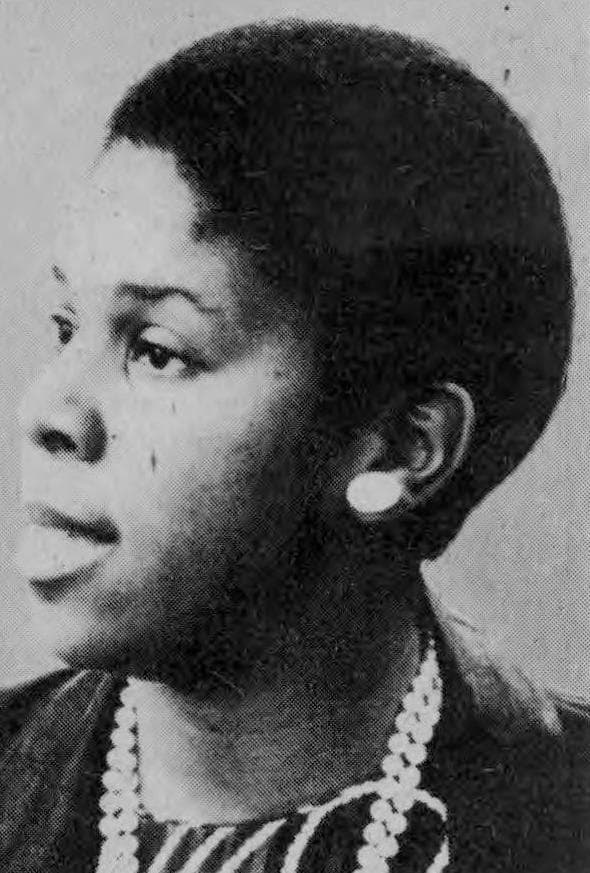
American · Politics · Activism · Medicine
Lenora Fulani
April 25, 1950 – present
Early Life and Background
Lenora Branch Fulani was born on April 25, 1950, in Chester, Pennsylvania, a working-class, industrial city near Philadelphia.[1][6][7][17] She was the youngest daughter of Pearl Branch, a licensed practical nurse, and Charles Branch, a railway baggage handler.[6][7] Growing up in a Black working-class family in the era of legal segregation and the civil rights movement, Fulani witnessed the emotional and material consequences of racism, poverty, and disenfranchisement.
Later accounts describe how, as a child, she became determined to help people in her community confront the "humiliation," "anguish," and "self-destructive rage" that came with being Black, poor, and powerless in white America.[17] This aspiration shaped her decision to study psychology and ultimately to integrate clinical practice with radical social activism.
Education and Intellectual Formation
Fulani attended Hofstra University, graduating with a B.A. in psychology in 1971.[2][3][6] She then pursued graduate studies at Columbia University Teachers College, earning a master’s degree in psychology, and continued on to the City University of New York Graduate Center, where she completed a Ph.D. in developmental psychology in the late 1970s.[2][3][6][7]
From 1973 to 1977, she worked as a guest researcher at Rockefeller University, specializing in the interplay of social environment and learning, with particular focus on the Black community.[2][3] At Rockefeller she encountered emerging postmodern psychology and began collaborating intellectually with Lois Holzman, a developmental psychologist, and Fred Newman, a philosopher of science and social therapist.[3][17] Their work emphasized the socially constructed nature of identity and the use of performance and group activity as tools for emotional development.
In addition to her academic training, Fulani received postgraduate training in social therapy at the New York Institute for Social Therapy and Research, deepening her commitment to therapeutic approaches that were explicitly political and collective.[6] This combination of mainstream psychological education and alternative therapeutic currents laid the groundwork for her later efforts to build performance-based youth programs and politicized therapeutic spaces.
Career Beginnings: Psychology, Social Therapy, and Community Work
After completing her doctorate, Fulani began practicing as a psychologist and psychotherapist, with a focus on marginalized communities in New York City.[1][6] She worked in settings that blended clinical work with grassroots organizing, often using group therapy and performance to address the emotional scars of racism and economic hardship.
Her collaboration with Fred Newman and Lois Holzman developed into a broader movement sometimes described as social therapy, which rejected the traditional, individualistic therapeutic model in favor of collective, developmental approaches.[3][17] Social therapy encouraged participants to "perform" new ways of relating, connecting psychological growth with social change.
By the early 1980s, Fulani’s work was increasingly tied to community organizations in New York, especially those serving Black and Latino youth. She became known locally as a tough, outspoken practitioner who saw mental health, education, and political power as inseparable.
Founding the All Stars Project and Youth Development Work
In 1981, Fulani co-founded the All Stars Project in New York City with Fred Newman.[3][8] The organization began as a grassroots effort to use performance and theater to support the development of low-income youth, many of whom felt excluded from formal educational institutions and cultural spaces.
The All Stars Project created talent shows, theater productions, and performance workshops in which young people from poor and working-class neighborhoods could participate as actors, stagehands, organizers, and audience members. Rather than treating them as clients needing remediation, the project encouraged them to "become performers" of new social roles—confident speakers, collaborators, and leaders.[3][17]
Over time, the All Stars Project expanded into a national performance-based youth development organization, establishing programs in several U.S. cities and engaging tens of thousands of young people. Its initiatives included the All Stars Talent Show Network, the Development School for Youth (which connected youth with business professionals), and various cultural projects.[3][8] Scholars have examined the project as a distinctive model of "development through performance" that challenges deficit-based approaches to poor and minority youth.[17]
Entry into Electoral Politics
Parallel to her psychological and educational work, Fulani became deeply involved in independent and third-party politics. She aligned herself with the New Alliance Party (NAP), a left-leaning, grassroots political organization with ties to Newman’s International Workers Party.[9]
During the 1980s and early 1990s, Fulani ran repeatedly for statewide and national office on the NAP ticket. She ran unsuccessfully for lieutenant governor of New York in 1982, for mayor of New York City in 1985, and for governor of New York in 1986, 1990, and 1994.[2] These campaigns emphasized racial equality, gay rights, and structural political reform, including ballot-access reform, term limits, and same-day voter registration.[1][2]
Through these races, Fulani built a public identity as a Black feminist, socialist-leaning independent politician committed to challenging the two-party system. Her rhetoric frequently criticized both major parties for failing working-class and minority communities and called for a multiracial, pro-reform alternative.
The 1988 Presidential Campaign: National Firsts
Fulani’s 1988 presidential campaign on the New Alliance Party ticket marked the peak of her electoral visibility. In that election, she became the first woman and the first African American presidential candidate to appear on the ballot in all fifty states and the District of Columbia.[1][2][3][6][9][10][13]
Her campaign platform combined calls for economic justice, anti-racist policies, and gay rights with advocacy for electoral reforms to open the system to third parties and independents.[1][9] She positioned herself as an outsider to both major parties, arguing that systemic change required truly independent politics.
On November 8, 1988, the date of the general election, Fulani received approximately 217,221 votes nationwide, then the highest number of presidential general-election votes ever won by a woman
Her all-states ballot access and record vote total have been widely cited in scholarship and media as landmark "firsts" for women and African Americans in presidential politics.[2][9][10][11] They also drew attention to the hurdles faced by independent candidates, from restrictive ballot-access laws to limited media coverage.
The 1992 Presidential Campaign and Federal Matching Funds
In 1992, Fulani launched a second presidential campaign, again as an independent candidate associated with the New Alliance Party.[2][6][10] This time she focused heavily on building a broader independent movement and highlighting structural issues in the electoral system.
On February 18, 1992, she qualified for federal primary matching funds, becoming the first Black woman to receive such funding in a U.S. presidential primary campaign.[6] Federal matching funds are public monies provided to candidates who meet specific fundraising criteria and agree to spending limits; qualifying demonstrated that her campaign had mobilized a substantial number of small donors nationwide.
This achievement expanded the boundaries of who could access public funding for national office and underscored the viability of independent, Black feminist politics at the federal level. Fulani used the campaign to continue advocating for ballot-access reforms, political decentralization, and empowerment of independent voters.[6][18]
While her vote totals in 1992 were smaller than in 1988, the campaign reinforced her role as a pioneering figure in independent politics and highlighted the importance of public financing structures for enabling marginalized candidates to compete.
Building Independent Voter Infrastructure: CUIP and Party Work
After the 1992 election, Fulani shifted emphasis from individual candidacy to movement-building. In 1994, she co-founded the Committee for a Unified Independent Party (CUIP), described as a national strategy center for independent voters.[3][13] CUIP sought to connect independent activists across more than 30 states, promote cross-ideological alliances around democratic reforms, and support efforts to create new political parties.
Fulani has also been credited as a founder of the Independence Party of New York State, a minor party that played a role in New York electoral politics and occasionally cross-endorsed major-party candidates.[3][13] Through these initiatives, she aimed to transform disillusionment with the two-party system into organized, sustained independent political power.
Her work with CUIP and the Independence Party placed her at the center of debates about the future of American populism and independent politics. Commentators have noted both her ability to build unusual coalitions and the controversies surrounding some of her alliances and ideological positions.[12][16][18]
Operation Conversation: Cops & Kids and Criminal-Justice Reform
In the mid-2000s, Fulani’s youth work intersected directly with criminal-justice issues. Following the November 2006 police shooting of Sean Bell in New York City, she launched Operation Conversation: Cops & Kids, a program of dialogues and performance-based workshops that brought together police officers and inner-city youth.[3][8][14]
Through the All Stars Project, Operation Conversation used improvisational theater, role-play, and guided discussion to help participants "perform" new ways of interacting, confront stereotypes, and build trust. The program’s goal was to develop relationships rather than simply mediate conflicts, reflecting Fulani’s belief that performance can be a powerful tool for social development.
The New York Police Department (NYPD) and the U.S. Department of Justice later recognized Operation Conversation as a model program for improving police–community relations, and it has been incorporated into officer training and community engagement activities.[8][14] In an era marked by national concern over police violence and racial profiling, the program stands out as an early, sustained experiment in using creative, developmental approaches to transform institutional relationships.
Major Works and Publications
Fulani’s intellectual and political work has included written publications as well as organizational leadership. She is the author of the memoir The Making of a Fringe Candidate, published in 1992, which reflects on her presidential campaigns and the challenges of being an independent, Black woman candidate in a two-party system.[10][17]
Her ideas about performance, development, and Black empowerment have been examined in academic work such as "Fulani's Tools and Results: Development as Black Empowerment?", which situates her projects within broader debates about race, psychology, and political organizing.[17] She has also appeared frequently in interviews and public forums, discussing third-party politics, youth development, and social therapy.
Awards, Honors, and Recognition
While specific formal awards are less documented, Fulani has been widely recognized in media, academic, and activist circles for her pioneering role in independent politics and youth development. She has appeared on major television networks including CNN, MSNBC, and PBS, and has been profiled by outlets ranging from mainstream newspapers to specialized political and historical platforms.[10][11][12]
Commentators have described her as one of the country’s leading Black political independents and a founder of a "flagship" youth development program in the All Stars Project.[11] Historical resources such as the Archives of Women’s Political Communication, the African American Registry, and Encyclopedia.com include detailed entries on her life and work, underscoring her significance in both women’s and African American history.[2][6][7]
Personal Life
Biographical sources note that Fulani was born Lenora Branch and later changed her name to Lenora Branch Fulani in 1973.[6] She has been described as divorced and is the mother of two children, a daughter named Ainka and a son named Amani.[6]
Her personal life is largely kept private in public accounts, but her biographical narratives emphasize her enduring connection to poor and working-class Black communities and her choice to return, after years in elite academic institutions, to grassroots work in neighborhoods similar to those where she was raised.[8] This trajectory—from academia back to community-based practice—has become a central theme in portrayals of her life.
Legacy and Historical Impact
Lenora Fulani occupies a distinctive place in the history of American women’s political leadership and Black radical politics. As the first woman and first African American to appear on presidential ballots in all fifty states, she broadened the conception of who could run for national office and challenged the gender and racial barriers embedded in electoral institutions.[1][2][9][10][13]
Her record-setting vote total in the 1988 general election and her status as the first Black woman to qualify for federal primary matching funds in 1992 further underscored the viability of independent, feminist, and anti-racist campaigns, even in a highly constrained political environment.[2][6]
Beyond electoral politics, Fulani’s work in the All Stars Project and Operation Conversation: Cops & Kids has influenced debates on youth development and community-police relations. Her insistence on performance-based developmental approaches has challenged conventional models of education and therapy, emphasizing creativity, collective activity, and cross-racial collaboration.[3][8][14][17]
Scholars and activists continue to study her projects as examples of how psychology, theater, and politics can intersect to build new forms of empowerment, particularly for poor and minority youth.[17] At the same time, her career has sparked controversy and debate, especially over the New Alliance Party’s internal dynamics and her later alliances within the Independence Party, reflecting the complex realities of independent political organizing.[12][16]
Later Life
As of the mid-2020s, available sources treat Lenora Fulani as living, with no reported date of death.[1][4][5] She has remained associated with the All Stars Project and with efforts to promote independent politics and developmental youth programs.[3][8][11][13]
Interviews, faculty listings, and organizational profiles describe her continuing work as an independent political leader, educator, and developmental psychologist, as well as her ongoing role in Operation Conversation and related initiatives.[3][8][11][13] Her later life thus appears characterized by sustained engagement in both grassroots youth work and national conversations about democracy, representation, and political reform.
While the scale of her electoral campaigns has receded, Fulani’s enduring impact lies in the institutions she helped build, the young people whose lives were shaped by performance-based development, and the historical precedents she set for women and African Americans in independent presidential politics.
Dated achievements
7 indexed.
- Apr251950Politics
Birth of Lenora Branch Fulani
Lenora Branch Fulani was born in Chester, Pennsylvania, later becoming a developmental psychologist and independent political activist.
View details Lenora Fulani - Wikipedia - Jan011981Activism
Co-founds the All Stars Project
Fulani co-founded the All Stars Project, a performance-based youth development organization serving low-income youth in New York City.