← All women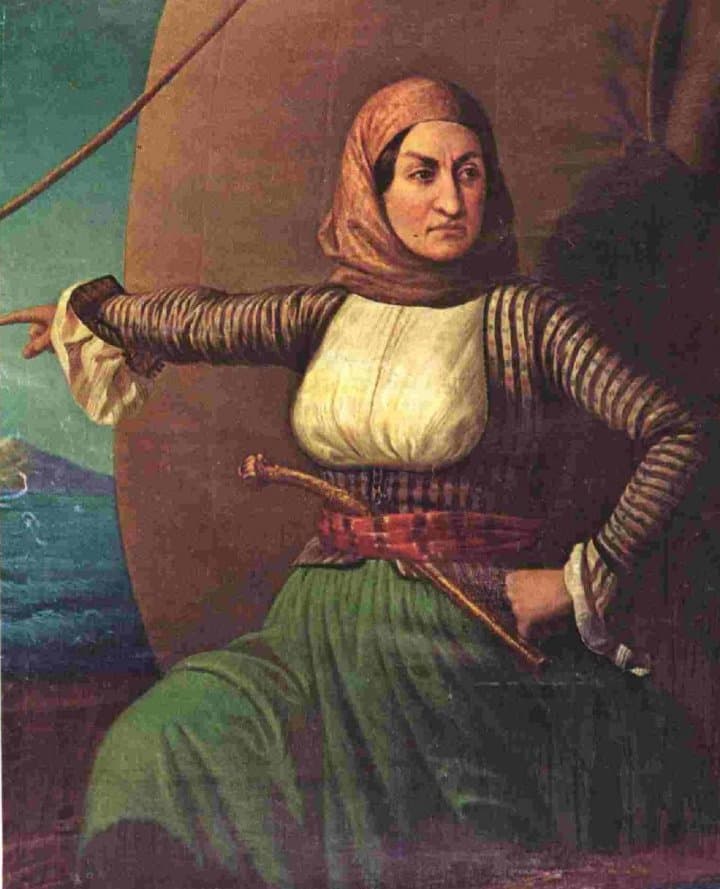
Greek · Politics · Exploration · Activism
Laskarina Bouboulina
May 11, 1771 – May 22, 1825
Early Life and Background
Laskarina Bouboulina was born on May 11, 1771, in Constantinople, part of the Ottoman Empire at the time. Her family was originally from the island of Hydra but relocated several times due to political tensions. Following her father's imprisonment and subsequent death at the hands of the Ottomans, she grew up in an environment of resistance and defiance.
Her mother, Skevo Pinotsi, married Stavrianos Bouboulis, a captain whose wealth allowed Laskarina an education that was unusual for women of her era. She was deeply influenced by the stories of her father's heroism and the ongoing struggle for Greek independence, which instilled in her a strong sense of patriotism and resistance.
Career Beginnings and Development
Bouboulina's career began as a shipowner and merchant. After inheriting her husband's fleet following his death in a pirate attack, she expanded her interests in the Mediterranean trade. Her resources and knowledge of naval operations became pivotal during the Greek War of Independence.
Major Works, Discoveries, or Accomplishments
Laskarina Bouboulina joined the underground Filiki Eteria, an organization that secretly planned for Greek independence. When the war erupted in 1821, she personally financed armed forces and equipped the ships under her command, effectively becoming one of the world's first female admirals.
Her most notable contribution was her pivotal role in the capture of the fortress of Nafplion, an achievement marked by her strategic prowess and leadership. Her fleet surrounded the fortress, providing resources and morale to the besieging forces. Despite the lack of formal recognition from the official Greek government, her leadership was crucial to the early successes of the rebellion.
Awards, Honors, and Recognition
Although there was no formal recognition from governmental bodies during her lifetime or posthumously, Bouboulina's leadership and contributions to the war efforts have been highly celebrated in national and international histories of the Greek War of Independence. Her legacy has been honored with statues and a museum dedicated to her name in Spetses.
Personal Life
Laskarina was married twice: first to Dimitrios Yiannouzas, with whom she had several children, and later to Dimitrios Bouboulis. Her marriages were partnerships in business and naval ventures, assisting in her significant ownership and operational control of a fleet of ships.
Legacy and Historical Impact
Bouboulina left an indelible mark on Greek history and is celebrated as a national heroine. Her life and exploits have been the subject of numerous books, films, and academic studies, highlighting her role as a female leader in a predominantly male context. She symbolizes the spirit of national resistance and courage under oppression.
Later Life and Death
After the war, Bouboulina faced conflicts with the nascent Greek government over the promises of compensation and titles. Regrettably, due to familial disputes, she was killed on May 22, 1825, during a private altercation in Spetses. Despite the tragic end, her story remains one of the most inspiring episodes in Greek history, showing remarkable resilience and leadership.
Dated achievements
2 indexed.
- May111771Politics
Birth of Laskarina Bouboulina
Laskarina Bouboulina was born in Constantinople.
View details Laskarina Bouboulina - Wikipedia - May221825Politics
Death of Laskarina Bouboulina
Laskarina Bouboulina died in Spetses during a family dispute.
View details