← All women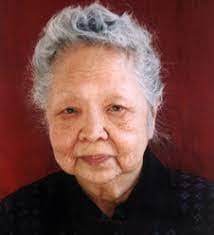
Chinese · Science
Lanying Lin
February 7, 1918 – March 4, 2003
Early Life and Background
Lin Lanying (Chinese: 林兰英) was born on 7 February 1918 in Putian, a city in Fujian province in southern China.[1][2][3][4] Her father, Li Jianhua, was an educator, and her mother, Zhou Shuixian, came from a conservative background.[2] Despite her father’s profession, the family initially did not believe in educating girls, reflecting entrenched gender norms in early 20th‑century China.[4] Lin was reportedly not allowed to attend school as a child, and her determination to study emerged in direct opposition to family expectations.[4]
Lin grew up during a tumultuous period marked by warlordism, Japanese invasion, and civil war, all of which disrupted everyday life and educational opportunities. In this context, her pursuit of formal education was doubly challenging: she had to overcome both social instability and patriarchal attitudes that confined women to domestic roles. Biographical accounts emphasize that Lin’s persistence and academic talent gradually shifted her family’s stance, allowing her to enroll in higher education.[4]
She eventually entered Fujian Union College (also known as Fukien Christian University), an institution with Christian missionary roots that offered broader access to modern scientific education.[4][7][12] Lin chose to study physics—a rare choice for a woman in China at the time—signaling an early interest in the physical sciences that would later define her career.
Education and Formative Influences
Lin graduated from the Department of Physics at Fujian Union College around 1940 and briefly taught there, gaining early experience as an educator and researcher.[7][12] Her undergraduate training in physics provided a foundation in classical and modern physical theory just as quantum mechanics and solid‑state physics were transforming the field.
Seeking further study, Lin went to the United States in 1948bachelor’s degree in mathematics from Dickinson College and later pursued graduate work in physics.[4][13] She then enrolled at the University of Pennsylvania, where she specialized in solid‑state physics—the branch of physics concerned with the properties of solid materials, particularly crystals and semiconductors.[4][7]
Lin received her PhD in solid‑state physics from the University of Pennsylvania in 1955, becoming one of the few Chinese women of her generation to earn a doctorate in a highly technical field.[4][7][10][12] Her doctoral work introduced her to cutting‑edge research on semiconductor materials and crystal growth, then central to the emerging transistor and electronics revolution. These experiences in the U.S. shaped her scientific approach and exposed her to industrial applications of semiconductor physics.
While some biographical notes also list the University of Chicago among her institutions, the core trajectory consistently described is her progression from physics in Fujian to mathematics at Dickinson and to solid‑state physics at the University of Pennsylvania.[4][13] This multi‑disciplinary background in physics and mathematics gave Lin strong theoretical and experimental skills, equipping her to lead complex materials research on her return to China.
Return to China and Career Beginnings
After completing her doctoral studies, Lin faced a pivotal decision: to remain in the United States, where opportunities in academia and industry were growing, or to return to a war‑torn and technologically developing China. In 1957, she chose to return to China, a decision widely cited as a sacrifice and an act of patriotism.[4][7][10][12] She arrived at a time when China was seeking to build its own semiconductor capabilities but lacked the necessary expertise and infrastructure.
Lin joined the Institute of SemiconductorsChinese Academy of Sciences (CAS), ultimately serving as a researcher and professor there.[7] Her early work focused on the growth and characterization of semiconductor single crystals—materials in which the crystal lattice is continuous and unbroken throughout, a prerequisite for reliable electronic devices.
In the late 1950s, she led efforts to synthesize mono‑crystalline germanium, silicon, and other semiconductor materials.[1][3][4][7][8] These materials formed the physical basis of transistor technology and, by extension, modern electronics. At the time, China had little experience with such sophisticated crystal growth methods, and Lin’s laboratory work required both adaptation of international techniques and significant innovation under resource‑constrained conditions.
Her return in 1957 thus marked the beginning of a sustained campaign to build a domestic semiconductor materials research base in China. Contemporary accounts and later retrospectives describe her as one of the pioneers of Chinese semiconductor science, whose work helped “catch up” decades of technological development.[7][16][17]
Major Scientific Contributions
Lin’s career is defined by a series of landmark achievements in semiconductor and aerospace materials. She is credited with overseeing the research, development, and manufacture of China’s first single crystals of several key semiconductor compounds, including silicon (Si), indium antimonide (InSb), gallium arsenide (GaAs), and gallium phosphide (GaP).[1][3][4][7][8]
Among her early milestones was the synthesis of mono‑crystalline germanium in different doping types, which allowed the creation of N‑type and P‑type germanium crystals.[1][3][4] These materials enabled the production of transistor radios in China, symbolizing the country’s entry into the age of modern consumer electronics.[4] Germanium transistors were vital to first‑generation solid‑state devices, and Lin’s success gave China an indigenous source of such materials.
In parallel, Lin worked on mono‑crystalline silicon, another cornerstone semiconductor. She is credited with manufacturing China’s first monocrystalline silicon and designing the country’s first monocrystal furnace used to extract silicon.[1][2][5][7][10] Developing reliable silicon single crystals required precise control of temperature gradients, impurity levels, and crystal growth dynamics. Lin’s furnace designs adapted available technology to local conditions, creating a platform for subsequent large‑scale silicon production.
Her team also produced mono‑crystalline gallium antimonide (GaSb), cadmium sulfide (CdS), and eventually gallium arsenide (GaAs), materials important for infrared detectors, light‑emitting devices, and high‑frequency electronics.[1][3][7][16] According to institutional and encyclopedic sources, Lin directed the research and development (R&D) of China’s first single crystals of Si, InSb, GaAs, and GaP, which collectively laid a foundation for microelectronics and optoelectronics.[7]
In the early 1960s, she pushed toward higher‑purity materials and more sophisticated crystal structures. She led work on high‑purity vapor phase epitaxy (VPE) and liquid phase epitaxy (LPE) materials, epitaxial growth techniques that deposit crystalline layers on substrates for devices like lasers and advanced diodes.[5][6][7] These high‑purity epitaxial materials reportedly reached the international advanced level, positioning China as a significant player in semiconductor materials research.[5][7]
Lin’s group also fabricated China’s first semiconductor laser, building on their progress in GaAs and related compounds.[3] Semiconductor lasers require highly controlled junctions and crystal quality; her success represented both a scientific and engineering breakthrough, contributing to applications in communications and sensing.
Later in her career, Lin initiated a new research field in microgravity semiconductor materials. She investigated the growth and properties of GaAs crystals in space, capitalizing on the reduced convection and sedimentation effects in microgravity to achieve improved crystal quality.[7] These space‑grown crystals attracted international attention and aligned her work with global research into space materials science.
Awards, Honors, and Recognition
Lin’s scientific contributions were recognized with multiple national and institutional awards. She twice received the National Scientific and Technological Progress Award (often translated as the National Science and Technology Progress Award), reflecting high‑level state recognition of her role in advancing semiconductor materials.[8] She also won the Chinese Academy of Sciences Science and Technology Progress Award first prize on four occasions, underscoring the sustained impact of her research within the national academy.[8]
In addition, Lin was honored with the Henry Fok Achievement Award, a distinction associated with support for scientific and educational advancement.[8] These accolades highlight both the technical merit and the strategic importance of her work, as semiconductor materials were central to national efforts in electronics, defense, and space technology.
Her professional status was further affirmed when she was elected an academician (member) of the Chinese Academy of Sciences in 1980
Beyond science, Lin served as vice‑chairman of the China Association for Science and Technology, a national body that coordinates scientific societies and promotes science outreach.[7] She was also a deputy to the National People’s Congress and a member of its Standing Committee, roles that integrated her expertise into legislative processes.[13] Her political appointments reflect recognition of her broader contributions and her ability to represent scientific perspectives in policymaking. While best known as a materials scientist, Lin was also described as a social activist and politically engaged figure.[8] Her participation in the National People’s Congress and the China Association for Science and Technology gave her platforms to advocate for scientific development and, indirectly, for the status of women in science. Biographical summaries note that she used her influence to support the growth of China’s semiconductor industry and research institutions, helping shape funding and infrastructure in ways that benefited both basic research and applied technology.[8] Given her own experiences of gender discrimination, her visibility as a successful woman scientist also had symbolic and practical significance for younger women seeking STEM careers. Some sources portray Lin’s decision to return from the United States in 1957 as a form of social commitment, emphasizing that she left behind more comfortable conditions abroad to contribute to China’s scientific modernization.[4][9][16] This narrative of sacrifice and patriotism has made her a recurring figure in media discussions about the origins of China’s contemporary semiconductor capabilities. Details of Lin Lanying’s personal life are relatively sparse in available public sources, especially compared to documentation of her scientific achievements. Encyclopedic entries and institutional profiles focus primarily on her education, research, and political roles, offering limited information about marriage, children, or family life in adulthood.[1][3][4][7][8] What is documented is the tension between her early family background and her later professional path: she emerged from a household that did not initially support girls’ education, yet went on to become a leading scientist and national figure.[4] This contrast itself has become part of her public narrative, used by later commentators to illustrate the transformative power of education and determination. Because reliable sources do not provide detailed accounts of her private relationships, most historical treatments of Lin emphasize her professional identity—physicist, materials scientist, academician, and political representative—rather than domestic roles. As a result, she is remembered primarily through the lens of her scientific and institutional contributions. Lin Lanying is widely remembered in China as the “mother of aerospace materials” and the “mother of semiconductor materials.”[1][2][3][5][6] These titles encapsulate her pioneering role in developing the materials that underpin modern electronics, communications, and aerospace technologies. Her work in synthesizing the first domestic single crystals of silicon, germanium, gallium arsenide, indium antimonide, and gallium phosphide allowed China to build its own transistor radios, semiconductor lasers, and other devices without relying exclusively on imported materials.[1][3][4][7][8] This was strategically vital during decades when technology transfer was limited and national self‑reliance in key industries was a priority. In microelectronics and optoelectronics, Lin’s development of high‑purity VPE and LPE materials helped advance China to the international frontier in semiconductor crystal quality.[5][7] These achievements strengthened domestic research capabilities and paved the way for subsequent generations of devices used in information technology, telecommunications, and defense. Her later research in microgravity semiconductor materials, specifically GaAs crystals grown in space, connected China’s semiconductor programs with global research efforts in space materials science and demonstrated an ability to operate at internationally significant levels.[7] Lin’s legacy also includes her role as a trailblazer for women in STEM. Coming from a background where girls were discouraged from schooling, she progressed to a PhD in the United States, led major national research initiatives, and became an academician of the CAS and a national legislator.[4][7][13] Organizations like Asia Research News and various women‑in‑science initiatives now highlight her story to inspire contemporary women scientists.[4][10] Her life and work are frequently discussed in modern media and educational content that explore the history of China’s semiconductor industry, often emphasizing that the United States “regretted” letting such talent leave as she helped advance China’s capabilities by decades.[16][17] This narrative situates Lin at the intersection of science, geopolitics, and gender history. In her later years, Lin continued to hold influential roles within the Chinese Academy of Sciences and the China Association for Science and Technology, even as younger researchers built upon her foundational work. She remained a reference point for semiconductor materials research and a symbol of the field’s importance to national development. Lin died on 4 March 2003, at the age of 85.[1][3][5][13] Her passing prompted tributes that emphasized her decades of service to science and the state, her central role in establishing China’s semiconductor materials research, and her significance as one of the country’s most prominent women scientists. Posthumously, her story has been preserved through encyclopedia entries in multiple languages, institutional profiles, educational videos, and commemorative posts on platforms that promote women in science.[1][2][3][4][5][7][8][10][16][17] These accounts collectively ensure that Lin Lanying remains a key figure in the historical record of global semiconductor development and women’s contributions to science. Today, as semiconductor technology continues to underpin computing, communications, and aerospace systems worldwide, Lin’s pioneering work in crystal growth and materials purity is recognized as an essential part of the foundation on which these industries rest. Her life demonstrates how individual scientific leadership, coupled with personal resilience and national commitment, can reshape a country’s technological trajectory.Political and Social Engagement
Personal Life
Legacy and Historical Impact
Later Life and Death
Dated achievements
4 indexed.
- Feb071918Science
Birth of Lin Lanying in Putian, Fujian
Lin Lanying, future 'Mother of Chinese Semiconductors,' was born in Putian, Fujian, China.
View details Lin Lanying - Wikipedia - Nov011958Science
China's First Monocrystalline Silicon Produced (November 1958)
Lin Lanying produced China's first monocrystalline silicon in November 1958, a foundational milestone for the nation's semiconductor industry.