← All women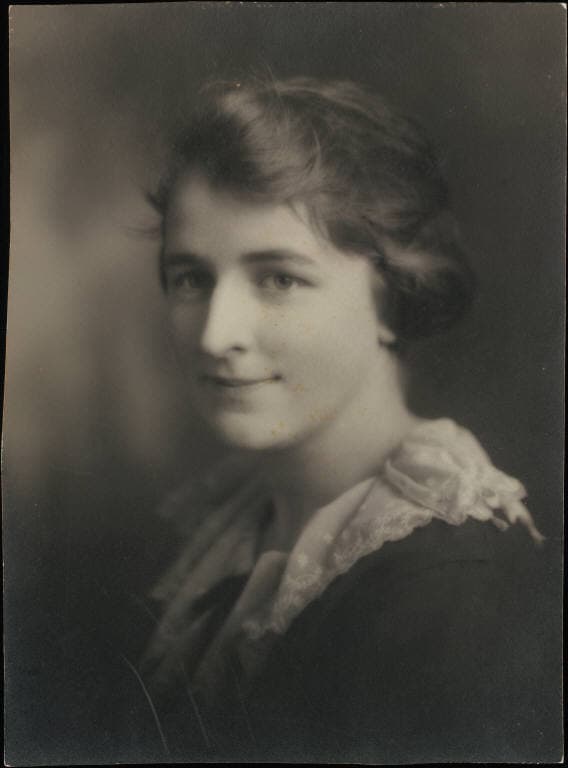
American · Literature · Activism
Kathryn Hulme
July 6, 1900 – August 25, 1981
Early life and family background
Kathryn Cavarly Hulme was born on 6 July 1900 in San Francisco, California, the daughter of Edwin Page Hulme and Julia Frances Cavarly Hulme. Biographical sources and archival finding aids consistently describe her as an American writer whose early life began in a city shaped by rapid growth, Pacific trade, and, soon after her childhood, the devastation of the 1906 earthquake. Although detailed accounts of her childhood are limited in the available record, later works suggest that memory, displacement, and the afterlife of catastrophe were enduring interests in her imagination.
Hulme attended the University of California, Berkeley after graduating from high school in 1918, spending three years there before moving to New York City in 1922. She also studied journalism and attended Hunter College and Columbia University according to biographical references. These educational and urban experiences introduced her to the worlds of reporting, travel, and freelance writing, all of which would shape her literary development.
Early career and travel writing
In the 1920s and 1930s, Hulme built a career that combined journalism, publicity work, and writing based on travel and observation. After moving to New York, she worked as a freelance writer and in travel-related publicity, an occupation that placed her in contact with international movement and cosmopolitan social life. Her early books reflected those interests: How's the Road? appeared in 1928, followed by Arab Interlude in 1930 and Desert Night in 1932. These works established her as a writer attentive to place, cultural encounter, and the experience of movement across borders.
During the 1930s, Hulme spent substantial time in Europe. Sources associated with her papers and later biographical sketches indicate that the decade was important both personally and intellectually. Her later memoir Undiscovered Country: A Spiritual Adventure would describe her years as a student of the mystic-philosopher G. I. Gurdjieff and her spiritual development. That interest in Gurdjieff’s circle, and in the communities of women associated with it, broadened her writing beyond travel literature toward a more reflective, psychological, and religiously inflected prose.
First major recognition
Hulme’s first widely recognized literary breakthrough came with We Lived as Children in 1938, a memoir-like work that drew on memory and family experience. The book is often treated as her early critical success because it demonstrated that she could move beyond travel writing into a more personal and literary mode. In a period when women writers were often expected to confine themselves to domestic subjects or lighter prose, Hulme’s work showed seriousness of theme and a willingness to connect private memory to larger historical change.
War, relief work, and postwar Europe
Hulme’s career took a major turn during and after World War II. She worked as an electric arc welder at the Kaiser shipyards during the war, joining the many women who entered industrial labor while men served in the armed forces. After the war she served with the United Nations Relief and Refugee Agency (UNRRA) in Europe, where she helped administer relief efforts for displaced persons. Archival materials and later institutional summaries identify this humanitarian work as a major part of her life and the source of some of her most important writing.
Her UNRRA service, including work at the Wildflecken displaced-persons camp, brought her into contact with refugees and survivors struggling to rebuild lives after the war’s destruction. During this period she met Marie-Louise Habets, a Belgian nurse and former nun who became her lifelong companion and later the inspiration for The Nun’s Story. Hulme’s postwar years were marked by direct contact with the human consequences of occupation, exile, and institutional upheaval, and these experiences gave her later prose a documentary depth rare in fiction of the period.
Major books and literary success
In 1952, Hulme received the Atlantic Nonfiction Prize for The Wild Place, a work grounded in her relief experience in Europe. The prize acknowledged her as more than a novelist: it recognized her ability to turn humanitarian service into literary nonfiction of public significance. The book was published in 1953 and deepened her reputation as a writer of war aftermath and moral witness.
Hulme’s best-known book, The Nun’s Story, was published in 1956. Drawing on her relationship with Marie-Louise Habets and the broader atmosphere of Catholic and postwar European life, the novel became a bestseller and made Hulme internationally famous. Its success reflected both literary craft and cultural timing. Mid-century readers were fascinated by religious vocation, women’s institutional lives, and the tension between conscience and obedience, and Hulme’s novel treated those themes with empathy rather than sentimentality.
The novel was adapted into a 1959 film starring Audrey Hepburn and Peter Finch, which further amplified Hulme’s reputation. The screen adaptation brought her story to a global audience and helped secure The Nun’s Story as her defining work in popular memory. At the same time, the film also demonstrates how women’s experiences of vocation and service could be translated into mainstream culture in the postwar era.
Hulme continued to publish in the following decades. Annie’s Captain appeared in 1961, followed by Undiscovered Country: A Spiritual Adventure in 1966 and Look a Lion in the Eye in 1974. These works reveal the breadth of her interests: family history, spiritual exploration, and travel narrative. Undiscovered Country is especially important because it makes explicit her engagement with Gurdjieff and her eventual conversion to Catholicism, connecting personal spiritual searching with a broader twentieth-century literary fascination with mysticism and religious transformation.
Personal life
Biographical sources indicate that Hulme married Leonard D. Geldert in New York City in 1925 and divorced in 1928. She had no children. Later references describe her as living with Marie-Louise Habets, and their relationship has become one of the most discussed aspects of Hulme’s personal history because of its influence on The Nun’s Story and on interpretations of her life. While surviving documents do not always provide the interpretive clarity modern readers may seek, the evidence supports the conclusion that Habets was central to Hulme’s emotional and creative life after the war.
Hulme also spent time in Connecticut and southern California before settling in Hawaiʻi later in life. Those moves reflect a life shaped by mobility rather than by a single literary center. She remained connected to literary and spiritual communities, especially those associated with Gurdjieff, and she continued to write about travel, belief, and personal transformation.
Legacy and historical impact
Kathryn Hulme’s significance lies in the way she transformed lived experience into literary record. She was part of the generation of women whose work during World War II and after it gave them access to histories that had often been written from male, military, or diplomatic perspectives. By writing about displacement, relief work, spiritual searching, and women’s institutional life, she documented twentieth-century crises from a perspective grounded in both observation and participation.
Her books remain valuable for scholars of women’s history, postwar humanitarianism, and mid-century religious culture. The Nun’s Story in particular continues to attract attention because it combines narrative accessibility with serious questions about authority, vocation, and female autonomy. The Wild Place preserves the realities of postwar reconstruction and refugee assistance, while Undiscovered Country offers a rare literary account of Gurdjieff’s milieu from a woman’s point of view.
Hulme’s papers, held at Yale, further enhance her legacy by documenting both the literary and humanitarian dimensions of her life. They confirm that she was not simply a novelist of one famous book, but a writer whose work connected travel, war, religion, and personal reinvention across much of the twentieth century.
Later life and death
Hulme spent her final years in Hawaiʻi and died in Līhuʻe, Kauaʻi, on 25 August 1981. Contemporary obituaries and archival records describe her as the author of The Nun’s Story, the work that had defined her public reputation for a quarter-century. Her death marked the passing of a distinctive voice in American women’s writing: a writer who combined humanitarian service, spiritual inquiry, and fiction rooted in real social change.
Her life story illustrates the expanded but still constrained opportunities available to educated women born at the turn of the twentieth century. Hulme moved through journalism, international travel, industrial wartime labor, refugee work, and literary success, leaving a body of work that continues to illuminate women’s roles in twentieth-century history.
Dated achievements
3 indexed.
- Jul061900Science
Birth of Kathryn Cavarly Hulme
Kathryn Cavarly Hulme was born in San Francisco, California, on July 6, 1900.
View details Kathryn Hulme - Wikipedia - Jan011952Science
Awarded the Atlantic Nonfiction Prize for The Wild Place
Hulme won the Atlantic Nonfiction Prize for The Wild Place, her acclaimed account of postwar refugee relief work in Europe.