← All women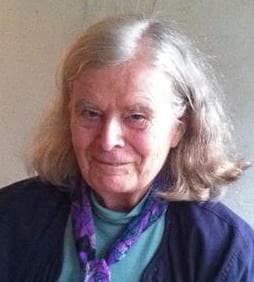
American · Science
Karen Uhlenbeck
August 24, 1942 – present
Early Life and Background
Karen Keskulla Uhlenbeck was born on 24 August 1942 in Cleveland, Ohio, United States, into a family of Estonian descent.[2][3][5][15] Her father worked as an engineer and her mother was an artist, a combination that exposed her early to both technical and creative forms of thinking.[17] Growing up in the Midwest during the mid-twentieth century, she developed a strong interest in science and mathematics, reading widely and excelling in school despite the limited expectations placed on girls who pursued technical subjects.
Uhlenbeck attended public schools and was drawn to mathematics by its logical structure and problem-solving challenges. She has recalled that, as a young woman, she lacked clear role models for a career in mathematics and often had to navigate institutional expectations that assumed women would prioritize family over professional ambitions.[11][17] Nonetheless, the expansion of American higher education in the postwar era opened paths for talented students, and she entered the University of Michigan, where she completed an A.B. (often reported as B.S.) in mathematics in 1964.[2][3][4][7]
Her undergraduate experience was formative but not straightforward. She later described feeling somewhat isolated and uncertain about her future in mathematics, encountering attitudes that made it difficult for women to envision long-term research careers.[11][17] Exposure to advanced courses, however, convinced her of the intellectual richness of analysis and geometry, and she decided to pursue graduate study.
Education and Early Career
After Michigan, Uhlenbeck enrolled at Brandeis University in Massachusetts, where she earned an M.A. in 1966 and a Ph.D. in 1968 under the supervision of the analyst and geometer Richard Palais.[2][3][4][7] Her thesis, on the calculus of variations and global analysis, placed her at the intersection of differential geometry and partial differential equations, an interface that would define much of her later work.[4] The environment at Brandeis, a relatively new institution with a strong emphasis on research, gave her direct access to leading mathematicians and a culture that valued innovation.
Completing a doctorate in mathematics as a woman in the 1960s remained unusual, and Uhlenbeck has described how she encountered skepticism about her commitment to a research career.[11][17] Early in her career she held temporary and visiting positions, including a lectureship at the University of California, Berkeley, and further appointments at institutions such as the University of Illinois, while she built her research program in geometric analysis.[3][9][17]
In 1971 she joined the University of Illinois at Urbana–Champaign, becoming part of a notable group of women mathematicians working there in analysis and related fields.[1][4][11] In 1977 she moved to the University of Illinois at Chicago, where she continued to develop foundational results in partial differential equations and gauge theory.[1][5][7] These appointments placed her within major American research departments at a time when senior female faculty were still rare, providing a platform from which she could pursue increasingly ambitious problems.
Development of Geometric Analysis and Gauge Theory
Uhlenbeck emerged in the 1970s and 1980s as one of the founders of modern geometric analysis, a field that combines techniques from nonlinear functional analysis, partial differential equations, and differential geometry to study geometric and topological problems.[1][2][12] Her work focused on understanding the behavior of solutions to nonlinear elliptic equations that arise in the study of minimal surfaces, harmonic maps, and gauge-theoretic structures, especially Yang–Mills fields.
Among her most influential contributions are what are commonly known as Uhlenbeck’s compactness theorem and related regularity results for sequences of connections in gauge theory. These theorems analyze how curvature concentrates and how singularities can form in families of solutions, providing crucial tools for later developments in four-manifold topology and the study of moduli spaces in mathematical physics.[2][3][16] Her analytic techniques offered a way to control these phenomena, showing under what conditions one can extract convergent subsequences and describe the limiting behavior.
In the early 1980s she published a pair of landmark papers on Yang–Mills fields in the journal Communications in Mathematical Physics, which became foundational for the subject.[4][7] These works examined the analytic structure of gauge fields and the role of energy concentration, and they were later cited by the American Mathematical Society as the basis for her receiving the Leroy P. Steele Prize for a Seminal Contribution to Research in 2007.[4][7] Her research provided the analytic backbone for work by other mathematicians, such as Simon Donaldson, who used gauge theory to make groundbreaking advances in four-dimensional topology.
Uhlenbeck’s contributions were not limited to gauge theory. She also made significant advances in the study of minimal surfaces and other variational problems, clarifying the structure of singularities and refining regularity results in the calculus of variations.[1][2] Her approach often blended delicate estimates with geometric intuition, and she became known for combining deep technical insight with conceptual clarity.
University of Chicago and University of Texas at Austin
In 1983, Uhlenbeck joined the University of Chicago, one of the world’s leading centers for pure mathematics, as a professor of mathematics.[7][9] Her time at Chicago, lasting until 1988, coincided with rapid development in geometric analysis and topology, and she played a central role in these intellectual currents. She was awarded a MacArthur Fellowship ("genius grant") in 1983, recognizing both her past achievements and her potential for future breakthroughs.[7] The fellowship gave her financial independence and flexibility, allowing her to pursue ambitious projects and take visiting positions that broadened her collaborations.
In 1988 she moved to the University of Texas at Austin, where she eventually held the Sid W. Richardson Foundation Regents’ Chair in Mathematics.[2][4][7][9] At Texas, she continued to produce influential work in partial differential equations and geometric analysis, while contributing to the department’s reputation as a major center for analysis and geometry. Her presence attracted students and postdocs from around the world, many of whom went on to become leaders in their own right.
During this period, Uhlenbeck also maintained strong ties to the Institute for Advanced StudyDistinguished Visiting Professor there.[2][12][14] Her connection to IAS placed her within a global network of mathematicians and theoretical physicists, facilitating cross-disciplinary dialogue between geometry, analysis, and high-energy physics.
Named Lectures and Professional Recognition
Uhlenbeck’s excellence in both research and exposition was recognized through a series of prestigious lecture invitations. On 6 January 1988, the American Mathematical Society announced that she had been selected as the 1988 Noether Lecturer of the Association for Women in Mathematics, highlighting her contributions to analysis, geometry, and mathematical physics.[4] The following day, 7 January 1988, she delivered her Noether Lecture, titled "Applications of Nonlinear Functional Analysis in Geometry," at the Joint Mathematics Meetings in Atlanta, making accessible her approach to geometric problems via nonlinear functional analytic methods.[4]
In 1990, Uhlenbeck reached another historic milestone when she delivered a plenary lecture at the International Congress of Mathematicians (ICM) in Kyoto, Japan.[1][12] The program placed her talk on 21 August 1990, and she thereby became only the second woman in history to give a plenary address at an ICM, following Emmy Noether’s lecture in 1932.[1][12] The plenary invitation is one of the highest honors in mathematics, reserved for those whose work has transformed entire fields, and her appearance at Kyoto underscored the global impact of her research.
Recognition from major academies followed. In 1986 she became the first woman mathematician elected to the U.S. National Academy of Sciences, an achievement widely noted as a breakthrough for women in the discipline.[4][8][10] In 1990 she was elected to the American Academy of Arts and Sciences, with records indicating her election date as 11 October 1990.[1][3] In 1998 she was elected a Foreign Member of the Royal Society (ForMemRS), one of the highest honors conferred by the United Kingdom’s national academy of science.[3][4]
National Medal of Science and Steele Prize
At the turn of the millennium, Uhlenbeck’s scientific stature was further affirmed through major national and professional awards. On 1 December 2000, President Bill Clinton announced that she would receive the National Medal of Science, with the citation emphasizing her pioneering contributions to geometric analysis and gauge theory and their profound impact on analysis, geometry, and mathematical physics.[4][15] The medal is the United States’ highest honor for scientific achievement, and her inclusion signaled broad recognition of the importance of modern geometric analysis.
On 13 June 2001, at a White House ceremony, President George W. Bush formally presented Uhlenbeck with the National Medal of Science.[4][15] The event highlighted her as one of the nation’s leading scientists and underscored the relevance of pure mathematical research to the broader scientific enterprise. For women in mathematics, her presence among the medal recipients represented a significant expansion of the visible role of women at the top levels of U.S. science.
In 2007, the American Mathematical Society awarded her the Leroy P. Steele Prize for a Seminal Contribution to Research, citing her 1982 papers on analytical aspects of gauge theory and Yang–Mills fields as foundational contributions.[4][7] The AMS announced the prize on 7 January 2007, and she received it formally at the Joint Mathematics Meetings in New Orleans on 8 January 2007.[7] The Steele Prize recognized the long-term impact of work that had reshaped the understanding of nonlinear partial differential equations and their geometric applications.
Abel Prize and Global Recognition
Uhlenbeck’s career reached a new pinnacle of international recognition in 2019. On 19 March 2019, the Norwegian Academy of Science and Letters announced that she had been awarded the Abel Prize, one of the most prestigious global awards in mathematics, "for her pioneering achievements in geometric partial differential equations, gauge theory and integrable systems, and for the fundamental impact of her work on analysis, geometry and mathematical physics."[1][16] She was the first woman ever to receive the Abel Prize since its establishment in 2003.[2][3][9][12]
The Abel Prize is often likened to a Nobel Prize for mathematics, and Uhlenbeck’s selection drew wide media attention and praise from the mathematical community. Commentators emphasized her role in founding geometric analysis and in developing methods that had led to "some of the most dramatic advances in mathematics in the last 40 years," as one institutional tribute put it.[9][14] On 21 May 2019, she formally received the prize from King Harald V of Norway at a ceremony in Oslo, becoming the first woman ever to be presented with the award.[1][16]
In addition to honoring her scientific contributions, the Abel Prize highlighted her commitment to advancing women in mathematics. Reports noted that she donated a substantial portion of her prize money to organizations that promote women’s participation in research mathematics, aligning the recognition of her work with her long-standing advocacy for gender equity.[12] In 2019 she was also included on TIME magazine’s list of "history-making women" for being the first woman to win the Abel Prize, underlining the broader cultural significance of her achievement.[15]
Advocacy for Women in Mathematics
Alongside her research, Uhlenbeck has been a prominent advocate for women in mathematics and science. She has repeatedly noted the difficulties she faced early in her career, including isolation, lack of mentorship, and implicit expectations that women would not pursue intensive research careers.[11][17] These experiences motivated her to create structures that would support the next generation.
Beginning in the 1990s, she was instrumental in developing programs that later became the Women and Mathematics initiative at the Institute for Advanced Study and the Park City Mathematics Institute (PCMI).[1][4][11][14] Co-founded formally in 2011 with James Simons and others, the Women and Mathematics program offers mentoring, courses, and networking opportunities for women at various stages of their mathematical careers, aiming to increase participation and retention in research mathematics.
Uhlenbeck has also been active in professional societies and editorial work, supporting efforts to broaden representation in conferences, committees, and prize selections.[12][17] Her visibility as a highly decorated researcher and her candid reflections on the structural barriers women face have made her a central figure in discussions about diversity and inclusion in the mathematical sciences.
Personal Life
Uhlenbeck married Olke C. Uhlenbeck, a biochemist, adopting his surname while retaining her birth surname Keskulla as a middle name.[2][15] Biographical accounts note that she balanced the demands of a two-scientist household with her academic career, at times facing expectations that women would take on primary domestic responsibilities.[11][17] She has spoken about how these pressures shaped her decisions about positions and research directions.
Her Estonian heritage, through her father’s family, has also been noted in several biographical sources, and she has occasionally remarked on the influence of her family background on her resilience and work ethic.[15][17] Outside mathematics, she is known to have wide-ranging interests, including reading and engagement with the arts, reflecting the influence of her artist mother.[17]
Later Life and Current Roles
In later years, Uhlenbeck transitioned from full-time faculty duties while remaining active in research and mentoring. She is Professor Emeritus of Mathematics at the University of Texas at Austin and has served as a Distinguished Visiting Professor at the Institute for Advanced Study in Princeton.[2][12][14][15] She also holds visiting and senior research scholar positions at Princeton University and maintains involvement with PCMI and the Women and Mathematics program.[2][10][12]
Her later work continues to engage with deep questions in geometric analysis and mathematical physics, though she has increasingly devoted time to mentoring and program-building. Interviews and personal profiles emphasize her reflective approach to her own career, acknowledging both the exhilaration and the challenges of working in a demanding field as a woman in an earlier era.[11][17]
As of the mid-2020s, Uhlenbeck remains alive and engaged with the mathematical community, participating in conferences, giving interviews, and supporting initiatives aimed at diversifying the profession.[2][12][14]
Legacy and Historical Impact
Karen Uhlenbeck’s legacy is multifaceted. Scientifically, she is widely regarded as one of the founders of modern geometric analysis and a central figure in the mathematical theory of gauge fields.[1][2][12] Her theorems on singularities, compactness, and regularity in nonlinear partial differential equations have become standard tools in differential geometry and have influenced major developments in topology and mathematical physics.
Her work exemplifies the power of analytic methods applied to geometric and physical problems. By rigorously analyzing Yang–Mills fields, minimal surfaces, and related structures, she helped show how deep geometric insight can emerge from careful study of PDEs. This perspective has permeated contemporary mathematics, shaping research agendas and inspiring new generations of analysts and geometers.[2][3][16]
Historically, Uhlenbeck has also been a trailblazer for women in mathematics. She broke multiple barriers: becoming the first woman mathematician elected to the U.S. National Academy of Sciences, one of the first women in several major faculty roles, the second woman plenary lecturer at an International Congress of Mathematicians, and the first woman Abel Prize laureate.[1][2][4][8][12][16] Each of these milestones has symbolic importance, demonstrating that women can lead at the highest levels of highly technical mathematical research.
Her advocacy for women and her role in building programs like Women and Mathematics at IAS and PCMI extend her impact beyond her own research. By creating structures that support and connect women at different career stages, she has helped to change the landscape of opportunity in mathematics.[1][4][11][14] Scholars and institutions frequently cite her as a "Michigan Great" and a model of both scientific excellence and commitment to equity.[11][14]
In encyclopedia articles, institutional profiles, and prize citations, Uhlenbeck is consistently described as "one of the founders of modern geometric analysis" and as a mathematician whose work has led to "some of the most dramatic advances in mathematics" in recent decades.[2][9][14][16] Her combination of deep technical achievements and sustained advocacy positions her as one of the most historically significant women in the mathematical sciences.
Dated achievements
11 indexed.
- Aug241942Science
Birth of Karen Keskulla Uhlenbeck
Karen Keskulla Uhlenbeck was born in Cleveland, Ohio, later becoming a foundational figure in geometric analysis and gauge theory.
View details Karen Uhlenbeck - Wikipedia - Jan061988Science
Selected as 1988 AWM Noether Lecturer
Karen Uhlenbeck was announced as the 1988 Noether Lecturer by the Association for Women in Mathematics, honoring her work in analysis and geometry.