← All women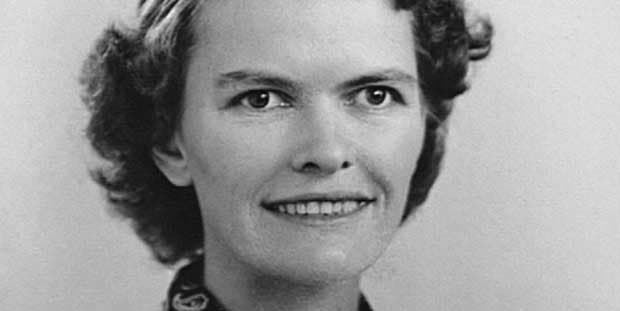
American · Science
Julia Robinson
December 8, 1919 – July 30, 1985
Early Life and Background
Julia Hall Bowman Robinson was born on December 8, 1919, in St. Louis, Missouri. She was the second of three daughters to Ralph Bowers Bowman and Helen Hall Bowman. Tragically, her mother died two years after her birth, and her father sent his daughters to live with their grandmother in Arizona. Her early education saw her immersed in the sciences, laying a foundation for her future in mathematics. Robinson attended San Diego High School, leading to her enrollment at San Diego State University and later transferring to the University of California, Berkeley, where she complete her BA in mathematics in 1940.
Career Beginnings and Development
Robinson's early career was disrupted by World War II, and she took on positions as a statistics teacher at Berkeley to aid the war effort. Upon completion of graduate studies, she earned a Ph.D. from UC Berkeley in 1948. Her thesis, supervised by Alfred Tarski, was on "Definability and Decision Problems in Arithmetic," which formed a critical part of her work throughout her career.
Major Works and Contributions
Robinson made significant contributions to decision problems in mathematics, particularly through her efforts in solving Hilbert's Tenth Problem, which asks for an algorithm to determine whether a Diophantine equation has an integer solution. Her collaborations with Martin Davis, Hilary Putnam, and finally Yuri Matiyasevich were pivotally instrumental, as it was Matiyasevich's use of her results that finalized the negative answer to the problem in 1970. This marked one of the great triumphs of 20th-century mathematics, showcasing teamwork across decades and continents.
Awards, Honors, and Recognition
Julia Robinson was recognized with numerous awards and honors during her lifetime. In 1975, she was the first woman mathematician elected to the National Academy of Sciences. She made history again in 1983 by becoming the first woman President of the American Mathematical Society. Throughout her career, she held various fellowships, including the MacArthur Fellowship, highlighting her influence in the field of mathematical sciences.
Personal Life
In 1941, Julia married Raphael M. Robinson, a fellow mathematician at UC Berkeley, who was a significant influence on her mathematical journey. Their marriage was a collaborative intellectual partnership, although they had no children.
Legacy and Historical Impact
Robinson's legacy in mathematics is profound, both in her groundbreaking solutions and in opening doors for women in the field. Her work continues to inspire new generations of mathematicians, especially women who see her as a trailblazer. In recognition of her contributions, the Julia Robinson Mathematics Festival encourages young curious minds to engage with mathematics critically and creatively.
Later Life and Death
Julia Robinson continued to contribute to the field even after her official retirement. She struggled with various health ailments, including a battle with leukemia, which she succumbed to on July 30, 1985, in Oakland, California. Her life and work remain a beacon of inspiration in the scientific community.
Dated achievements
2 indexed.
- Dec081919Science
Julia Robinson's Birth
Julia Robinson was born on December 8, 1919.
View details Mathematics History: Julia Robinson - Jul301985