← All women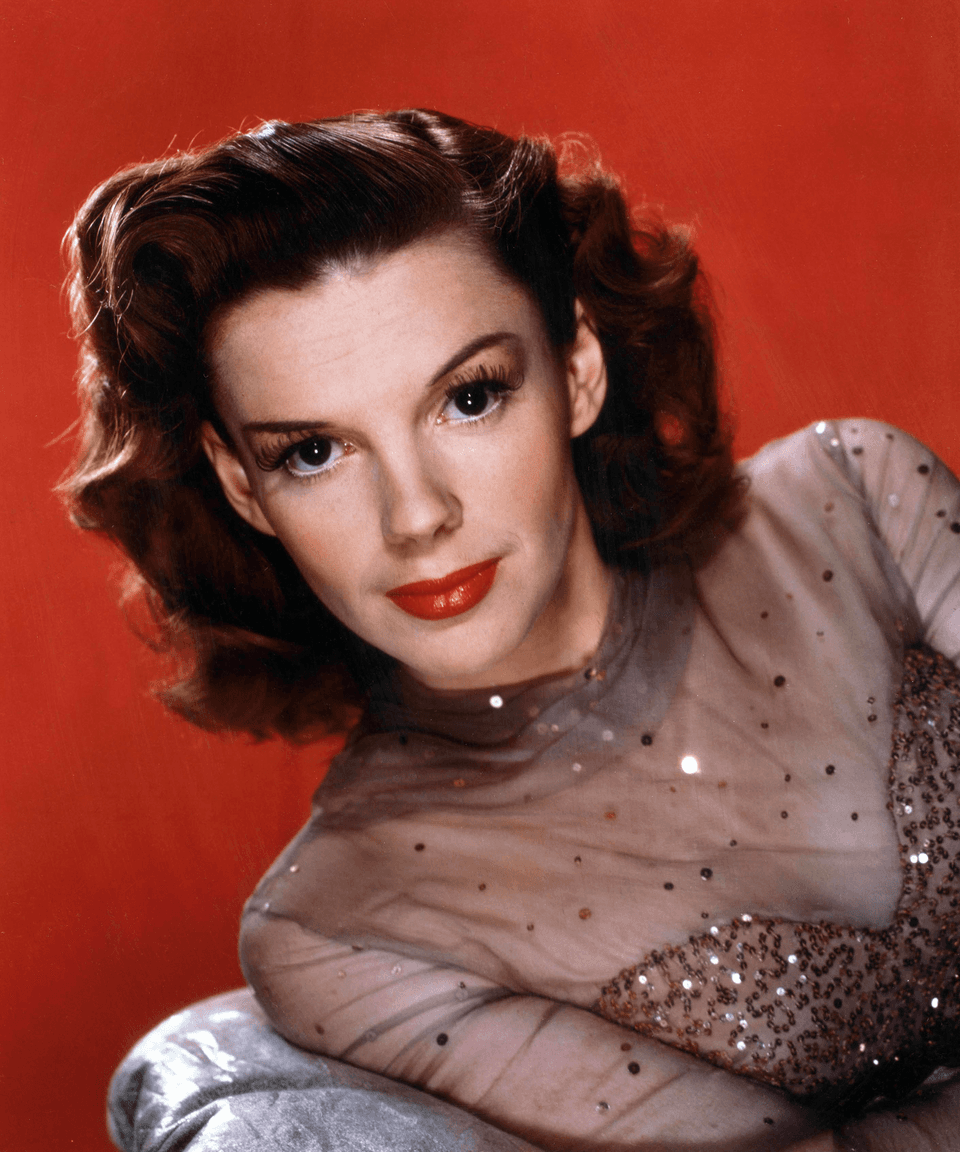
United States · Arts · Literature
Judy Garland
June 10, 1922 – June 22, 1969
Early Life and Family Background
Judy Garland was born Frances Ethel Gumm on June 10, 1922, in Grand Rapids, Minnesota, the youngest of three daughters born to Frank Avent Gumm and Ethel Marion Milne, a couple who ran a local movie theater that also served as a venue for vaudeville acts. Show business was in her blood from the start: her parents themselves had been vaudeville performers before settling into theater management, and all three Gumm sisters were groomed for the stage from early childhood. Frances made her performing debut at the astonishingly young age of two, singing a rendition of 'Jingle Bells' at her family's theater during a Christmas show in 1924, an early sign of the prodigious talent that would define her life.
The Gumm family relocated to Lancaster, California, in 1926, seeking a more temperate climate and greater opportunities in the burgeoning entertainment industry near Los Angeles. The three Gumm sisters performed together as a vaudeville act known as "The Gumm Sisters," touring various West Coast venues. Ethel Gumm, an ambitious stage mother, pushed her daughters relentlessly, and Frances's talent quickly distinguished her from her siblings. By the early 1930s, the act had been renamed "The Garland Sisters," and shortly thereafter Frances adopted the stage name Judy Garland, inspired partly by a popular song, "Judy," and the surname of a family friend, drama critic Robert Garland.
Entry into Hollywood and MGM Contract
In 1935, at the age of thirteen, Judy Garland signed a contract with Metro-Goldwyn-Mayer (MGM) without a screen test, an unusual move that reflected the studio's confidence in her vocal talent. Garland's early years at MGM were marked by insecurity about her appearance—studio executives reportedly considered her less conventionally glamorous than other child stars like Shirley Temple—and she was subjected to a grueling regimen of diet control, amphetamines to maintain energy and suppress appetite, and barbiturates to help her sleep after long working days. This early exposure to studio-mandated drug use would have devastating long-term consequences for her health and personal life.
Garland's breakthrough came through a series of films pairing her with fellow young star Mickey Rooney, including the popular "Andy Hardy" series and several original musicals such as Babes in Arms (1939). However, it was her role as Dorothy Gale in The Wizard of Oz (1939) that transformed her into an international sensation. Her performance of "Over the Rainbow" became one of the most iconic musical moments in film history and would remain closely associated with her identity for the rest of her career and beyond. For her combined work in 1939, Garland received a special Academy Juvenile Award at the 12th Academy Awards ceremony on February 29, 1940.
Stardom Through the 1940s
Throughout the 1940s, Garland starred in a string of successful MGM musicals, including Meet Me in St. Louis (1944), in which she introduced the classic songs "The Trolley Song" and "Have Yourself a Merry Little Christmas," and The Harvey Girls (1946), among others. She also starred opposite Gene Kelly in For Me and My Gal (1942), marking the beginning of a valuable creative partnership. Despite her professional success, Garland's personal life became increasingly turbulent during this period, marked by a difficult first marriage to composer David Rose (1941–1945), ongoing substance dependency stemming from her studio-imposed regimen, and mounting anxiety and depression.
In 1945, Garland married director Vincente Minnelli, with whom she had her first child, Liza Minnelli, born in 1946 and destined to become a major entertainer in her own right. Garland's continued struggles with substance abuse and mental health, however, led to increasing tension with MGM. She was suspended multiple times for missed filming days and was ultimately dismissed from the studio in 1950 after conflicts during the production of Annie Get Your Gun, ending a fifteen-year relationship with the studio that had made her a star.
Reinvention as a Concert Performer
Following her departure from MGM, Garland reinvented herself as a live concert performer, drawing on the vaudeville roots of her childhood. On April 9, 1952, she opened a historic engagement at New York's Palace Theatre, delivering an electrifying evening of song and performance that ran for a then-unprecedented nineteen weeks. The engagement was a triumphant success and later earned her a Special Tony Award for her contribution to the revival of vaudeville as an art form. That same year, she married her third husband, producer Sidney Luft, with whom she had two children, Lorna and Joey Luft.
In 1954, Garland returned to film in a major way, starring in A Star Is Born, a musical drama produced by Luft that many critics consider the finest performance of her career. Her portrayal of aspiring performer Esther Blodgett earned her a Golden Globe Award for Best Actress in a Motion Picture – Musical or Comedy, presented on March 30, 1955, and an Academy Award nomination for Best Actress, a loss to Grace Kelly that remains one of the most discussed upsets in Oscar history.
Career Resurgence and the Carnegie Hall Triumph
The late 1950s and early 1960s marked another period of professional resurgence for Garland. She continued touring as a concert performer to great acclaim and returned to dramatic film work with a supporting role in Judgment at Nuremberg (1961), which earned her an Academy Award nomination for Best Supporting Actress and a Golden Globe nomination in the same category in 1962.
The pinnacle of this era came with Garland's legendary concert at Carnegie Hall in New York City on April 23, 1961. The live recording of the performance, released as the double album Judy at Carnegie Hall, was a critical and commercial sensation, spending 95 weeks on the Billboard charts. At the 4th Annual Grammy Awards on March 15, 1962, the album won Album of the Year, making Garland the first woman in history to receive this top Grammy honor, and she additionally won Best Solo Vocal Performance, Female at the same ceremony.
Just ten days earlier, on March 5, 1962, at the 19th Golden Globe Awards, Garland had been presented with the Cecil B. DeMille Award for lifetime achievement in motion pictures, becoming the first woman ever to receive this prestigious honor. Together, these accolades represented the crowning recognition of her extraordinary career as both a film star and recording artist.
Television Work and Later Career
Building on this resurgence, Garland launched her own television variety program, The Judy Garland Show, which aired on CBS from 1963 to 1964. Although the show was ultimately short-lived and struggled in the ratings against stiff competition, it showcased her extraordinary versatility as a performer and has since been reappraised by critics and fans as a showcase for some of the finest television musical performances of the era. Garland continued to perform in concerts around the world throughout the mid-to-late 1960s, though her health, finances, and personal life remained precarious, compounded by ongoing substance dependency and a series of failed marriages, including to Mark Herron (1965–1969) and, in her final months, to Mickey Deans.
Personal Life
Garland was married five times: to composer David Rose, director Vincente Minnelli, producer Sidney Luft, actor Mark Herron, and nightclub manager Mickey Deans. She had three children: Liza Minnelli (with Minnelli), and Lorna and Joey Luft (with Sidney Luft). Liza Minnelli would go on to become a celebrated performer in her own right, continuing the family's legacy in entertainment. Garland's life was marked by chronic financial difficulties, largely stemming from mismanagement of her earnings and the lingering effects of her substance dependency, issues that were often exploited by an unsympathetic press throughout her later career.
Death and Legacy
Judy Garland died on June 22, 1969, in London, England, at the age of 47, from an accidental overdose of barbiturates. Her death shocked the entertainment world and prompted an outpouring of public mourning; an estimated 20,000 mourners lined the streets of New York City to view her body as it lay in state. She was originally interred at Ferncliff Cemetery in New York before her remains were relocated to Hollywood Forever Cemetery in Los Angeles in 2017.
In 1997, the Recording Academy posthumously honored Garland with a Grammy Lifetime Achievement Award, presented on February 26, 1997, recognizing her enduring influence on recorded music. Several of her recordings, including "Over the Rainbow," Judy at Carnegie Hall, the soundtracks to Meet Me in St. Louis and The Wizard of Oz, and her duet "For Me and My Gal" with Gene Kelly, have since been inducted into the Grammy Hall of Fame.
Judy Garland's legacy endures as one of the towering figures of twentieth-century American entertainment. Her performance as Dorothy in The Wizard of Oz remains one of the most beloved in cinema history, and her rendition of "Over the Rainbow" has become a universal symbol of hope and longing. She is also widely celebrated as a gay icon, a status cemented by her enduring popularity within the LGBTQ+ community and the symbolic proximity of her death to the Stonewall riots of June 1969. Garland's combination of extraordinary vocal talent, dramatic depth, and personal vulnerability continues to resonate with audiences and influence generations of performers who followed her.
Dated achievements
9 indexed.
- Jun101922Science
Birth of Judy Garland
Judy Garland (born Frances Ethel Gumm) was born in Grand Rapids, Minnesota, later becoming one of the most celebrated American entertainers of the 20th century.
View details Judy Garland - Wikipedia - Feb291940Science
Academy Juvenile Award at the 12th Academy Awards
Garland received a special Academy Juvenile Award on February 29, 1940, for her performances in 1939, including The Wizard of Oz.