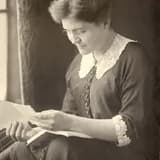
Receives Master of Social Work from Columbia University, deepening her Progressive Era reform training.
On May 18, 1910, Josephine Roche received her Master of Social Work (MSW) from Columbia University, as part of the university’s 1910 commencement for graduate and professional schools.[5][3] The degree capped two years of intensive study in social science and social work practice at one of the nation’s pioneering programs.
While at Columbia, Roche conducted investigations for the Russell Sage Foundation, examining child labor, sweatshop work, and the conditions faced by immigrant families in urban industries.[3] This research brought her directly into factories, tenements, and community institutions, sharpening her understanding of how law, business, and public policy interacted to shape everyday life for workers.
Receiving the MSW in 1910 was historically significant both personally and structurally. Few women of her generation held advanced professional degrees, and social work itself was just emerging as a recognized profession. Roche’s Columbia training provided her with methodological rigor—surveys, casework, and policy analysis—that she later applied to coal‑field labor relations, public‑health administration, and the design of social insurance programs.[13][15]
Armed with this graduate credential, Roche chose not to remain in the East but to bring the insights of Progressive reform back to Colorado. Within two years she would become Denver’s first policewoman, and later she would leverage her social‑work expertise in the U.S. Children’s Bureau and the Treasury Department. Her 1910 Columbia commencement thus represents the moment when an unusually educated woman reformer was poised to translate academic analysis into wide‑ranging institutional change.