← All women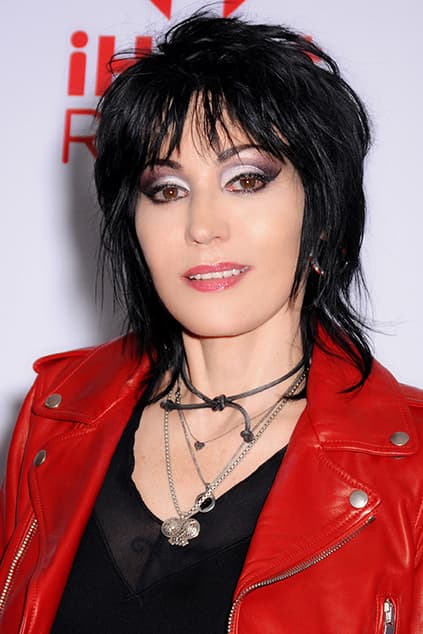
American · Arts
Joan Jett
September 22, 1958 – present
Early Life and Background
Joan Jett was born Joan Marie Larkin on 22 September 1958 in the Philadelphia area (often cited as Wynnewood or Philadelphia), Pennsylvania, United States. Multiple biographical sources agree on this date and region, though they differ slightly in naming the specific locality.[1][2][3][4][6][10][12][15]
She was raised in a working‑class family; her father, often identified as James Larkin, worked in the insurance field, and her mother, Dorothy, was a homemaker.[12][15] When Jett was about 12, the family moved from Pennsylvania to Southern California, settling in the Los Angeles area, including West Covina.[9][13][14] The move placed her in one of the epicenters of 1970s rock culture, exposing her to a vibrant music scene.
Jett received her first electric guitar at age 13 and quickly became determined to play rock music.[4][14] She initially took formal lessons but quit around age 14 because the instructor insisted on teaching folk songs rather than the hard‑rock riffs she wanted to learn.[13] Instead, she taught herself by playing along with records, a self‑directed learning process that shaped her raw, three‑chord style.
During her teens, Jett began frequenting West Hollywood clubs such as Rodney Bingenheimer’s English Disco, where glam rock and proto‑punk flourished.[1][11] Immersion in this subculture—dominated by acts like David Bowie and Suzi Quatro—reinforced her sense that women could front rock bands with electric guitars and leather‑clad swagger. Quatro in particular became a crucial role model, demonstrating that a woman could occupy the same sonic and visual space as male rock stars.[4]
Career Beginnings: The Runaways
In 1975, at around age 16, Jett helped form the pioneering all‑female rock band The Runaways in Los Angeles.[1][4][10][12] She initially envisioned an all‑girl group and connected with drummer Sandy West, with whom she began rehearsing. Producer Kim Fowley soon became involved, helping assemble the classic lineup that included Jett (rhythm guitar and vocals), West (drums), Cherie Currie (lead vocals), Lita Ford (lead guitar), and Jackie Fox (bass).[1][4]
The Runaways signed with Mercury Records and released their self‑titled debut album in 1976, followed by Queens of Noise (1977) and Waitin’ for the Night (1977).[1][10] Jett’s songs such as "Cherry Bomb" captured adolescent rebellion from a female perspective, while the band’s image—teen girls playing loud, distorted guitars—challenged deep‑seated gender norms in rock.[10][12] Though they faced skepticism, moral panic, and exploitation, The Runaways achieved substantial success, especially in Japan, where they toured to fervent audiences.[1]
Within the band, Jett moved increasingly into leadership and vocal duties, particularly after Currie’s departure. However, conflicts with management, industry pressures, and internal tensions led to the band’s dissolution by the late 1970s.[1][4][10] Despite their relatively short existence, The Runaways became an influential reference point for later women‑fronted rock and punk acts, and Jett’s experience there provided both musical training and a harsh education in the realities of the music business.
Solo Career and the Birth of Blackheart Records
After The Runaways disbanded, Jett sought to launch a solo career. In 1979 she traveled to England, where she recorded demos and what became her debut solo album with producer Kenny Laguna and a group of session musicians.[1][4] These sessions yielded an album originally titled Joan Jett, blending original material with covers that reflected her deep affinity for classic rock and early punk.
Back in the United States, Jett and Laguna attempted to secure a release through major record labels. They were turned down repeatedly, with executives doubting the commercial appeal of a hard‑rock album led by a woman with a tough, punk‑inspired image.[4][11] In response, they pressed the album independently and began selling it directly to fans, at concerts and through small distribution channels.[1][11]
On 17 March 1980, this independent debut album was released in the United States under the title Joan Jett, later reissued as Bad Reputation.[1] The record included the now‑iconic track "Bad Reputation," whose defiant lyrics and driving guitar became a statement of resistance against industry and social judgment. The success of the independently released album laid the groundwork for Jett and Laguna to create their own label, Blackheart Records, one of the earliest artist‑run rock labels in the U.S. (founded in 1980).[1][4][11]
Blackheart Records allowed Jett to control her recordings, image, and business decisions to an extent rare for women artists at the time. Voice of America later described her as the first female artist to own her own record label, underscoring the pioneering nature of this move in a male‑dominated industry.[6]
Joan Jett and the Blackhearts: Mainstream Breakthrough
Seeking a permanent backing band, Jett placed a classified ad in newspapers and eventually formed Joan Jett and the Blackhearts, with musicians including Gary Ryan, Lee Crystal, and later Ricky Byrd.[1][4] The group began extensive touring, gradually building a fan base.
Jett’s breakthrough came with her cover of the Arrows’ 1975 song "I Love Rock ’n Roll". On 1 August 1981, Joan Jett and the Blackhearts released their version of the song as a single.[1] Delivered with heavy guitar, pounding drums, and Jett’s gritty vocals, the recording distanced itself from the original’s pop flavor and remade the song as a hard‑rock anthem.
On 20 March 1982, the single reached No. 1 on the Billboard Hot 100, beginning a seven‑week run at the top of the chart.[1][2][6][10] It eventually became one of the most recognizable rock songs of the early 1980s, earning heavy rotation on radio and MTV. The success was particularly notable because the mainstream rock charts were dominated by male acts; Jett’s number‑one hit demonstrated that a woman‑fronted hard‑rock band could dominate airwaves and sales.
Following the single’s success, the album I Love Rock ’n Roll was released on 1 May 1982.[1] It combined covers and originals, including tracks like "(I’m Gonna) Run Away" and "Love Is Pain," and achieved multi‑platinum status.[2] The album’s cover imagery—Jett in black leather, guitar in hand—became iconic, offering a visual template for women assuming authoritative roles in rock performance.
Over the 1980s, Joan Jett and the Blackhearts released further albums such as Album (1983) and Glorious Results of a Misspent Youth (1984), spawning hits like "Crimson and Clover" and "I Hate Myself for Loving You."[1][4][10] Jett’s sound, rooted in three‑chord rock and punk energy, remained consistent even as trends shifted around her, reinforcing her reputation as a stalwart of straightforward, riff‑driven rock and roll.
Producing and Supporting Other Artists
Beyond her own recordings, Jett leveraged Blackheart Records and her experience to support other artists, especially women in punk and alternative rock. Biography.com notes that she produced albums for Bikini Kill and L7, both central to the early 1990s Riot Grrrl and feminist punk movements.[4] Her role as producer helped bring these acts greater visibility and validated their aggressive, politically charged sound.
Jett also collaborated with various musicians and appeared on tribute albums and compilations, maintaining a presence across diverse corners of rock culture. Her stewardship of Blackheart Records enabled the label to sign and release other artists who might otherwise have struggled to find support within mainstream industry structures.
Acting and Media Appearances
Jett has occasionally worked as an actress. She starred opposite Michael J. Fox in the 1987 film Light of Day, in which she played a working‑class musician; the title song, written by Bruce Springsteen and performed by Jett, became another notable track in her catalog.[1][4][10] She also appeared in various film and television roles and took part in Broadway theater, notably portraying Columbia in a production of The Rocky Horror Show.[5]
Her visibility in film and television reinforced her rock persona while expanding her audience beyond music alone. Media profiles frequently referred to her by sobriquets such as "Queen of Rock ’n’ Roll," "Godmother of Punk," and "Original Riot Grrrl," signaling her perceived position within rock’s symbolic hierarchy.[5][14][15]
Awards, Honors, and Recognition
Jett’s achievements have been recognized by numerous institutions. In addition to chart success and gold and platinum certifications for several albums,[2][12] she has received formal honors reflecting her impact on music history.
On 1 November 2012, she was inducted into the Philadelphia Music Alliance Walk of Fame, which honors musicians with strong ties to the city.[9] The Alliance’s biography notes her birth in Philadelphia and her subsequent move to Los Angeles, acknowledging her as one of the region’s most influential musical exports.
In 2013, Joan Jett and the Blackhearts were listed among nominees for induction into the Rock and Roll Hall of Fame, signaling formal recognition of her influence.[13] Two years later, on 18 April 2015, Joan Jett and the Blackhearts were officially inducted into the Hall of Fame.[1][2][8] The honor placed her within an elite group of artists credited with shaping the development of rock and roll and was particularly meaningful given the Hall’s historically male‑skewed membership.
Various media outlets and organizations have consistently ranked "I Love Rock ’n Roll" among the greatest rock songs. For example, Billboard has listed it within its "best songs of all time" rankings, and international outlets have highlighted its long chart run and enduring popularity.[6][10]
Personal Life
Public sources provide limited detail about Jett’s personal relationships, reflecting her long‑standing preference for privacy. She has never married and does not have children, according to widely circulated biographical summaries, though comprehensive, primary‑source confirmation remains sparse.[4][12] Jett has often declined to define her sexuality in interviews, a stance that many LGBTQ+ fans interpret as resonant with queer identity and resistance to labeling.
Jett is noted for her animal rights activism, including work with organizations such as PETA, and for her advocacy on feminist issues.[12] Her support for causes and younger bands aligns with her broader image as a figure of resistance and solidarity within rock culture.
Legacy and Historical Impact
Joan Jett’s legacy in women’s and music history rests on several intertwined achievements:
- She co‑founded The Runaways, one of the first widely known all‑female hard‑rock bands, helping to normalize the sight of women playing loud electric guitar on major stages.[1][4][10]
- Through her solo work and Joan Jett and the Blackhearts, she demonstrated that a woman‑fronted hard‑rock band could reach the top of mainstream charts, as with the seven‑week No. 1 run of "I Love Rock ’n Roll" in 1982.[1][2][6][10]
- By creating and owning Blackheart Records, she established a model of female control over recording and distribution. Voice of America explicitly cited her as the first female artist to own her own record label, recognizing this as a historic departure from industry norms.[6]
- Her production work for Riot Grrrl bands like Bikini Kill and L7 connected her legacy to later feminist movements in punk and alternative rock, effectively bridging generations of women’s resistance in music.[4]
Jett’s aesthetic—black leather, heavy guitar, and a tough, androgynous presentation—has influenced countless performers and contributed to a broader reimagining of femininity in rock and punk. Scholars and journalists frequently label her the "Godmother of Punk" and "Original Riot Grrrl," recognizing her as a precursor to the explicitly feminist punk explosion of the 1990s.[5][12][14][15]
Her continued touring and recording into the 2000s and 2010s demonstrate the durability of her appeal. She appears regularly at major festivals and events, often sharing stages with newer generations of artists who cite her as an inspiration.[1][4]
Later Life and Ongoing Career
In the decades following her 1980s peak, Jett has remained an active performer, songwriter, and producer. She has released additional albums with the Blackhearts, participated in collaborative projects, and maintained Blackheart Records as a functioning label.[1][4]
Her 2015 induction into the Rock and Roll Hall of Fame marked a high point of institutional recognition, but it did not signify retirement. Jett continues to tour extensively, bringing her foundational hits and newer material to audiences across the United States and abroad.[1][8] She has also appeared in documentaries and biopics related to The Runaways and the broader history of women in rock, further cementing her role in the historical record.
As of the mid‑2020s, Joan Jett remains a living figure whose work is actively performed, recorded, and reinterpreted. Her career spans more than five decades, from teenage rebellion in 1970s Los Angeles to canonical status as a Rock and Roll Hall of Fame inductee. For women’s‑history scholarship, she exemplifies how persistence, creative control, and refusal to conform to gendered expectations can reshape both an artistic field and its institutional memory.
Dated achievements
8 indexed.
- Sep221958Science
Birth of Joan Jett
Joan Marie Larkin, later known as Joan Jett, was born in Wynnewood, near Philadelphia, Pennsylvania.
View details Joan Jett Biography - Mar171980Science
Debut solo album released independently
Jett released her debut solo album (later reissued as "Bad Reputation") independently, asserting artistic and business control.