← All women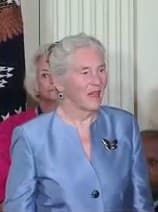
American · Science · Medicine
Janet Rowley
April 5, 1925 – December 17, 2013
Early Life and Background
Janet Davison Rowley was born on April 5, 1925, in New York City, the only child of Hurford and Ethel Davison, both schoolteachers. Her parents’ commitment to education and intellectual curiosity strongly shaped her upbringing. The family later moved to Chicago, where she spent most of her life.[2][3][13]
Rowley was an academically precocious child. During the Great Depression and World War II era, she advanced quickly through school, graduating from high school early and entering the University of Chicago at age 15.[2][3] The University of Chicago’s flexible curriculum and emphasis on rigorous intellectual training provided a stimulating environment that would influence her entire career.
Initially interested in social work and teaching, Rowley gravitated toward science and medicine as she encountered mentors who encouraged her aptitude for biology and chemistry.[3][9] She enrolled in the university’s accelerated medical program created to address physician shortages during World War II and earned her M.D. in 1948.[2][3] At a time when very few women were admitted to medical schools, her presence in the program reflected both her exceptional abilities and the support of her parents and institution.
Education and Formation as a Physician
Rowley completed her medical training at the University of Chicago, where she developed an interest in pediatrics and genetic disorders.[2][3] After receiving her medical degree, she undertook clinical training and early practice in pediatrics, working with children affected by developmental and congenital conditions.[3][9]
Her initial professional path combined clinical work with part-time research and teaching. In the 1950s and 1960s, she served in various roles in Chicago-area clinics and hospitals, often balancing part-time appointments with family responsibilities. Exposure to children with inherited conditions gradually deepened her fascination with human genetics, foreshadowing her later turn toward chromosome analysis.[3][9][12]
In 1962, Rowley spent a pivotal year at Oxford University in England, where she trained in newly developed techniques of human chromosome analysis.[9] These included improved chromosome banding methods and fluorescence staining that allowed individual chromosomes to be distinguished and rearrangements to be visualized. This sabbatical was a turning point: she returned to Chicago equipped with cutting-edge cytogenetic techniques that she would apply to leukemia and other cancers.
Career Beginnings and Development
Back in Chicago after Oxford, Rowley joined the University of Chicago cytogenetics program on a part-time basis, often working from home while raising four sons.[9][12] She photographed chromosomes from patient samples and painstakingly arranged them in karyotypes—paired sets ordered by size and banding pattern. This labor-intensive approach, conducted in an era before digital imaging, demanded extraordinary attention to detail.
During the late 1960s and early 1970s, she focused on chromosomes from patients with various leukemias. While many researchers considered chromosomal abnormalities in cancer cells to be random or merely a consequence of malignancy, Rowley looked for patterns. In these karyotypes she began to see recurring, specific changes: pieces of chromosomes that appeared to have been exchanged rather than simply deleted.[2][7][10]
In 1972, Rowley identified what became known as the t(8;21) translocation in acute myelogenous leukemia (AML), the first consistent chromosomal translocation discovered in any human cancer.[7][11][14] That same year, she recognized recurrent translocations involving what had long been known as the Philadelphia chromosome in chronic myelogenous leukemia (CML), demonstrating that this abnormal chromosome 22 resulted from a translocation between chromosomes 9 and 22.[2][3][7][11]
Although these discoveries were made in 1972, their implications unfolded over subsequent years as Rowley and other researchers characterized additional recurring translocations and linked them to distinct leukemia subtypes. Her work showed that specific chromosomal rearrangements were not incidental but defined particular cancers.[7][10][11]
Major Scientific Discoveries
Rowley’s major contributions lie in establishing that recurring chromosomal translocations cause leukemia and other cancers, thereby demonstrating that cancer is fundamentally a genetic disease.[2][10][16] Working through the 1970s and beyond, she and her colleagues identified numerous non-random translocations in hematologic malignancies and correlated them with clinical features and outcomes.
Her first major breakthrough, the recognition of the t(8;21) translocation in AML, proved that a specific chromosomal rearrangement could reliably be found in a subset of patients and was associated with a distinct disease phenotype.[7][11][14] This finding overturned the prevailing view that chromosomal changes in cancer cells were chaotic and noninformative.
Rowley’s subsequent work on CML and the Philadelphia chromosome was equally transformative. She showed that the Philadelphia chromosome—a shortened chromosome 22 previously thought to result from a deletion—was actually produced by a translocation between chromosomes 9 and 22.[2][3][7][11] This insight provided the basis for later molecular studies that identified the BCR–ABL fusion gene, a constitutively active tyrosine kinase that drives CML. Decades after her cytogenetic discovery, this fusion became the target for the drug imatinib (Gleevec), one of the first highly effective, mechanism-based cancer therapies.[10][11][14]
On June 8, 1973, Rowley’s landmark paper, “New consistent chromosomal abnormality in chronic myelogenous leukemia identified by quinacrine fluorescence and Giemsa staining,” was published in Nature, formally documenting the CML translocation and strengthening her argument that chromosomal abnormalities could be cancer-causing lesions rather than mere epiphenomena.[10][12]
Throughout the 1970s and 1980s, Rowley identified additional recurring translocations in leukemias and lymphomas, demonstrating that different malignancies have distinct chromosomal signatures.[2][7][11] These discoveries contributed to modern classification systems for hematologic cancers, which now routinely incorporate cytogenetic and molecular findings to guide diagnosis and prognosis.
Her work also established the principle that identifying the specific genetic lesion in a cancer can inform targeted therapy. By defining the chromosomal basis of CML and several leukemias, she laid the conceptual groundwork for the development of drugs aimed at the proteins encoded by fusion genes created through translocation.[10][11]
Academic Roles and Institutional Leadership
Rowley spent her entire academic career at the University of Chicago. She eventually became the Blum-Riese Distinguished Service Professor of Medicine, Molecular Genetics & Cell Biology, and Human Genetics, reflecting her cross-disciplinary influence.[3][12]
Initially working part-time while raising four children, she transitioned to full-time research and faculty duties by the mid-1970s, once her sons were older.[12] She played a central role in building the university’s cytogenetics program, mentoring numerous trainees and collaborating broadly with clinicians and laboratory scientists.[12][13]
Rowley also served on national committees and advisory bodies. She was a member of the President’s Council on Bioethics, contributing to discussions on genetics, stem-cell research, and biomedical ethics.[12] Her perspective often emphasized the importance of scientific evidence and the potential of genetic and stem-cell technologies to advance medicine.
Awards, Honors, and Recognition
Rowley’s pioneering work earned her extensive honors. She received major international prizes, including the Canada Gairdner International Award (1996) and the Japan Prize (2012), for her contributions to cancer genetics and the understanding of chromosomal translocations.[5][8]
On September 25, 1998, she was awarded the Albert Lasker Clinical Medical Research Award, recognizing her discovery of recurring chromosomal translocations in human cancers and their role in oncogenesis, which enabled molecular diagnosis of cancer.[2][5] The Lasker Foundation highlighted how her work bridged cytogenetics and clinical oncology.
On March 14, 1999, Rowley was presented with the National Medal of Science, the highest scientific honor in the United States, for her fundamental contributions to cancer genetics.[1][2] This award emphasized her role in demonstrating that cancer is a genetic disease driven by specific chromosomal rearrangements.
In 2009, she was inducted into the National Women’s Hall of Fame, which cited her pioneering work in cancer genetics and her discovery of chromosomal translocations in leukemia.[5][9] That same year, on August 12, 2009, President Barack Obama awarded her the Presidential Medal of Freedom, the nation’s highest civilian honor, for her discovery of recurring chromosomal abnormalities in leukemias and lymphomas and the revolutionary impact of this work on understanding and treating cancer.[7][11]
On April 16, 2013, Albany Medical Center announced that Rowley was one of three recipients of the Albany Medical Center Prize in Medicine and Biomedical Research, honoring her for discovering the first consistent chromosome translocation in any human cancer and for establishing the genetic basis of many leukemias.[9] This prize, one of the largest in American medicine, underscored the enduring influence of her early discoveries.
Rowley also received numerous awards from professional societies, including multiple honors from the American Society of Hematology, and was widely described in obituaries and tributes as the “matriarch of modern cancer genetics.”[7][13][17]
Personal Life
Janet Davison met David Rowley, a fellow medical student at the University of Chicago, and the two married during their training.[3][12] The couple had four sons. For many years, Rowley structured her professional life around family responsibilities, working part-time and conducting much of her chromosome analysis at home.
Her career thus exemplifies a distinctive path: instead of following a conventional full-time academic trajectory, she combined domestic responsibilities with painstaking, incremental research. This arrangement meant that her major discoveries emerged from work conducted in constrained circumstances, making her eventual recognition in the form of Lasker, National Medal of Science, and Presidential Medal of Freedom especially notable.[9][11][14]
Colleagues frequently remarked on her modesty, directness, and strong advocacy for women in science. She served as a role model for younger researchers, particularly women balancing family life and scientific careers, and often spoke publicly about the importance of opportunity and persistence.[10][12]
Legacy and Historical Impact
Rowley’s legacy is anchored in her role as a pioneer who proved that cancer is a genetic disease driven by specific chromosomal translocations.[2][10][16] Her discoveries changed the conceptual framework of oncology. Before her work, many scientists believed that chromosomal abnormalities in cancer cells were too chaotic to be meaningful or were simply consequences of malignant transformation. Rowley’s careful documentation of recurring translocations demonstrated that these changes were primary lesions defining tumor types.
Clinically, her findings enabled more precise diagnosis and prognostication in leukemias and lymphomas. Cytogenetic analysis became standard in the evaluation of hematologic malignancies, with specific translocations associated with distinct risk categories and informing treatment decisions.[7][11] As molecular techniques advanced, the genes involved in these translocations were identified, leading to a wave of targeted therapies—including the development of tyrosine kinase inhibitors directed at the BCR–ABL fusion protein in CML.
Her work also influenced cancer classification systems, contributing to the shift from morphology-based to genetically informed taxonomies. Organizations such as the World Health Organization incorporated chromosomal and molecular findings into leukemia and lymphoma classifications, reflecting Rowley’s impact on how diseases are defined.[7][11]
Beyond scientific and clinical contributions, Rowley’s career has been widely cited as a powerful example of a woman succeeding at the highest levels of academic medicine despite structural barriers. She conducted her early research while working part-time and raising four children, in an era with limited institutional support for such arrangements. Her success helped expand notions of who could become a leading scientist and how scientific careers could be structured.[9][10][12]
Institutions including the University of Chicago, the Lasker Foundation, and the National Women’s Hall of Fame have highlighted her role as a trailblazer in cancer genetics and a mentor to generations of researchers.[3][5][9] Archival collections, such as the Janet D. Rowley Papers at the University of Chicago Library, preserve her correspondence, research records, and teaching materials for future scholars.[13]
Later Life and Death
Rowley remained an active faculty member and researcher at the University of Chicago into her late 80s. She continued to publish, participate in scientific meetings, and advise younger colleagues, while also engaging in public discourse on topics such as stem-cell research and bioethics.[10][12]
In her final years, she received several lifetime achievement recognitions from cancer research organizations, reflecting the enduring relevance of her decades-old discoveries to contemporary oncology.[7][11] Even as genomic technologies and high-throughput sequencing transformed cancer research, her fundamental insight—that specific chromosomal rearrangements define and drive particular malignancies—remained central.
On December 17, 2013, Rowley died at her home in Chicago from complications of ovarian cancer, at age 88.[2][3][7][17] Obituaries from the American Society of Human Genetics, the University of Chicago, and major news outlets emphasized both her scientific achievements and her personal qualities: intellectual rigor, perseverance, and a deep commitment to patients and students.
Her death marked the close of a remarkable career, but her influence continues in every cytogenetic analysis performed for leukemia, every targeted therapy developed against fusion oncoproteins, and every woman scientist who cites her story as evidence that pathbreaking science can come from unconventional careers.
Dated achievements
8 indexed.
- Apr051925Science
Birth of Janet Davison Rowley
Janet Davison Rowley was born in New York City, later becoming the geneticist who proved chromosomal translocations cause leukemia.
View details Janet Rowley - Wikipedia - Jun081973Science
Landmark Nature Paper on the Philadelphia Chromosome Translocation
Rowley published her seminal Nature paper identifying the translocation forming the Philadelphia chromosome in chronic myelogenous leukemia.