← All women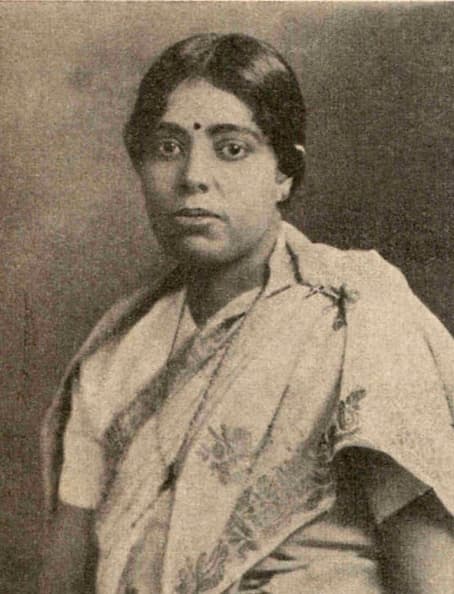
Indian · Science
Janaki Ammal
November 4, 1897 – February 7, 1984
Early Life and Background
Edavaleth Kakkat Janaki Ammal was born on November 4, 1897, in Tellicherry, Kerala, India. She hailed from a family of distinguished intellectuals and was encouraged to pursue education from an early age. Janaki's father, a sub-judge, instilled in her a love for natural sciences. She obtained her Bachelor’s degree from Queen Mary’s College in Chennai and later pursued a B.Sc. in botany from the Presidency College. Her passion for biology took her to the University of Michigan, Ann Arbor, where she earned a D.Sc. in 1931, one of the earliest Indian women to achieve such a feat in the field of botany.
Career Beginnings and Development
Janaki commenced her career at the Sugarcane Breeding Station in Coimbatore in the early 1930s. Her work there focused on the cytogenetics of sugarcane and project enhancement for sugarcane varieties, which significantly impacted agrarian sciences in India. Her overseas education was instrumental in advancing her research techniques.
Major Works and Discoveries
In the mid-1940s, Janaki Ammal worked at the John Innes Horticultural Institute in London, wherein she conducted pioneering research on polyploidy in plants. Her scientific vigor and research findings were recognized internationally, and her contributions notably included the development of sweeter varieties of sugarcane. She firmly believed in the necessity of integrating indigenous plants such as wild rice into the mainstream for biodiversity and food security.
Awards, Honors, and Recognition
Throughout her career, Janaki Ammal received numerous accolades for her contributions to botany, including the Padma Shri in 1977. Her advocacy for native plant diversity and ecosystem evaluation was backed by her prolific research and academic contributions.
Legacy and Historical Impact
Ammal’s work on the cytogenetics of sugarcane and her advocacy for native plant research created a new path for agro-genetic studies in India and globally. Her pioneering role as a woman in science during her time inspired a generation of Indian women scientists. Her legacy is preserved through the establishment of the Janaki Ammal Herbarium in India, showcasing her dedication to botany and her contributions to environmental sustainability.
Later Life and Death
In her later years, Ammal served as a director general of the Botanical Survey of India, where she continued her advocacy and engaged in in-depth research on ethnic plants. She passed away on February 7, 1984, leaving behind a rich legacy that blazed a trail for women in the STEM fields.
Dated achievements
2 indexed.
- Nov041897Science
Birth of Janaki Ammal
Janaki Ammal is born on November 4, 1897, in Tellicherry, Kerala, India.
View details Wikipedia - Feb071984Science
Death of Janaki Ammal
Janaki Ammal passed away on February 7, 1984, leaving a legacy in botanical research.
View details