← All women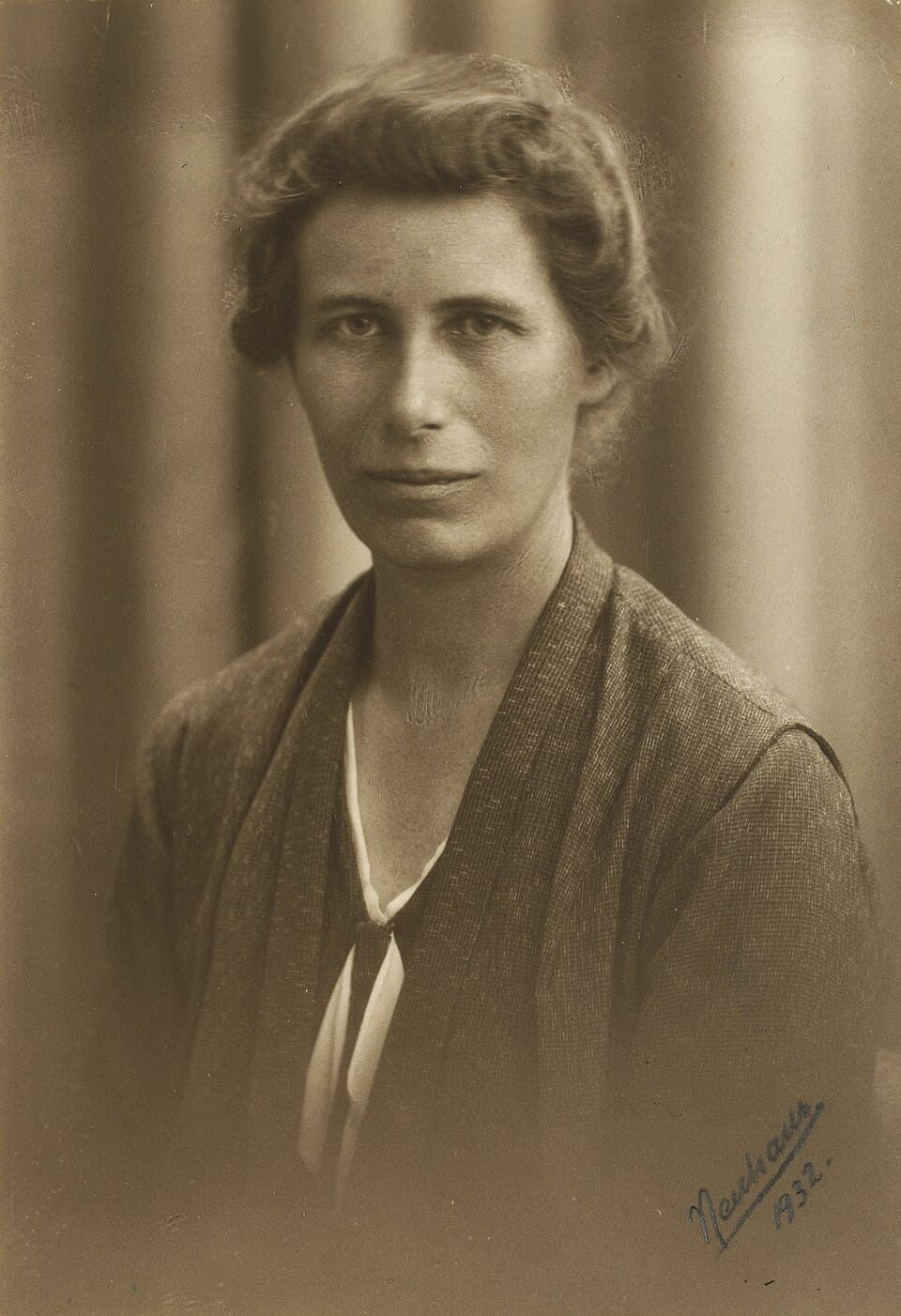
Danish · Science
Inge Lehmann
May 13, 1888 – February 21, 1993
Early Life and Family Background
Inge Lehmann was born on 13 May 1888 in the Østerbro district of Copenhagen, Denmark, into a family that combined academic rigor with liberal social values. Her father, Alfred Georg Ludvig Lehmann, was a professor of psychology and an experimental scientist, and her mother, Ida Sophie (Torsleff) Lehmann, came from a family of booksellers.[3][11][14] Growing up in this environment, Inge and her sister Harriet were surrounded by books, discussion, and an expectation that intellectual curiosity was normal for girls as well as boys.
A crucial formative influence was the progressive school she attended in Copenhagen, often described as a coeducational institution where boys and girls studied the same curriculum, including advanced mathematics and science.[2][8][11] At a time when most girls in Europe were steered toward limited academic training, this schooling fostered Lehmann’s confidence in her mathematical ability and gave her early exposure to rigorous quantitative thinking. Later in life, she recalled her gratitude for this unorthodox environment while also noting that broader society remained far less supportive of women’s ambitions.
University Education and Interrupted Studies
After completing secondary school, Lehmann enrolled at the University of Copenhagen, where she studied mathematics and related subjects.[2][11] Seeking stronger training and international experience, she spent periods at the University of Cambridge, notably at Newnham College, one of the few colleges then open to women.[2][11] Cambridge offered a more competitive and demanding environment than she had previously encountered, and the intensity, combined with health and financial pressures, led her to interrupt her studies and return to Denmark for a time.[11]
These disruptions meant that Lehmann’s formal academic path was slower than that of many male contemporaries. Nonetheless, she persevered and completed a master’s degree in mathematics at the University of Copenhagen in 1920, after the First World War.[2][11] Her mathematical grounding later proved essential to her work in seismology, where careful interpretation of numbers and waveforms is more decisive than direct observation. During the 1920s she also studied at the University of Hamburg and took up geodesy, the science of measuring Earth’s shape and gravitational field.[11]
Entry into Geodesy and Seismology
In the early 1910s, Lehmann worked as an actuary in the insurance sector, applying her mathematical skills but without a clear path toward research.[2][11] Her return to academia via geodesy marked a turning point. By 1928 she had earned a Master of Science degree in geodesy and joined the Royal Danish Geodetic Institute, where Denmark’s small but active geophysical community was beginning to develop seismic observation networks.[11]
That same year, Lehmann was appointed chief of the seismological department of the Danish Geodetic Institute.[2][11] This role placed her in charge of establishing, maintaining, and interpreting records from seismographs in Denmark and Greenland. At the time, seismology was a relatively young discipline; global networks were sparse, and each new major earthquake was a critical source of information about Earth’s interior. Lehmann’s responsibilities included calibrating instruments, compiling arrival times of seismic waves, and collaborating with international colleagues who pooled data from around the world.
Her meticulousness and preference for independent work suited the demands of the job. She became known for her careful analysis of seismic phases—different types of waves that travel through Earth’s interior and are recorded at seismic stations as small wiggles on long paper records. These skills put her in a position to make major contributions when particularly revealing earthquakes occurred.
The 1929 New Zealand Earthquake and the Path to Discovery
A crucial scientific opportunity came with a large earthquake in New Zealand in 1929, whose waves were recorded at seismic stations worldwide, including those under Lehmann’s supervision.[1][6][8] When she examined the seismograms, she noticed unexpected P‑wave arrivals inside the classical “shadow zone” on the far side of Earth from the earthquake. According to the prevalent model—Earth having a single, completely liquid core—no such direct P‑waves should appear in that region.
Lehmann’s curiosity led her to investigate these anomalies over several years. She carefully compared data from multiple earthquakes and stations, checking instrumental errors and alternative explanations. Other seismologists had glimpsed similar hints, but Lehmann’s combination of mathematical precision and skepticism drove her to reinterpret the data rather than dismiss it as noise. In an era lacking digital tools, she hand‑measured and tabulated arrival times, gradually building a case that the wave patterns could not be reconciled with a wholly liquid core.[1][6]
Her analysis of the 1929 earthquake and subsequent events did not immediately produce a new model, but it set the stage for her 1936 breakthrough. It also exemplified her working style: she advanced slowly and cautiously, refusing to publish until she felt her interpretation was robust—an approach that contributed to her reputation as a meticulous but sometimes under‑recognized scientist.
Discovery of Earth’s Inner Core
In 1936, Lehmann published her seminal paper “P′”, in which she proposed that Earth’s core was not a single, homogeneous liquid region but consisted of a solid inner core surrounded by a molten outer core.[1][2][3][7] She demonstrated that certain P‑waves observed in the shadow zone could be explained if they were refracted by a boundary within the core, indicating that seismic velocities changed abruptly at some internal radius. This inner boundary is now understood as the top of the solid inner core.
Before Lehmann’s work, the idea of a liquid core had been established largely through the work of seismologists like Beno Gutenberg, who in 1912 identified the core–mantle boundary. However, no one had convincingly argued for a further subdivision of the core itself. Lehmann’s model challenged the prevailing consensus and required other scientists to revisit their assumptions about the deep Earth. Over the following decades, as more seismic data were collected and new methods emerged, independent studies confirmed her interpretation, and the concept of a solid inner core became widely accepted.[2][3][15]
This discovery is now recognized as one of the most important advances in 20th‑century geophysics. It influences models of Earth’s thermal history, the generation of the geomagnetic field by convection in the outer core, and comparisons with the interiors of other planetary bodies. The inner core boundary is often referred to in seismological contexts as a Lehmann discontinuity, reflecting the enduring association of her name with this internal structure.[3][6]
The Lehmann Discontinuity in the Upper Mantle
Lehmann did not stop with the inner core. Continuing to analyze global seismic records, she identified another feature: a discontinuity in seismic wave speeds at depths of about 190–250 km in the upper mantle.[2][3] Around 1964, she presented evidence for this velocity jump, which later became known as the Lehmann discontinuity in the mantle.[3]
The existence and nature of this upper‑mantle discontinuity remain subjects of active research, with interpretations ranging from compositional changes to variations in temperature or partial melt. Nonetheless, Lehmann’s recognition of a distinct seismic boundary at these depths further cemented her role as an astute interpreter of subtle seismic signatures. It also illustrated her capacity to contribute to multiple aspects of Earth structure, from the core to the mantle, using essentially the same tool: careful reading of seismic arrival times.
Career at the Danish Geodetic Institute
From 1928 to 1953, Lehmann served as chief seismologist of the Royal Danish Geodetic Institute.[2][3][11] During these years she oversaw the expansion and modernization of seismic networks in Denmark and Greenland, ensuring that high‑quality data were available for both local and international research. She frequently collaborated with seismologists abroad, exchanging bulletins and arrival‑time tables that formed the backbone of global seismology before automated data sharing.
Lehmann also held a formal role in international organizations such as the International Association of Seismology and Physics of the Earth’s Interior (IASPEI), contributing to efforts to standardize observations and interpretations.[2][11] She was known among colleagues for her reserve and independence; she preferred to work alone and published sparingly, but her papers were read carefully because of their precision and the originality of their conclusions.
Despite her central technical role, Lehmann faced significant institutional barriers as a woman. She later remarked, in a frequently quoted comment, that “you should know how many incompetent men I had to compete with – in vain.”[6][8] The remark captures her frustration with being overlooked for positions and opportunities that went to less qualified male scientists, a pattern familiar to many women in early‑ and mid‑20th‑century science.
Retirement and Continued Research
Lehmann formally retired from the Danish Geodetic Institute in 1953, after roughly a quarter‑century as its leading seismologist.[3][11] Retirement did not, however, end her scientific activity. Instead, it opened new possibilities. She accepted visiting positions and research collaborations abroad, including extended stays in the United States, where major universities and research institutions were building more extensive seismic networks.
She worked with prominent American seismologists, such as Beno Gutenberg and Charles Richter at the California Institute of Technology, and collaborated with researchers at the Lamont‑Doherty Earth Observatory and other centers.[2][11] These collaborations allowed her to access richer data sets and contribute to emerging understandings of mantle structure and core dynamics. Even in her sixties and seventies, she remained scientifically active, revising travel‑time tables and participating in debates over upper‑mantle discontinuities and Earth’s internal layering.
Major Awards, Honors, and Recognition
Over her long career, Lehmann gradually received national and international recognition, much of it coming relatively late in life. In 1969, she was elected a Foreign Member of the Royal Society (ForMemRS), one of the highest honors in British science and an acknowledgment of her foundational contributions to geophysics.[16][17] She also received honorary doctorates from the University of Copenhagen and Columbia University, signifying esteem from both her home country and the United States.[11]
In 1971, Lehmann was awarded the William Bowie Medal by the American Geophysical Union, the organization’s highest honor, for outstanding contributions to fundamental geophysics.[3][11] She is widely cited as the first woman to receive this medal, reflecting both her scientific stature and the gendered history of scientific recognition. Other honors included the Emil Wiechert Medal of the German Geophysical Society and the Medal of the Seismological Society of America.[2][11]
Posthumously and in late 20th‑ and 21st‑century retrospectives, her status as a pioneering woman in Earth science has been strongly emphasized. A beetle species, Globicornis (Hadrotoma) ingelehmannae, was named after her in 2015, a symbolic homage linking her name to the natural world she helped elucidate through geophysics.[6] The American Geophysical Union established the Inge Lehmann Medal to honor outstanding contributions to the understanding of Earth’s mantle and core, ensuring that her name remains closely associated with deep Earth studies.[2]
Personal Life and Character
Lehmann never married and had no children, a fact that some biographers note in the context of the limited options for women who sought professional careers in her era.[2][11][16] She devoted much of her time and energy to scientific work and maintained a relatively private personal life. Colleagues and later commentators describe her as reserved, demanding of high standards in herself and others, and often sharply critical of sloppy analysis, regardless of the author’s status.
Her letters and recollections suggest a dry wit and a certain impatience with institutional politics. The famous comment about competing with “incompetent men” reveals both her awareness of structural sexism and her willingness to speak about it in clear terms.[6][8] At the same time, she sustained long‑term professional friendships and collaborations across Europe and North America, indicating that she was capable of deep collegial loyalty when she felt intellectually respected.
Later Years and Longevity
Lehmann remained intellectually engaged well into old age. Even after she ceased active research, she followed developments in seismology, including the deployment of global digital seismic networks and advances in computational modeling that provided new, independent confirmations of the inner core she had inferred decades earlier.[2][7] Her extraordinary longevity—living to more than 104 years—meant that she witnessed the field evolve from sparse mechanical records to dense, sophisticated global arrays.
She died on 21 February 1993 in Copenhagen, the city of her birth.[3][5][8][11] She was buried in Hørsholm Cemetery, beside her father, in a modest grave that contrasts with the magnitude of her scientific legacy.[8] Obituaries and later historical accounts emphasized not only her discovery of the inner core but also her persistence in a male‑dominated profession and her role as a model for later generations of women scientists.
Scientific Legacy and Historical Impact
Lehmann’s legacy is multifaceted. Scientifically, she fundamentally reshaped our understanding of Earth’s deep interior. Her 1936 discovery of the solid inner core is now a standard element of Earth science education and underpins modern theories of the geodynamo and thermal evolution.[1][2][3] The Lehmann discontinuity in the upper mantle, though still debated in detail, remains a key observational constraint on models of mantle structure and dynamics.[2][3]
Methodologically, she exemplified the power of precise, critical analysis of observational data. With relatively simple tools—mechanical seismographs and hand‑measured travel times—she extracted information about structures thousands of kilometers below Earth’s surface, regions we can never access directly. Her work is often cited as a classic example of how careful use of indirect evidence can reveal the properties of inaccessible domains, influencing not only geophysics but also the epistemology of Earth science more broadly.
Socially and historically, Lehmann stands as a pioneering woman in the physical sciences. She entered university at a time when female students were rare, built a career in a state institute where senior positions were overwhelmingly held by men, and persisted in research despite recurring marginalization.[6][8][11] Her eventual honors—membership in the Royal Society, the William Bowie Medal, and multiple honorary degrees—came partly as the scientific community began to reckon with the contributions of women who had long been overlooked.
Modern institutions and educational materials frequently highlight Lehmann as a role model. Museums, such as the Oxford University Museum of Natural History, present her story to illustrate both the history of Earth science and the challenges women have faced in gaining recognition.[1][6] The American Museum of Natural History and other organizations frame her work as a turning point in our understanding of the planet’s interior, emphasizing that her achievements came in an era of significant gender bias.[1]
In contemporary discussions of diversity in science, Lehmann’s life is often invoked as an example of how structural barriers can delay but not entirely prevent outstanding scientific contributions. Her long career, spanning from early 20th‑century Copenhagen to the globalized research networks of the late 20th century, serves as a reminder that talent can emerge in unexpected places and persist despite systemic obstacles.
Commemoration and Ongoing Recognition
Since her death, Lehmann has been the subject of biographies, scholarly articles, and popular profiles that reassess her place in the canon of geophysics. The Biographical Memoirs of Fellows of the Royal Society published a detailed account of her life and work in 1997, highlighting both her scientific innovations and her struggles for professional recognition.[16] Scientific societies, universities, and science communication outlets now regularly feature her in "on this day" and "pioneering women in science" series.[14][17]
Educational websites and curricula present Lehmann alongside figures like Marie Curie and Emmy Noether as part of a broader effort to diversify the historical narrative of science.[1][6][13] Her name is attached not only to scientific concepts and medals but also to outreach materials aimed at encouraging young people—especially girls—to pursue careers in physics and Earth science. Through this dual legacy, both technical and cultural, Inge Lehmann has become an enduring symbol of the capacity of careful observation and intellectual persistence to reveal the hidden structure of the world.
Dated achievements
3 indexed.
- May131888Science
Birth of Inge Lehmann in Copenhagen
Inge Lehmann was born on May 13, 1888, in Copenhagen, Denmark, into a progressive, intellectually engaged family.
View details Britannica: Inge Lehmann - Sep011936Science
Publishes landmark paper 'P′' proposing Earth's solid inner core
Lehmann published her seminal paper 'P′' in September 1936, providing the first evidence that Earth has a solid inner core within a liquid outer core.