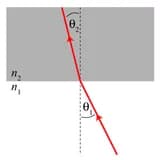
Hilda Hänchen, co-discoverer of the Goos–Hänchen effect in optics, died on October 19, 2013.
Hilda Hänchen died on October 19, 2013, bringing to a close a long life that spanned nearly the entire twentieth century and into the second decade of the twenty-first. Born in 1919, she lived through the Weimar Republic, the Second World War, the division and reunification of Germany, and the digital revolution—an extraordinary span of historical change.
By the time of her death at the age of 94, the Goos–Hänchen effect, the phenomenon she had helped experimentally confirm in 1947 alongside Fritz Goos, had become a well-established and widely cited concept in optical physics, referenced in thousands of scientific papers and textbooks covering topics from classical optics to modern photonics and quantum mechanics.
Hänchen's death was noted primarily within specialist physics history circles and biographical compilations dedicated to recovering the often under-documented contributions of women scientists to twentieth-century physics. Her legacy endures principally through the effect that permanently bears her name, ensuring that her contribution to experimental optics remains recognized in scientific literature long after her passing, even though broader biographical details about her life remain relatively scarce in the historical record.