Hilda Hänchen, the German physicist who co-discovered the Goos–Hänchen effect, was born on this day in Germany.
Hilda Hänchen was born on September 1, 1919, in Germany, during a period of profound political and social upheaval in the aftermath of the First World War. Little is documented about her earliest childhood, but she grew up in an era when women were still fighting for equal access to higher education and to careers in the physical sciences, particularly in Germany where academic institutions remained heavily male-dominated well into the twentieth century.
Despite these structural barriers, Hänchen would go on to pursue advanced studies in physics, eventually working under the supervision of physicist Fritz Goos at the University of Hamburg. Her birth in 1919 places her generation among the women who came of age during the interwar period and who would later navigate the disruptions of the Second World War while building scientific careers.
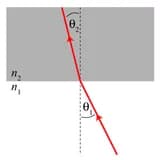
Her later achievements—most notably her role in the experimental confirmation of what became known as the Goos–Hänchen effect—would secure her a lasting, if modest, place in the history of optical physics. This dated milestone, her birth, marks the beginning of a life that would quietly but significantly contribute to twentieth-century experimental physics, in a field where women's contributions were often under-recognized or overshadowed by male collaborators.