← All women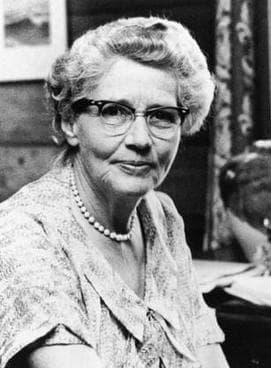
American · Science · Medicine
Helen Taussig
May 24, 1898 – May 20, 1986
Early Life and Background
Helen Brooke Taussig was born on May 24, 1898, in Cambridge, Massachusetts. She was the daughter of Frank William Taussig, a prominent economist, and Edith Thomas Guild, a pioneering student of Radcliffe College. Growing up in an intellectually vibrant environment, she faced significant personal challenges, including dyslexia, which she overcame with determination.
Education
Despite barriers against women in medicine during her time, Taussig pursued a rigorous education, attending Radcliffe College and later the University of California, Berkeley. She earned her bachelor’s degree in 1921. Subsequently, she transferred from Harvard Medical School, which did not award degrees to women at that time, to Boston University and finally to Johns Hopkins University, where she received her M.D. in 1927.
Career Beginnings and Development
Helen Taussig began her medical career at the Harriet Lane Home for Invalid Children at Johns Hopkins Hospital. Her early work focused on preventive pediatrics, but she quickly found her passion in cardiology, specifically addressing congenital heart defects in children.
Major Works and Accomplishments
Taussig's most notable contribution came in the development of the Blalock-Taussig shunt in 1944. She collaborated with surgeon Alfred Blalock and laboratory technician Vivien Thomas to design a procedure that would correct the congenital heart defect known as "tetralogy of Fallot," colloquially known as "blue baby syndrome." This groundbreaking work laid the foundation for modern cardiac surgery and significantly improved survival rates in children with this condition.
Awards and Recognition
Throughout her career, Helen Taussig received numerous awards, including the John Howland Award and the Presidential Medal of Freedom in 1964. She was a member of several professional societies and the first woman president of the American Heart Association.
Personal Life
Taussig never married and dedicated her life to her work and her patients. She lived a life marked by academic brilliance, personal challenges, and unwavering commitment to advancing medicine.
Legacy and Impact
Helen Taussig's pioneering spirit and relentless pursuit of knowledge had a profound impact on the field of pediatric cardiology. Her work not only saved countless lives but also inspired generations of women in medicine. Her rigorous research furthered an understanding of fetal heart and congenital anomalies, setting new standards in cardiology.
Later Life and Death
After retiring, Taussig continued to contribute to research and advocacy. She passed away on May 20, 1986, near her home in Kennett Square, Pennsylvania, due to injuries from an automobile accident. Her legacy lives on through her substantial contributions to medicine and her role as a trailblazer for women in science.
Dated achievements
2 indexed.
- May241898Medicine
Birth of Helen B. Taussig
Helen Brooke Taussig was born on May 24, 1898, in Cambridge, Massachusetts.
View details Changing the Face of Medicine | Dr. Helen Brooke Taussig - May201986Medicine
Death of Helen B. Taussig
Helen Brooke Taussig passed away on May 20, 1986, near her home in Pennsylvania.