← All women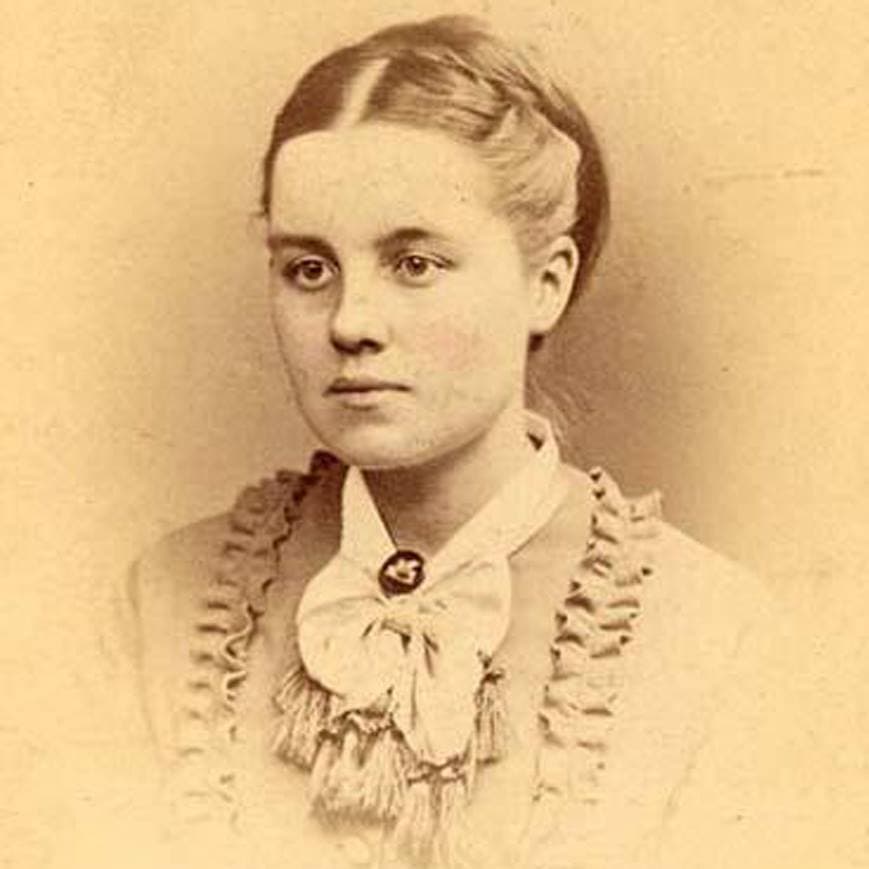
American · Science
Helen Magill White
November 28, 1853 – October 28, 1944
Early life and background
Helen Magill (later Helen Magill White) was born on 28 November 1853 in Providence, Rhode Island, into a Quaker family that placed unusually strong emphasis on education for daughters as well as sons.[1][2][4] Her father, Edward Hicks Magill, was a classical scholar and educator who successively headed the classical department at Providence High School, served as assistant master (sub‑master) at the Boston Public Latin School, and later became president of Swarthmore College in Pennsylvania.[1][4][5] Her mother, Sarah Warner (Beans) Magill, shared the family’s Quaker background, which traditionally afforded women greater spiritual and educational agency than did many other Christian denominations in the mid‑nineteenth century.[3][10]
From childhood, Magill lived in an environment saturated with books, languages, and debates about educational reform. According to institutional and biographical accounts, her father trained her intensively in the classics, providing instruction that paralleled or exceeded what was typically offered to boys preparing for college.[1][4] This early training proved decisive. When the family moved to Boston during her youth, Edward Magill became sub‑master at the Boston Public Latin School, one of the oldest and most prestigious boys’ preparatory schools in the United States. Helen was admitted as a student and, by all accounts, was the only female student enrolled there at the time.[4][10] Her presence in a male bastion of classical instruction foreshadowed the barriers she would later challenge at the collegiate and graduate level.
Quaker ideals informed both her upbringing and her educational opportunities. Friends’ emphasis on inner light, moral equality, and practical reform helped underwrite the Magill family’s belief that girls deserved access to rigorous study. This conviction stood in sharp contrast to prevailing nineteenth‑century norms that confined most girls’ schooling to basic literacy and domestic skills. It also shaped Helen’s later insistence, echoed in family reminiscences, that women were as deserving of a college education as men.[5]
Education and formative influences
Magill’s formal higher education unfolded at institutions that were themselves experimenting with coeducation and women’s access. Her father joined the founding leadership of Swarthmore College, a Quaker‑affiliated institution near Philadelphia that admitted both men and women from its opening. Helen enrolled there and, in 1873, graduated as a member of Swarthmore’s first graduating class, a cohort that notoriously consisted of five women and one man.[2][4][5][10] Participation in this inaugural class placed her at the center of early coeducational college life in the United States.
After Swarthmore, she pursued advanced study at Boston University. BU, founded in 1869, was more open to women than were many older institutions, but its graduate programs were still overwhelmingly male. Magill entered the Department of Classics (later Classical Studies), specializing in Greek language and literature.[1][9] Under demanding conditions and in a field that required mastery of ancient Greek texts, philology, and history, she prepared a dissertation titled The Greek Drama, focused on Greek tragedy.[8][9][16] Her work culminated in the award of the Ph.D. in 1877, a date confirmed by Boston University, Cornell University archival descriptions, and scholarly biographical dictionaries.[1][8][9][16]
Some later popular accounts misdated this milestone to 1881 or cast her as the first American‑born woman to receive a Ph.D., but authoritative institutional sources emphasize that she was the first woman in the United States to earn a doctoral degree in any subject and that the year was 1877.[1][8][9][16] This distinction is important: the claim concerns the location and institutional context—no woman studying at an American university had attained the Ph.D. prior to Magill’s degree at BU, regardless of nationality.
Following the Ph.D., Magill continued her studies abroad. From 1877 to 1881 she undertook further work in the classics at Cambridge University in England.[1] Sources note that she became the first American woman to sit for the classical Tripos examinations, although Cambridge at the time did not confer full degrees upon women.[1][3] Preparing for and taking those examinations demanded an extraordinary command of Latin and Greek literature and contributed further to her reputation as a pioneering woman classicist.
Career beginnings and development
Magill’s early career was rooted in secondary and collegiate education, particularly in institutions designed for girls and women. Shortly after completing her doctorate and European study, she began teaching in various settings. One early role, mentioned in institutional histories, was as principal of a secondary school in Johnstown, Pennsylvania.[9] While details of this period are scant, it formed part of a pattern in which she was often tasked with building or reforming programs for advanced instruction for young women.
In 1883, at the urging of the prominent Unitarian minister and reformer Edward Everett Hale, Magill was hired to organize and direct the Howard Collegiate Institute in West Bridgewater, Massachusetts.[1][2][4][8][10] This new women’s institution required not only administrative skill but also curricular vision. As principal, she was responsible for shaping academic standards, hiring faculty, and establishing a serious college‑preparatory program for girls at a time when many similar schools emphasized refinement over scholarship. Rutgers’ Dictionary of British and Canadian Scholars notes that she led Howard Collegiate Institute for about four years.[1]
After leaving Howard, Magill held teaching positions at several institutions. She taught physical geography at Brooklyn High School, a significant public secondary school in New York City, and served briefly as a professor at Evelyn College, a short‑lived women’s annex to Princeton University.[1][3][4][8][9] Evelyn College, founded in the late 1880s, represented Princeton’s tentative step toward women’s higher education. Magill’s presence on its faculty underscored both her standing as a woman scholar and the limited, often fragile nature of women’s access to elite universities: Evelyn College ultimately closed in the 1890s, and Princeton did not become fully coeducational until the late twentieth century.
Throughout these years, Magill combined classroom teaching with administrative work and curricular design. Her training in classics and geography allowed her to teach across disciplines, and her experience at Swarthmore and Cambridge informed her expectations for women’s academic performance. Although she did not publish widely in scholarly journals, her influence was felt in the shaping of programs that treated girls’ and women’s education as deserving of intellectual seriousness.
Major works, accomplishments, and barrier‑breaking firsts
Magill’s most historically significant achievement was her 1877 Ph.D. in Greek from Boston University, recognized by universities and biographical authorities as the first doctorate earned by a woman in the United States.[1][4][8][9][16] Her dissertation, The Greek Drama, survives in manuscript form in the collections of Cornell University Library, which preserves the first page and related materials.[16] The work reflects rigorous engagement with ancient Greek tragedy and associated scholarship, establishing her as an early American woman expert in classics.
In addition to this landmark, several other aspects of her career stand out:
- Pioneering classical education: From her youth as the sole girl at Boston Public Latin School to her sitting for Cambridge’s classical examinations, Magill demonstrated that women could thrive in the highest levels of classical training, a field often deemed unsuitable for women.[1][3][4]
- Leadership at Howard Collegiate Institute: As organizer and principal of Howard Collegiate Institute from 1883, she helped set a model for serious academic standards in girls’ education in Massachusetts, strengthening the pipeline of women prepared for college.[1][2][4][8]
- Faculty role at Evelyn College: Her appointment as a professor at Evelyn College, Princeton’s women’s annex, placed her within an early experiment in integrating women’s higher education into the orbit of an Ivy League university.[1][3][4][8]
Although Magill did not leave a large body of published scholarship, her work as a teacher and administrator contributed to the intellectual formation of numerous female students. Archival records from Cornell University and references in modern articles note that her BU dissertation was rediscovered among the papers of her husband, Andrew D. White, underscoring the historical value of her contribution to classical studies.[8][13][16]
Awards, honors, and recognition
During her lifetime, Magill operated in a scholarly world that rarely conferred formal awards on women, and no contemporary prizes or honorary degrees have been widely documented in the surviving sources. However, her accomplishments have been recognized posthumously in several important ways.
Boston University’s Department of Classical Studies publicly lists her among its "Pioneering Alums", emphasizing that she was the first woman ever to receive a doctorate in any subject in the United States and highlighting her subsequent work as an educator and her connection to Cornell’s founding family.[9] The Dictionary of British and Canadian Scholars (a biographical reference work) includes a detailed entry recognizing her as the first American woman awarded a Ph.D. and documenting her educational and professional trajectory.[1]
In more popular and public‑history contexts, organizations focused on women’s history and girls’ empowerment have profiled Magill as a model of intellectual achievement. Articles and commemorative posts describe her as a trailblazer who demonstrated women’s capacity for high‑level scholarship at a time when universities largely excluded them.[2][4][6][10] Although these are not formal honors in the traditional academic sense, they attest to her enduring symbolic status as a pioneering woman scholar.
Personal life and marriage to Andrew Dickson White
Magill’s personal life was shaped significantly by her marriage to Andrew Dickson White, a historian, diplomat, and the founding president of Cornell University. According to Cornell University Library’s guide to White’s papers, the two met in September 1887 at the annual meeting of the American Social Science Association, where Magill presented a paper and White, a friend of her father, was in attendance.[8] Their acquaintance developed into a friendship and eventually into marriage.
On 10 September 1890, Helen Magill and Andrew Dickson White were married, as recorded in biographical entries and archival descriptions.[1][8][12] By this time, White had retired from the Cornell presidency but remained an influential public figure. The marriage brought Magill into a prominent academic and diplomatic circle and altered the trajectory of her own career: she largely withdrew from formal academic employment, focusing instead on managing the couple’s household and accompanying her husband on his professional travels.
White served as U.S. Minister to Russia (1892–1894) and Ambassador to Germany (1897–1902), and Magill joined him abroad, thereby gaining firsthand exposure to international diplomacy and European intellectual life.[9][12] The couple’s domestic arrangements and travels are reflected in White’s extensive correspondence and diaries, preserved at Cornell. While detailed records of her daily activities are limited, it is clear that she played a central role in organizing the social and cultural dimensions of White’s diplomatic postings.
Genealogical sources and biographical summaries indicate that the couple had children, including at least one daughter, Karin Andreevna White, who survived into the twentieth century, and other children who died young.[5] Andrew Dickson White died in 1918, leaving Helen a widow.[2][5][7][8] After his death, she spent several years living abroad and later in Ithaca, New York, before eventually settling in Kittery Point, Maine.[2][8]
Some modern popular accounts also note that Magill took positions on contemporary women’s issues, including a reported public opposition to certain suffrage strategies around 1913, though these details are less firmly documented in scholarly sources and must be treated cautiously.[7] What is clear is that her own life embodied both the opportunities and constraints faced by educated women of her generation: she achieved an unprecedented doctoral milestone yet subsequently subordinated much of her professional activity to the demands and expectations surrounding her husband’s public career.
Later life and death
Following Andrew D. White’s death in 1918, Magill’s life entered a quieter phase. Biographical accounts and archival summaries report that she lived abroad for a time, then returned to the United States, spending periods in Ithaca, where she maintained connections to Cornell’s community and her late husband’s legacy.[2][8][9] Eventually she retired to Kittery Point, Maine, a coastal town that served as her final residence.[1][2][8]
On 28 October 1944, at Kittery Point, Helen Magill White died at the age of ninety, just one month before her ninety‑first birthday.[1][2][15] A New York Times obituary and reference works confirm the date and place of her death, noting that she was remembered primarily as the widow of Cornell’s first president and as an early woman scholar.[1][15] She was interred in Sage Chapel on the Cornell University campus in Ithaca, reflecting both her husband’s central role in the university’s history and her own association with Cornell as his partner.[5]
By the time of her death, the world of higher education had changed dramatically from the one she entered as a young woman in the 1860s and 1870s. Women had gained the right to vote in the United States in 1920, and by the 1940s increasing numbers of women were earning college degrees, though they remained a minority in many graduate programs. From her vantage point in old age, Magill would have been able to see at least the beginnings of the broader transformation she had helped to initiate.
Legacy and historical impact
Helen Magill White’s legacy rests foremost on her status as the first woman in the United States to receive a Ph.D., a milestone achieved in 1877 at Boston University with her doctorate in Greek.[1][4][8][9][16] This achievement has become a standard reference point in histories of women’s higher education, classical studies, and Boston University itself. By meeting the full requirements of a doctoral program in a demanding field, she challenged prevailing assumptions about women’s intellectual capacity and helped to legitimize the claim that women deserved access to the highest levels of academic training.
Her example had symbolic and practical consequences. Symbolically, she provided a concrete case that advocates for women’s education could cite in arguments for coeducation and equal academic standards. Practically, her teaching and administrative work at institutions such as Howard Collegiate Institute, Brooklyn High School, and Evelyn College contributed to building the infrastructure of advanced schooling for girls and women in the late nineteenth century.[1][3][4][8][9] Each of these institutions formed part of the pipeline through which later generations of women entered college and, eventually, graduate school.
Magill’s life also illustrates the ways in which structural constraints limited even the most accomplished women scholars of her time. Despite her pioneering Ph.D. and advanced studies at Cambridge, her opportunities for long‑term academic employment were restricted, and her marriage to a prominent university president and diplomat effectively ended her independent scholarly career. This pattern—early academic brilliance followed by withdrawal from professional life after marriage—was common among educated women of her cohort, reflecting social expectations rather than lack of ability or ambition.
In recent decades, renewed scholarly and public interest has brought Magill’s story back into view. Boston University and Cornell University highlight her in institutional histories, while women’s history blogs, educational organizations, and social‑media projects profile her as a role model for girls interested in academia.[2][4][6][9][10] The recovery of her dissertation manuscript at Cornell has further underscored her place in the intellectual history of classics in America.[8][13][16]
Although she did not leave a large corpus of published research, Helen Magill White’s life and work represent a crucial chapter in the long struggle for women’s full participation in scholarly life. Her 1877 doctorate did not by itself transform the academy, but it created a precedent that others could follow and expand. In this sense, her historical significance lies not only in what she personally achieved but also in the possibilities she opened for those who came after her.
Dated achievements
5 indexed.
- Nov281853Science
Birth in Providence, Rhode Island
Helen Magill was born in Providence, Rhode Island, to Quaker educators Edward Hicks Magill and Sarah Warner Magill.
View details Rutgers Database of Classical Scholars: Helen Magill White - Jun011873Science
Graduated in Swarthmore College's First Class
Helen Magill graduated in 1873 in Swarthmore College's inaugural class, one of five women among six graduates.