← All women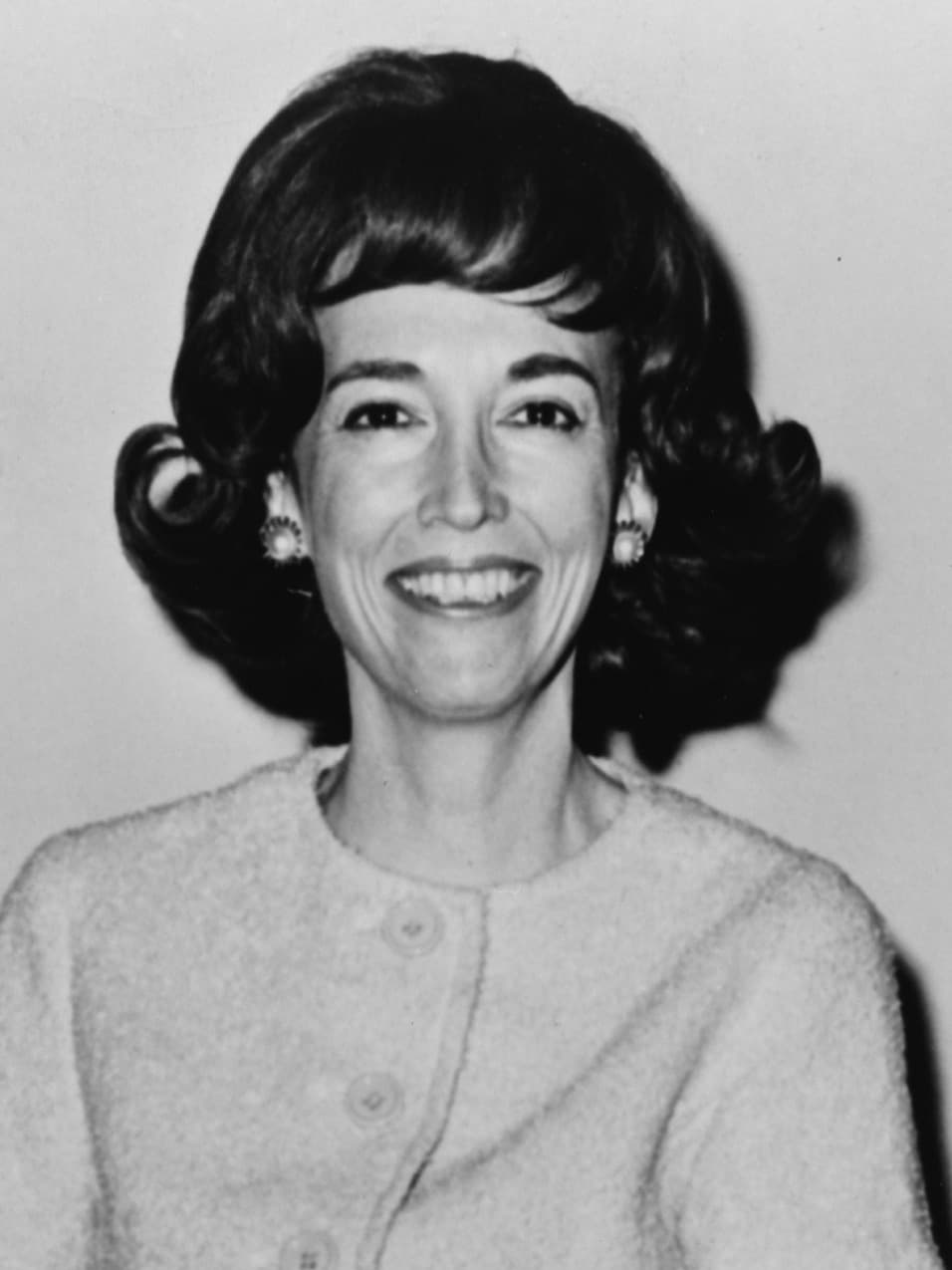
American · Arts · Literature
Helen Gurley Brown
February 18, 1922 – August 13, 2012
Early life and education
Helen Gurley Brown was born Helen Marie Gurley on February 18, 1922, in Green Forest, Arkansas. She was the daughter of Ira and Cleo Gurley. Biographical sources describe her family as poor and emphasize that her childhood unfolded in the economic hardship of the Great Depression era, conditions that later shaped her belief in the importance of earning one’s own living and building personal independence. Her early life in Arkansas remained central to her self-presentation throughout her career, especially in contrast to the urban, media-driven world she later helped define.
Brown attended Texas State College for Women and later Woodbury College, and she also took extension courses in writing at the University of California, Los Angeles. Those educational experiences did not lead her immediately into literary fame, but they helped prepare her for office work, business communication, and the advertising industry. In many respects, her route into media was typical of women of her generation only in the sense that she entered through limited openings; unlike many of her contemporaries, she steadily pushed beyond the clerical roles available to women and into creative decision-making.
Her upbringing and education gave her a practical sense of work, money, and mobility. Later, she would repeatedly frame independence as something both emotional and economic. That argument was not abstract for Brown. It was grounded in the circumstances of a girlhood marked by limited opportunity and in the experience of a young woman trying to enter male-dominated professional spaces during the 1940s.
Career beginnings in advertising
In 1941, Brown moved to Los Angeles and began working as a secretary. That move marked the beginning of her professional life in an office environment, where she learned the rhythms of business and advertising. The city’s commercial culture exposed her to a world in which language, persuasion, and image could shape public desire. For a woman in the early 1940s, secretarial work was one of the few widely available entry points into professional life; Brown used it as a platform rather than a destination.
Her major breakthrough came in 1948, when she became the first female copywriter at Foote, Cone & Belding. That appointment was a genuine barrier-breaking moment. Advertising agencies were among the most influential American institutions of the postwar period, but creative authority was still overwhelmingly male. Brown’s hiring placed a woman in a role that had direct influence over consumer messaging, and it demonstrated that women could succeed in a creative business function long reserved for men. It also gave Brown the practical skill set that would later define her editorial voice: crisp selling language, audience awareness, and a sharp understanding of what women readers wanted.
Brown spent the late 1940s and 1950s building experience in advertising and media. Sources describe her as rising from secretary to executive, and by the time she became widely known, she had already proven that women could move into higher-status commercial work through talent and persistence. Her early career is important because it shows that her later fame did not arise from an overnight breakthrough. It was the result of years spent learning how to write for consumers, how to position products, and how to work within male-dominated corporate hierarchies.
Sex and the Single Girl and national fame
Brown’s first book, Sex and the Single Girl, was published on July 3, 1962. The book became an immediate bestseller and transformed her into a nationally recognized figure. In clear, breezy prose, Brown argued that unmarried women could enjoy sex, fashion, work, and social independence without waiting for marriage to validate them. In the early 1960s, that message was both commercially daring and socially controversial. It placed Brown at the center of debates over women’s roles just before second-wave feminism became a major force in public life.
The book reached No. 1 on The New York Times bestseller list on November 25, 1962, and by the end of that year it had sold millions of copies worldwide. Its success showed that Brown had tapped into a large audience of women navigating a rapidly changing society. While some readers and critics objected to its frankness, many others found in it a lively affirmation of female autonomy. Brown did not write as an academic theorist or a political organizer; instead, she packaged independence as practical, stylish, and modern.
The importance of Sex and the Single Girl lies in its cultural reach. The book helped normalize public discussion of women’s sexual lives and career ambitions. It also laid the groundwork for Brown’s future work at Cosmopolitan, where she would extend the same philosophy in magazine form. The book’s success made her an author of influence, not merely a sensational one, and it ensured that she would be recruited to shape a much larger media platform.
Marriage and personal life
Brown married film producer David Brown on March 16, 1959. The marriage is often described as personally and professionally supportive. David Brown encouraged her writing, including Sex and the Single Girl, and their partnership has frequently been presented as one that respected her ambitions rather than narrowing them. In an era when marriage often pushed women out of public life, Helen Gurley Brown’s marriage became part of a more modern model in which a husband could function as a collaborator and sponsor of a wife’s career.
Her marriage did not reduce her public identity. If anything, it coincided with the period in which she became a more visible commentator on modern womanhood. Brown’s personal life was thus closely intertwined with the messages of her work: women could desire marriage, success, sex, and self-fulfillment at the same time. She did not fit neatly into the domestic ideal that prevailed in much of mid-century America, and that fact itself became part of her appeal. Brown and David Brown did not have children.
Brown’s public image was often inseparable from her personal brand. She was known for glamour, wit, and confidence, and she cultivated an identity that refused to separate femininity from ambition. This made her both admired and criticized. Supporters saw in her a bold advocate for women’s self-definition; detractors saw commercialism or provocation. In either case, her personal choices were part of the historical record of how women’s lives were changing in the second half of the twentieth century.
Cosmopolitan and editorial transformation
In July 1965, Brown became editor-in-chief of Cosmopolitan, a position that defined the rest of her career. Her first issue reportedly sold out, and the magazine quickly became associated with a new tone: upbeat, stylish, sexual, and career-conscious. Brown understood that a large and growing audience of young women wanted editorial content that treated them as ambitious adults rather than as housewives in training.
Under Brown’s leadership, Cosmopolitan moved away from its earlier general-interest format and became a leading magazine for young women. She helped popularize what became known as the “Cosmo girl” image: a woman who was attractive, independent, professionally aspiring, and comfortable discussing sex and relationships. That model was immensely influential, though also controversial. Critics argued that it fused feminism with consumerism and beauty culture; supporters argued that Brown simply gave women permission to want more from life.
One of Brown’s most historically significant editorial moves was her introduction of frank discussions of sex into mainstream women’s magazines by the end of her first year at Cosmopolitan. In the context of the 1960s, this was a major cultural shift. Women’s magazines had long addressed fashion and domesticity, but Brown treated sexual desire, pleasure, and personal satisfaction as legitimate subjects for mass circulation. That editorial choice changed the language of popular women’s media and influenced countless publications that followed.
Her leadership also helped expand Cosmopolitan internationally. Over the decades, the magazine grew into more than twenty-seven international editions, extending Brown’s influence far beyond the United States. In that sense, she was not only an American media figure but a global shaper of editorial style and consumer culture.
Later career, honors, and continued influence
Brown stepped down as U.S. editor-in-chief of Cosmopolitan in February 1997 after more than three decades in the role, but she remained involved with international editions. That longevity is itself remarkable: few editors have maintained such a visible and durable presence in a single publication for so long. Her continued association with the magazine meant that her editorial philosophy remained influential even after her formal domestic tenure ended.
She was widely profiled, discussed, and debated throughout her career and after it. Brown was admired by many women who saw in her a rare example of a female media executive who built a large public platform on her own terms. At the same time, she was criticized by some feminists and cultural commentators for reinforcing beauty standards and for commodifying female sexuality. Both reactions testify to her importance. Figures who do not matter rarely generate such sustained disagreement.
Brown also authored additional books, including Sex and the Office, Having It All, and The Late Show: A Semi Wild but Practical Guide for Women Over 50. These works continued her interest in practical advice for women at different stages of life. Across her writing, Brown returned to a consistent theme: women should pursue work, pleasure, and self-definition without apologizing for ambition. Her style was often light, but the underlying proposition was radical for its time.
Death and legacy
Helen Gurley Brown died on August 13, 2012, in Manhattan. Hearst issued an official statement the next day honoring her role as editor-in-chief of Cosmopolitan’s international editions and as the author of Sex and the Single Girl. Obituaries emphasized that she had changed the tone of women’s magazines and helped redefine what a modern woman could be in popular culture.
Brown’s legacy is complex and enduring. She helped open mainstream media to frank discussion of sex, promoted the legitimacy of women’s ambition, and created one of the most recognizable editorial brands in the world. Her work also reflected the limitations of its era, especially its reliance on glamour, consumption, and highly conventional ideas of attractiveness. Yet even critics acknowledged that she expanded the available vocabulary for women’s lives.
From an Arkansas childhood to the top of magazine publishing, Brown’s career traced a path of unusually visible female advancement in mid-twentieth-century America. She was not a politician or legislator, but she exercised cultural power on a vast scale. Her books and magazines reached millions, and her editorial model became a template for later lifestyle journalism. In women’s history, Helen Gurley Brown remains a pivotal figure because she insisted that women could be single, professional, sexual, and ambitious all at once.
Dated achievements
13 indexed.
- Feb181922Arts
Birth of Helen Gurley Brown
Helen Gurley Brown was born on February 18, 1922, in Green Forest, Arkansas.
View details Helen Gurley Brown - Wikipedia - Jun011941Arts
Move to Los Angeles to work as a secretary
In 1941, Helen moved to Los Angeles to work as a secretary, marking the start of her career.