← All women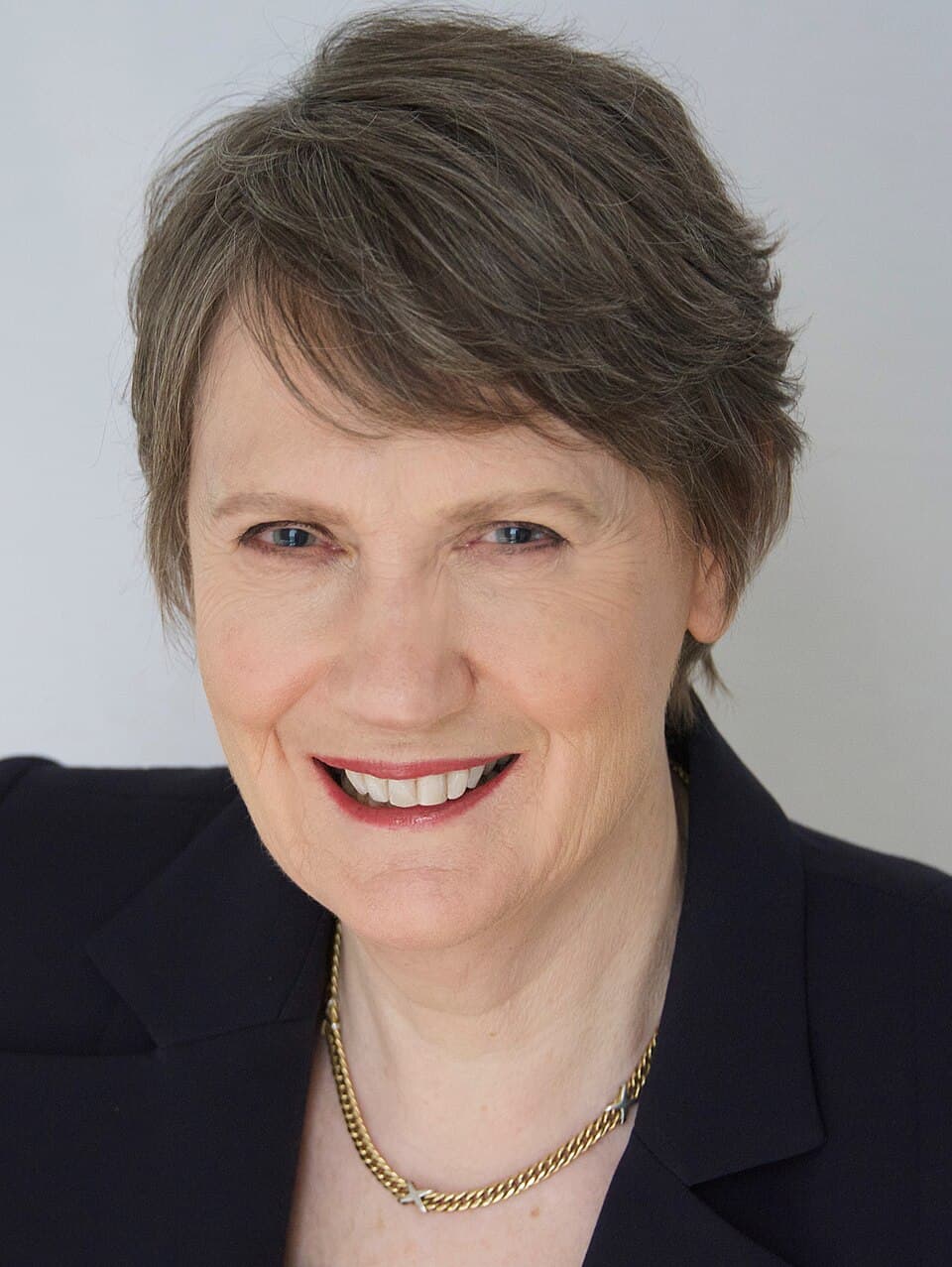
New Zealand · Politics · Activism
Helen Clark
February 26, 1950 – present
Early Life and Background
Helen Elizabeth Clark was born on 26 February 1950 in Hamilton, in New Zealand’s Waikato region.[2][3][7] She grew up as the eldest of four daughters in a farming family at Te Pahu, a rural community south of Hamilton.[3][7] Her father, George Clark, was a sheep and cattle farmer with conservative political leanings, while her mother, Margaret, worked as a primary school teacher.[7] This combination of rural life and educational values profoundly influenced Clark’s later interest in social policy, community welfare, and the practical conditions of ordinary New Zealanders.
Clark attended local schools and demonstrated strong academic ability. The contrast between her father’s support for the National Party and her own emerging social democratic convictions exposed her early to political debate, sharpening her analytical skills and interest in public affairs.[7] Growing up in mid‑20th‑century New Zealand, she also encountered a society in which women were expected to occupy domestic and support roles rather than leadership positions. The limitations she observed helped motivate her lifelong commitment to gender equality and women’s leadership.[6][9]
Education and Formative Influences
After leaving school, Clark enrolled at the University of Auckland, where she studied political science.[1][3][6] She completed a Bachelor of Arts degree in 1971 and went on to earn a Master of Arts with First Class Honours in 1974.[1][7] Her MA thesis examined rural political behaviour and representation, reflecting both her family background and her interest in how ordinary citizens engage with political structures.
During her university years, Clark became active in student politics and broader social movements. She campaigned against the Vietnam War and apartheid, participating in protests linked to international solidarity movements.[1][6] These experiences introduced her to the intersection of domestic politics and global justice, and reinforced her belief in multilateralism and human rights—themes that would later shape her foreign policy as prime minister and her leadership at the United Nations Development Programme (UNDP).[1][5]
Following her postgraduate study, Clark joined the Political Studies Department at the University of Auckland as a lecturer.[1][3] Teaching political science allowed her to deepen her understanding of comparative politics, public policy, and international relations, while mentoring younger students in critical thinking and civic engagement. Her academic work gave her an analytical grounding and familiarity with political theory that distinguished her from many contemporaries when she later entered electoral politics.
Entry into Politics and Parliamentary Career
Clark’s transition from academia to politics came through involvement with the New Zealand Labour Party, whose values of social justice and equality resonated strongly with her.[2][6] She contested seats unsuccessfully before securing nomination for the Mount Albert electorate in Auckland, a safe Labour seat.
On 28 November 1981, Clark was elected Member of Parliament (MP) for Mount Albert in the general election, entering the 40th Parliament.[3][12] She was one of only eight women MPs at the time, reflecting the still‑limited representation of women in New Zealand’s legislature.[3] The victory marked the beginning of a parliamentary career that would last 27 years; she would hold Mount Albert through repeated re‑elections until her resignation in 2009.[1][12]
In Parliament, Clark quickly developed a reputation as a diligent and intellectually rigorous MP. She took an interest in social policy, health, housing, and foreign affairs, and became known for her capacity to master complex briefs.[1][12] Her early years coincided with significant economic changes and internal debates within Labour over the direction of policy, giving her exposure to the political challenges of reform and party unity.
Ministerial Roles and Rise to Deputy Prime Minister
After Labour’s victory in the 1984 election and its return to government, Clark’s influence within the party grew. Between 1987 and 1990, she served in the Fourth Labour Government as a cabinet minister, holding portfolios including Conservation, Housing, and later Health and Labour.[1][12] These roles allowed her to shape policy in areas central to social welfare and environmental protection. As Minister of Conservation, she helped expand protected areas and strengthen environmental safeguards, while in Housing and Health she worked on access and equity issues.[1][6]
On 28 August 1989, Clark was sworn in as Deputy Prime Minister of New Zealand, serving under Prime Minister Geoffrey Palmer.[3][12] This appointment placed her in the second‑highest executive role and confirmed her status as one of Labour’s key leaders. The period was politically turbulent, marked by debate over economic reforms and constitutional issues, and Clark’s experience in cabinet helped her navigate complex policy and coalition dynamics.
Her growing seniority was also recognized internationally. On 5 July 1990, she was appointed to the Privy Council, becoming New Zealand’s first woman member of that body.[3] The Privy Council historically served as the highest court of appeal for many Commonwealth countries and as an advisory council to the British monarch; Clark’s appointment symbolized the penetration of women into previously male‑dominated constitutional structures.[3][2]
Leadership of the Labour Party and Opposition
Labour lost office in the 1990 general election, beginning a period in opposition marked by internal debates over the party’s identity and economic policies. Clark held senior roles on the opposition front bench and became increasingly prominent as an alternative leader.
On 1 December 1993, she was elected Leader of the New Zealand Labour Party, succeeding Mike Moore after a leadership contest, and thereby became Leader of the Opposition in Parliament.[3][12] Her leadership came just before the introduction of New Zealand’s mixed‑member proportional (MMP) electoral system, which altered the landscape of party politics. Clark undertook to rebuild Labour as a modern social democratic party, emphasizing social justice, public services, and a more cautious approach to market liberalization.[2][6]
As Opposition leader, Clark faced skepticism about whether a woman could lead a major party to national electoral victory. Over successive years, she demonstrated resilience and strategic skill, maintaining party unity, recruiting new talent, and presenting a credible alternative programme. Her performance in Parliament and public debate helped normalize women’s leadership in high‑stakes electoral competition.[3]
Prime Minister of New Zealand (1999–2008)
Clark’s breakthrough to the premiership came with the general election of 27 November 1999, when Labour won sufficient support to form a government, often in partnership with the Alliance and later other parties.[2][5] Clark thus became Prime Minister of New Zealand, the first woman to attain the office by winning an election.[2] Jenny Shipley had previously served as prime minister after an internal party change, making Clark the second woman to hold the office overall, but the first elected to it through a nationwide campaign.[2][3]
Clark’s first term focused on restoring social services and addressing perceived inequities from earlier economic reforms. Her government introduced paid parental leave, expanded health and education funding, and invested in regional development.[6] It also took a distinct foreign policy stance, maintaining New Zealand’s nuclear‑free policy and carefully calibrating participation in international military operations. Clark oversaw New Zealand’s role in peacekeeping, including in East Timor, while voicing support for multilateral diplomacy and the United Nations.[1][5]
Labour’s popularity under Clark remained strong. In the 27 July 2002 general election she secured a second consecutive term as prime minister, and on 17 September 2005 she led Labour to a third successive victory, becoming the first Labour leader ever to win three consecutive general elections.[3][5] These achievements underscored her skill in electoral strategy and coalition management and made her one of New Zealand’s longest‑serving prime ministers.[12]
Clark’s governments introduced reforms in multiple areas. Domestically, they enacted civil union legislation recognizing same‑sex relationships, progressed Treaty of Waitangi settlements with Māori iwi, and pursued initiatives to reduce child poverty and improve public health.[6][12] Her administration also emphasized environmental sustainability, setting climate targets and promoting renewable energy and conservation measures.[2] Internationally, Clark positioned New Zealand as an independent voice advocating for multilateral solutions, human rights, and sustainable development.
Her leadership style was characterized by careful preparation, policy detail, and a collegial approach to cabinet. Clark also became one of the world’s most visible women heads of government. In 2006, Forbes magazine ranked her among the twenty most powerful women globally, reflecting her influence both domestically and internationally.[7][8][12]
End of Premiership and Transition to International Roles
In the general election of 8 November 2008, Labour was defeated by the National Party led by John Key.[3][8] The loss brought Clark’s nine‑year premiership to an end.[2] She promptly announced her decision to step down as Labour leader, reinforcing norms of accountability and renewal in parliamentary democracies.
Clark remained an MP for Mount Albert in the immediate aftermath of the election and served briefly as Labour’s foreign affairs spokesperson.[12] However, international institutions soon sought her experience. On 17 April 2009, she resigned from Parliament, ending her 27‑year tenure as an MP and clearing the way for her move to the United Nations.[1][3]
Administrator of the United Nations Development Programme (2009–2017)
In April 2009, the United Nations General Assembly confirmed Clark’s appointment as Administrator of the United Nations Development Programme (UNDP).[1][5] She formally assumed office on 16 April 2009, becoming the first woman to lead UNDP.[1][3] Concurrently, she served as Chair of the United Nations Development Group, coordinating the heads of UN funds, programmes, and departments working on development issues.[1][5]
UNDP operates in nearly all developing countries, supporting poverty reduction, democratic governance, crisis recovery, and environmental sustainability. Clark’s tenure coincided with major global challenges, including the aftermath of the financial crisis, escalating climate change, and the transition from the Millennium Development Goals (MDGs) to the Sustainable Development Goals (SDGs).
Under her leadership, UNDP promoted inclusive growth, institutional capacity‑building, and gender equality. Clark championed transparency; during her tenure, UNDP was ranked among the most transparent global development organizations.[5] She worked to strengthen the agency’s role in supporting national development strategies and in helping countries build resilience to crises, including natural disasters and conflict.
Clark’s extensive experience as a former prime minister informed her approach to multilateral cooperation. She emphasized partnerships with civil society, the private sector, and other international organizations, highlighting the need for integrated responses to poverty, inequality, and environmental degradation. Her advocacy for climate action and sustainable energy reflected long‑standing interests nurtured during her New Zealand political career.[5][9]
After serving two consecutive four‑year terms, Clark announced her intention to step down, and her tenure formally ended on 26 April 2017.[3][5] She left UNDP with a reputation as a strong manager and outspoken advocate for development, governance reform, and gender equality within the UN system.
Later International Roles and Global Advocacy
Following her time at UNDP, Clark continued to play a prominent role in global public policy. She joined a range of international boards, commissions, and advisory groups focused on sustainable development, climate action, democratic governance, and global health.[5][9] Among these roles, she chairs the boards of organizations such as the Extractive Industries Transparency Initiative and the Partnership for Maternal, Newborn and Child Health, reinforcing norms of transparency and rights‑based approaches to health.[9]
In 2019, Clark became a member of The Elders, the group of independent global leaders founded by Nelson Mandela to work on peace, justice, and human rights.[5] As part of The Elders, she has contributed to initiatives on conflict resolution, climate policy, and strengthening multilateral institutions. Her membership extends the tradition of experienced former leaders engaging in collective moral and political advocacy.
Clark has also remained active in global health governance. In July 2020, she was appointed by the Director‑General of the World Health Organization as Co‑Chair of the Independent Panel for Pandemic Preparedness and Response, tasked with reviewing the international response to COVID‑19 and recommending reforms to strengthen preparedness for future pandemics.[9] This role highlighted her expertise in institutional analysis and crisis governance.
Beyond formal positions, Clark is a frequent speaker and commentator on issues of gender equality, women’s political participation, climate change, sustainable development, and the future of multilateralism. She has supported initiatives encouraging women to run for office and occupy leadership roles in public and private institutions.[5][9]
Awards, Honours, and Recognition
Clark’s contributions have been recognized through numerous honours. She has been appointed to New Zealand’s Order of New Zealand (ONZ), the country’s highest civilian honour, acknowledging her outstanding service as prime minister and international leader.[3][12] She holds other domestic and international distinctions that reflect her service to public life and global development, though many are recorded by year rather than precise date.
Internationally, her influence was highlighted when Forbes magazine ranked her the 20th most powerful woman in the world in 2006, during her second term as prime minister.[7][8][12] Academic institutions have awarded her honorary degrees and fellowships, and she has been invited to serve on advisory councils for think tanks and research organizations dedicated to policy analysis and global governance.[5]
These honours collectively demonstrate the breadth of her impact, from national politics to international development, and they underscore the degree to which a woman leader from a small Pacific nation can shape global agendas.
Personal Life
Clark married Peter Davis, a sociologist and public health scholar, in 1981.[1][11] Davis became a professor at the University of Auckland and has pursued an academic career focused on health policy and the sociology of medicine.[1] The couple has not had children, a decision that has occasionally been noted in public commentary but that Clark herself has framed within the context of her demanding political and public commitments.
Throughout her career, Clark has maintained a reputation for personal discipline, privacy, and intellectual seriousness. She is known for her interest in the outdoors, including tramping and gardening, which reflect her rural upbringing and concern for environmental stewardship.[6] Her personal choices and lifestyle stand in contrast to traditional expectations of women in mid‑20th‑century New Zealand, offering alternative models of womanhood centered on professional achievement and public service.
Legacy and Historical Impact
Helen Clark’s legacy in New Zealand and internationally is multi‑dimensional. Domestically, she is remembered as one of the country’s longest‑serving and most influential prime ministers, leading the Fifth Labour Government through three consecutive terms from 1999 to 2008.[3][12] Her governments’ policies on paid parental leave, civil unions, Treaty settlements, and environmental protection reshaped the social and legal landscape, embedding principles of equity and sustainability more deeply into national life.[2][6]
Her premiership also normalized the idea of women at the apex of executive power. By winning three consecutive elections as Labour leader, she demonstrated that public trust in a woman leader could be sustained across multiple electoral cycles.[3][5] This precedent has had enduring influence on New Zealand’s political culture, contributing to the emergence of other women leaders, including later women prime ministers.
Internationally, Clark’s tenure as the first woman Administrator of UNDP broke barriers in the leadership of major UN agencies and strengthened the development system’s focus on gender equality, transparency, and inclusive governance.[1][5] Her work on the SDGs, climate policy, and crisis resilience helped shape global development frameworks in the early 21st century. Through The Elders, WHO panels, and other roles, she continues to contribute to debates on multilateral reform and global justice.[5][9]
In the broader history of women’s leadership, Clark stands as an exemplar of a career that moves from rural roots and academic scholarship to national and international leadership. Her trajectory shows how women can leverage education, activism, and party politics to reach the highest offices, and then carry that experience into the governance of global institutions. She has been a consistent advocate for the integration of gender perspectives into mainstream policy, arguing that sustainable development and peace cannot be achieved without women’s full participation.
Later Life and Ongoing Work
Since completing her term at UNDP on 26 April 2017, Clark has lived largely outside formal state office but remains deeply engaged in public affairs.[3][5] She divides her time among international board roles, speaking engagements, research advisory work, and advocacy on issues such as climate action, democratic governance, and the empowerment of women and girls.[5][9]
Clark is widely regarded as a senior stateswoman of both New Zealand and the international community. Her commentary on global challenges is sought by media outlets, academic institutions, and policy forums. While she has not returned to electoral politics, her influence continues through thought leadership, mentorship of younger politicians and activists, and her participation in high‑level commissions and panels.
As of the mid‑2020s, Clark remains a living figure in women’s history, offering an active voice in debates about the future of multilateral cooperation and the role of women in decision‑making. Her career provides a rich case study for scholars of gender and politics, illustrating how structural barriers can be navigated and how women leaders can reshape both national trajectories and global governance.
Dated achievements
12 indexed.
- Feb261950Science
Birth of Helen Clark
Helen Elizabeth Clark was born in Hamilton, New Zealand, on 26 February 1950.
View details Helen Clark | Britannica - Nov281981Science
Elected to New Zealand Parliament for Mount Albert
Clark was elected MP for Mount Albert in the general election of 28 November 1981, one of only eight women in the 40th Parliament.