← All women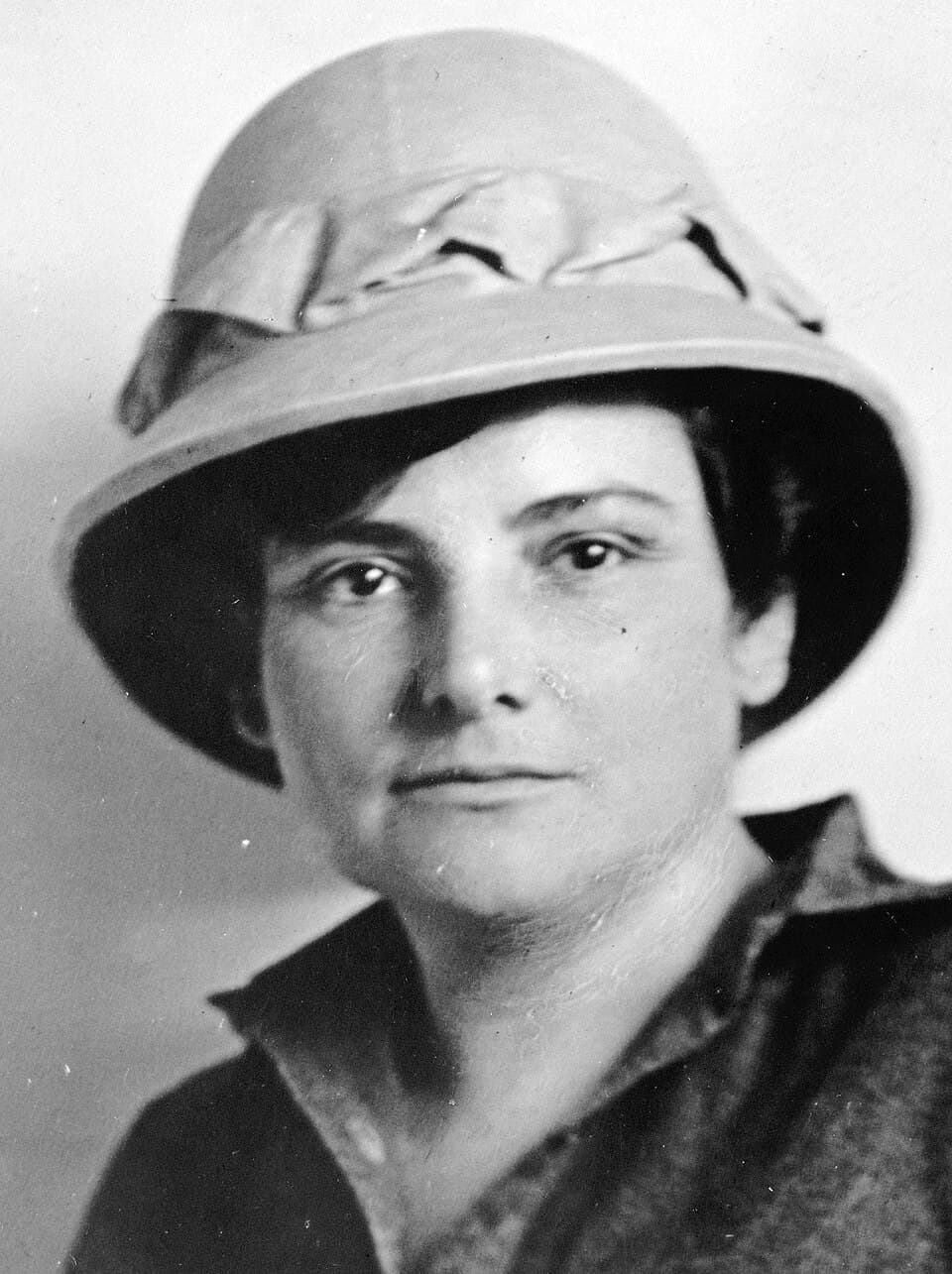
American · Exploration
Harriet Adams
October 22, 1875 – July 17, 1937
Early Life and Background
Harriet Chalmers Adams was born on 22 October 1875 in Stockton, California, United States.[5][7][11] She was the daughter of Alexander Chalmers, a Canadian‑born merchant and rancher, and Frances Wilkens Chalmers
Sources emphasize that Adams did not receive formal higher education in geography, instead becoming a largely self‑taught geographer, anthropologist, and photographer.[7][12] As a girl she reportedly devoured travel literature and geographic works, combining book learning with practical experience in camping, riding, and navigation. The combination of informal study and hands‑on travel was typical for women of her era, who faced significant barriers to university training in scientific disciplines. Her childhood in Stockton also exposed her to California’s patterns of migration and cultural diversity. The region’s Indigenous communities, Mexican and European settlers, and global trading ties provided early encounters with multicultural societies.[7] This environment helped shape her later interest in Latin America and the South Pacific, where she paid close attention to how colonialism and post‑colonial politics affected everyday life. On 5 October 1899, Adams married Franklin Pierce Adams, an electrical engineer and businessman.[14][17] (He is not the New York writer of the same name.) Their marriage was a partnership that facilitated her exploratory ambitions; Franklin frequently traveled with her, and the couple undertook long journeys together across South America and other regions.[7][9][17] Contemporary accounts portray him as supportive of her work rather than attempting to curtail it, a relatively uncommon dynamic for a woman in the early twentieth century. The couple did not have children, a fact that some biographical treatments link to the extensive travel and logistical demands of Adams’s career.[7] They maintained homes in California and later in the eastern United States but spent long periods abroad. Franklin’s presence on many expeditions provided companionship and practical assistance, yet the intellectual framing and public presentation of their travels were largely Harriet’s work; she wrote the articles, delivered the lectures, and developed an integrated geographic perspective. Adams’s major exploratory career began in the first decade of the twentieth century1904, she embarked on an extensive journey through Latin America with her husband, traveling for nearly three years and logging tens of thousands of miles.[7][12] Much of this travel was on horseback, by riverboat, or on foot, through regions that had limited infrastructure for foreign travelers. She visited Peru, Bolivia, Ecuador, Chile, Paraguay, and other countries, conducting what would now be called ethnographic and geographic fieldwork—observing local languages, customs, economies, and landscapes.[7][8] These experiences laid the foundation for her long association with the National Geographic Society. In 1907, she published her first major article in National Geographic Magazine, detailing aspects of her South American travels.[5][7] The article introduced readers to Andean topography, Indigenous cultures, and political developments in countries unfamiliar to many Americans. It also signaled that a woman explorer could produce authoritative geographic writing for a leading scientific magazine. Over subsequent years, Adams continued to travel widely, extending her range to Asia and the South Pacific while returning repeatedly to Latin America.[5][8] She often structured expeditions around particular themes—such as missionary work, trade routes, or revolutionary movements—though she remained flexible and opportunistic in following leads encountered on the ground. Her methods included careful note‑taking, photography, interviews, and mapping, building a growing personal archive of materials that informed her publications and lectures. One of Adams’s most celebrated achievements was her extensive travel in South America, where she reportedly spent time in every country and traveled more than 100,000 miles, mostly on horseback.[7][2] Her journeys took her from coastal cities to high Andean passes and into Amazonian and Guianan regions that were, at the time, sparsely documented in English‑language geographic literature. During these travels, around 1912, Adams completed a difficult overland route along the northern coast, becoming the first woman to journey from the Amazon River to Cayenne, French Guiana.[2][3][12] The route involved navigating river systems, mangrove coastlines, and colonial borders, and she chronicled observations on local communities and colonial administration. The accomplishment demonstrated not only physical stamina but also an ability to negotiate with local officials and guides in multiple languages. About the same period, she achieved the first female ascent of El Misti, a prominent volcano overlooking Arequipa, Peru.[2][12] Climbing El Misti at early twentieth‑century levels of equipment required substantial endurance and careful acclimatization. This ascent expanded her exploratory profile into mountaineering and symbolized women’s capacity to tackle demanding high‑altitude challenges. Adams’s geographic work was not limited to South America. She traveled across Asia and Oceania, including regions of the South Pacific, and wrote about religious missions, colonial governance, and indigenous cultures.[5][8] Her articles often blended observational detail with commentary about global politics and economic change. For example, she paid close attention to how railroads, mining enterprises, and plantation economies were reshaping landscapes and societies. Adams’s relationship with National Geographic grew steadily after her first major article in 1907.[5][7] Over time she authored 21 articles for the magazine, more than any other woman during its first half‑century.[7][8] These pieces ranged from accounts of highland Peru and Bolivia to narratives of journeys across Asia and the Pacific, all illustrated with her photographs and maps. She became a central figure in the Society’s public lecture series, speaking for more than twenty years to audiences in the United States and abroad.[2][7] Her lectures were known for their vivid storytelling and visual aids, including lantern slides of her photographs. Crowds often filled large auditoriums, and contemporary reports described her as one of the Society’s most popular lecturers.[7][8] Through these events she shaped public perceptions of regions that many Americans knew only from maps or brief news reports. Adams’s work with National Geographic exemplified a broader trend in early twentieth‑century geography: the emergence of popular geographic education through magazines and public lectures. As a woman occupying a prominent role in this system, she helped normalize the idea that women could be both field researchers and authoritative interpreters of complex global regions. During World War I, Adams applied her skills as an explorer and journalist to the European theater. Serving as a war correspondent for Harper’s Magazine, she reported from the French front, visiting hospitals, logistics hubs, and crucially, the front‑line trenches.[3][8][11] She is widely credited as the first woman journalist allowed to enter front-line trenches in France, an extraordinary exception to military rules that typically barred women from such zones. Her dispatches described the conditions of soldiers, the devastation of landscapes, and the emotional atmosphere of the Western Front. She used photography to capture scenes of trench life and war‑damaged environments, giving readers a visual complement to her written accounts.[8][11] Her perspective as a woman in a combat zone was unusual and challenged prevailing assumptions about the proper roles for female journalists. This wartime work expanded the boundaries of women’s professional reporting. Adams’s trench access showed that women could undertake the same dangerous fieldwork as men, and it prefigured the later careers of female war correspondents in the mid‑ and late twentieth century. It also integrated her geographic sensibility—attention to landscape, infrastructure, and regional variation—into the emerging genre of modern war reportage. Adams’s exploratory and publishing record led to formal recognition from prestigious geographic institutions. In 1913, she was elected to membership in the Royal Geographical Society of London (RGS), becoming, according to several accounts, the first American woman to receive this honor and only the third woman member overall.[2][7] The RGS was a central institution for global exploration, and membership signified acceptance into the highest ranks of geographic practitioners. Her election required nomination and approval by existing members, many of whom were prominent male explorers and scholars. Some scholarly sources cautiously describe her as "one of the first American women" elected to the Society, reflecting minor historiographical uncertainty about the precise sequence of female American admissions.[7] However, consensus holds that her membership was exceptionally early and barrier‑breaking for an American woman. Beyond the RGS, Adams was recognized in the United States as an expert on Latin America by government, business, and academic circles.[2][7] She advised companies and agencies on regional conditions and appeared on panels and lecture programs as a leading authority. Her ability to synthesize on‑the‑ground experience and comparative analysis made her especially valuable for understanding post‑colonial politics and economies. In 1925, Adams played a founding role in the Society of Woman Geographers, established to promote and recognize women involved in exploration, geography, and related professions.[2][11][14] She was chosen as the Society’s first president, reflecting her stature among fellow women explorers and her long record of fieldwork and publication. The Society provided a formal structure for women who might otherwise have been isolated within male‑dominated institutions. It organized lectures, shared fieldwork experiences, and celebrated members’ achievements, helping to build solidarity and visibility for women geographers.[2][11] Under Adams’s leadership in its early years, the Society positioned women not as exceptional anomalies but as regular participants in the global production of geographic knowledge. In 1936, a year before Adams’s death, the Society issued a tribute highlighting the "staggering amount of work" she had accomplished in ethnology, geography, natural history, and sociology over her lifetime.[7] This recognition underscored both the breadth of her interests and the depth of her influence in shaping how women’s exploratory work was perceived and remembered. Contemporary commentators bestowed multiple epithets on Adams that captured her public reputation. She was sometimes called the "Mrs. Marco Polo of the Americas" and, in other contexts, the "world’s greatest woman explorer".[2][12] These titles, while infused with the gendered language of their time, signaled that her exploratory achievements were widely recognized and admired. National Geographic and other outlets portrayed her as a figure of passion, courage, and style, emphasizing her ability to navigate rugged terrains while maintaining a distinctive personal presence.[8] Photographs often show her in practical but elegant attire, combining functionality with an awareness of how female explorers were expected to appear in public. She cultivated a persona that made exploratory work attractive and imaginable for women readers. Adams also used public lectures to encourage other women to travel and to recognize that exploration could be a serious intellectual pursuit rather than merely a romantic pastime.[7][8] In doing so, she challenged the stereotype that rigorous fieldwork and geographic analysis were inherently masculine endeavors. In the 1930s, Adams continued to lecture and write, though the pace of her travel appears to have slowed relative to the previous decades. She still maintained an international orientation, spending time in Europe and engaging with global networks of explorers and geographers.[7][2] Her long career had by then spanned shifts from late imperial exploration to the interwar period’s more critical examinations of colonial legacies. On 17 July 1937, Adams died in Nice, France, after a short illness, at age 61.[3][5][7][11] Her remains were subsequently interred in Chapel of the Chimes in Oakland, California.[2] Obituaries and memorials highlighted her extensive travel and her role as a pioneer for women in exploration and geography. The Society of Woman Geographers and National Geographic each acknowledged her contributions, reinforcing her status as a central figure in early twentieth‑century geographic history. Harriet Chalmers Adams’s legacy can be assessed along several dimensions: exploration, geographic scholarship, journalism, and women’s institutional advancement. As an explorer, she dramatically expanded the range of regions documented by American women travelers, especially in South America, where her fieldwork helped fill gaps in English‑language understanding of Andean and Amazonian territories.[2][7][12] As a geographic writer and lecturer, she played a key role in popularizing complex regions for broad audiences. Her 21 articles in National Geographic and many lectures brought detailed analysis and visual documentation to tens of thousands of people, making her one of the most influential geographic communicators of her time.[5][7][8] Her insistence on close observation and on listening to local voices contributed to a more nuanced portrayal of the areas she visited. In journalism, her World War I correspondence demonstrated that women could operate effectively as frontline reporters, setting precedents for later generations of female war correspondents.[3][8][11] Her trench access remains a landmark in the history of women’s engagement with combat reporting. Institutionally, Adams’s election to the Royal Geographical Society and her presidency of the Society of Woman Geographers opened doors for women in fields that had previously excluded them or confined them to marginal roles.[2][7][11][14] She helped establish women as legitimate members and leaders of geographic organizations, and the continued activity of the Society of Woman Geographers stands as a living part of her legacy. For women’s‑history scholars, Adams exemplifies the ways in which women in the early twentieth century carved out professional authority in sciences and exploratory disciplines despite structural barriers. Her career shows how field experience, publication, and organizational work could combine to create new spaces for women in knowledge production. Today she is remembered in scholarly articles, biographies, and museum and institutional timelines as a pioneering explorer who reshaped both the practice and public perception of geography.Marriage and Personal Life
Career Beginnings and Development
Major Exploratory Journeys and Geographic Work
National Geographic Contributions and Lecturing
World War I Correspondence
Royal Geographical Society and Professional Recognition
Society of Woman Geographers and Advocacy for Women
Reputation, Titles, and Public Image
Later Life and Death
Legacy and Historical Impact
Dated achievements
8 indexed.
- Oct221875Exploration
Birth in Stockton, California
Harriet Chalmers Adams was born in Stockton, California, USA.
View details Wikipedia: Harriet Chalmers Adams - Jan011912Exploration
First woman to journey from Amazon River to Cayenne, French Guiana
First woman to traverse from the Amazon River to Cayenne in 1912.