← All women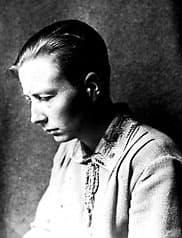
German · Science · Activism · Politics
Grete Hermann
March 2, 1901 – April 15, 1984
Early life and background
Clara Margarete "Grete" Hermann was born on 2 March 1901 in Bremen, in the northwestern part of the German Empire.[1][2][4][13] She was the daughter of Gerhard and Augusta Hermann, a middle‑class family whose support enabled her to pursue secondary education at a time when girls’ opportunities in advanced study were limited.[4][13] Growing up in the port city of Bremen exposed her to international currents of trade and ideas, while the upheavals of the early 20th century—World War I and the subsequent German Revolution—formed the political backdrop against which her intellectual and ethical commitments later developed.
Hermann showed early aptitude for mathematics and an interest in philosophical questions. After qualifying for secondary‑school teaching in 1921, she turned toward university study.[11] Like many women of her generation, she had to navigate formal restrictions and informal biases that restricted women’s access to higher education in Germany. Nevertheless, she earned entry to one of the leading mathematical centers in the world: the University of Göttingen.
Education and formative influences
At Göttingen, Hermann studied mathematics under Emmy Noether and Edmund Landau, two central figures in the development of modern algebra and analysis.[10][12][13][14] She simultaneously studied philosophy with Leonard Nelson, a neo‑Kantian and neo‑Friesian philosopher known for his rigorous approach to ethics and the theory of knowledge.[10][13][14] This dual training in advanced mathematics and systematic philosophy became the defining feature of Hermann’s intellectual profile.
Under Noether’s supervision, Hermann pursued research in algebra. She completed a doctoral dissertation titled Die Frage der endlich vielen Schritte in der Theorie der Polynomideale (The question of finitely many steps in the theory of polynomial ideals), obtaining her doctorate in mathematics in the mid‑1920s—sources differ on whether the formal degree was completed in 1925 or 1926, but all agree on this period.[10][12][13] She was Emmy Noether’s only officially supervised female Ph.D. student, a fact often highlighted in historical accounts of women in mathematics.[10][13] Her doctorate included minors in physics and philosophy, reflecting her interdisciplinary ambitions.[13]
Hermann also became closely associated with Leonard Nelson and the neo‑Friesian philosophical circle. After her doctorate, she served as Nelson’s private assistant, collaborating on his work in ethics and pedagogy until his death in 1927.[13][16] She later edited and helped publish Nelson’s writings posthumously, an experience that deepened her commitment to integrating ethical reasoning with scientific practice.
Doctoral work and the origins of computer algebra
Hermann’s dissertation, published in Mathematische Annalen, is widely recognized as a foundational text in the field now called computer algebra.[10][11] She studied the problem of whether computations involving polynomial ideals could be carried out in a finite number of steps, and in the process she provided explicit algorithms for central tasks in abstract algebra, such as primary decomposition in polynomial rings.[10][11]
In her work, Hermann did not have access to electronic computers; she operated entirely in the conceptual realm of algorithms and effective procedures. Nonetheless, she introduced detailed step‑by‑step methods and discussed questions of complexity—how many steps an algorithm would require—anticipating concerns that later became standard in theoretical computer science.[10][11] Her algorithms for primary decomposition, sometimes referred to as the "Hermann algorithm," are still cited in the literature and influenced later developments in symbolic computation.
Several historical surveys credit Hermann with writing some of the first algorithms for computer algebra in the 1920s, decades before digital computers made automated symbolic manipulation possible.[11] This work placed her at the intersection of pure algebra, logic, and the emerging notion of mechanical computation, and it has led contemporary commentators to describe her as one of the earliest pioneers of algorithmic algebra.
Turn to philosophy and quantum mechanics
From the mid‑1920s onward, Hermann increasingly devoted herself to philosophy.[9] Building on her neo‑Kantian and neo‑Friesian background, she sought to understand the conceptual foundations of physics, especially the newly developing quantum theory. She maintained contacts with physicists while working intensively on issues of causality, measurement, and probability in quantum mechanics.[13][16]
Hermann’s philosophical work on quantum mechanics was informed by her mathematical expertise and by Nelson’s ethical and epistemological framework. She argued that physical theories must be understood in relation to the conditions of possible experience and that the interpretation of quantum mechanics should respect both empirical adequacy and logical coherence. Her writings in the 1930s engaged critically with leading figures such as Werner Heisenberg and John von Neumann, positioning her as a substantive voice in debates over the completeness of quantum theory.[7][2][19]
Critique of von Neumann and hidden variables
Hermann’s most famous scientific‑philosophical contribution came in 1935, when she published an analysis of John von Neumann’s 1932 argument purporting to show that hidden‑variable theories in quantum mechanics were impossible.[4][7][10][11] Von Neumann’s theorem had been widely interpreted as a definitive proof that quantum mechanics could not be supplemented by underlying deterministic variables. Hermann carefully examined the assumptions of this proof and identified a critical logical flaw.
In her critique, Hermann showed that von Neumann’s impossibility claim relied on a particular additivity assumption for expectation values that was not justified by physical principles for hidden‑variable theories.[4][7][10] She argued that the proof did not rule out all possible hidden‑variable models, but only those satisfying specific mathematical constraints introduced by von Neumann. As a result, the conclusion that hidden‑variable theories were impossible did not follow.
This analysis made Hermann one of the earliest researchers to challenge the canonical reading of von Neumann’s no‑hidden‑variables theorem.[4][7][10] However, her work—published in German and framed within a neo‑Kantian philosophical perspective—was largely overlooked by the wider physics community. It failed to influence mainstream interpretations of quantum mechanics, which continued to treat von Neumann’s result as decisive.
Only decades later, when John Bell began exploring hidden‑variable theories in the 1960s and formulated Bell’s theorem, did historians and philosophers of physics rediscover Hermann’s critique. Contemporary accounts now often note that Hermann anticipated crucial points later discussed by Bell, and that she had exposed limitations in von Neumann’s argument long before hidden‑variable models returned to the center of foundational debates.[4][7][10]
Philosophy of physics, ethics, and pedagogy
Beyond her specific interventions in quantum foundations, Hermann developed a broader ethical philosophy of physics.[7][16] She insisted that physical theories and their interpretations cannot be divorced from ethical considerations, especially concerning the responsibilities of scientists and the societal implications of their work. Her neo‑Friesian outlook stressed the importance of rational critique, moral duty, and educational reform.
Hermann contributed substantially to pedagogy and the philosophy of education. After Nelson’s death, she collaborated with educator Minna Specht in editing and disseminating his work on ethics and pedagogy.[13][16] She later wrote an extensive commentary on Nelson’s ethical philosophy, published in the 1950s, which explored the relationship between scientific rationality and moral action.[13][16]
Her educational philosophy emphasized critical thinking, democratic responsibility, and the integration of scientific knowledge into a broader ethical framework. In this respect, Hermann belonged to a tradition of German reform pedagogy that sought to reshape schools and universities in response to the crises of the first half of the 20th century.
Political engagement and resistance to Nazism
Hermann’s philosophical commitments were closely tied to her political activities. She became active in the Internationaler Sozialistischer Kampfbund (ISK), a socialist organization that opposed Nazism.[1][7][14] Through the ISK, she participated in resistance efforts, educational work, and the dissemination of critical political philosophy.
During the Nazi period, the ISK’s members faced persecution, and many operated clandestinely or in exile. Hermann’s association with this group reflects her willingness to connect abstract ethical principles with concrete political resistance. After World War II, she contributed to discussions within the Social Democratic Party of Germany (SPD), helping to modernize its ethical and educational positions.[1][7]
Her political work, although less documented in detail than her scientific contributions, illustrates a broader pattern: Hermann consistently linked the analysis of quantum mechanics and mathematical reasoning to questions of responsibility, justice, and democratic culture.
Awards and recognition
In June 1936, Hermann, together with Eduard May and Thilo Vogel, was awarded the Richard Avenarius Prize by the Academy of Sciences of Saxony in Leipzig for their work at the intersection of quantum physics and philosophy.[12] The award recognized contributions that clarified philosophical questions arising from modern science, underscoring the esteem in which Hermann’s contemporaries held her foundational work.
This prize is one of the few documented instances of formal recognition of Hermann’s physics‑philosophy research during her lifetime. Despite her pioneering contributions, much of her work remained underappreciated for decades, particularly outside German‑language circles. Only in the late 20th and early 21st centuries have historians of science and philosophy begun systematically reassessing her impact.
Personal life
Biographical sources note that Hermann later used the names Grete Henry and Grete Henry‑Hermann, reflecting her marriage and subsequent divorce.[8][10][12][14] After her marriage in 1938, she was often referred to as Grete Henry, and, following her divorce, as Grete Henry‑Hermann.[12] These changes in name contributed to some fragmentation in the historical record, with her publications and archival traces appearing under multiple variants: Margarethe Grete Hermann, Grete Henry, Meg Henry Hermann, and others.[4]
Details of her domestic life—such as whether she had children—are sparsely documented in accessible scholarly sources. Most accounts focus on her intellectual, educational, and political activities rather than on private matters. What is clear is that Hermann maintained a long‑term commitment to teaching and academic work, continuing to lecture and write on ethics and pedagogy well into her later years.[13]
Later career and retirement
In the postwar decades, Hermann shifted her primary focus from the technical aspects of quantum mechanics toward ethics, pedagogy, and political philosophy.[13][16] She remained connected to the scientific community but increasingly devoted herself to analyzing the moral dimensions of scientific practice and to educational reform.
In 1953, she published a substantial commentary on Leonard Nelson’s ethical philosophy, further developing his ideas and situating them in the changed context of post‑Nazi Germany.[13][16] Through teaching and writing, she contributed to the reconstruction of German intellectual life, emphasizing democratic values and critical rationality.
Hermann retired formally in 1966, but sources emphasize that she remained intellectually active, continuing to engage in academic discussions and to write on ethical and pedagogical questions.[13] Her retirement did not mark an end to her influence; rather, it coincided with a growing international interest in the history and philosophy of quantum mechanics, laying the groundwork for later rediscovery of her earlier work.
Death
Grete Hermann died on 15 April 1984 in Bremen, West Germany, the city of her birth.[1][4][10][11][13] Some secondary sources in other languages report alternative dates, such as 15 February 1984, but the majority of authoritative references—including German, English, and specialized historical studies—agree on 15 April as the correct date.[1][4][8][10][13] She was 83 years old.
At the time of her death, Hermann’s contributions to quantum foundations and computer algebra were only beginning to receive sustained historical attention. Many of her writings remained difficult to access, scattered across philosophical journals, edited volumes, and German‑language publications. Subsequent decades would see a marked increase in scholarly work on her thought.
Legacy and historical impact
Since the late 20th century, Hermann has come to be recognized as a major early figure in the foundations of quantum mechanics and computer algebra.[4][9][12][14][16][18] Her critique of von Neumann’s no‑hidden‑variables proof is now regularly cited in histories of quantum theory as an important, though initially neglected, challenge to orthodoxy.[4][7][10] Historians emphasize that she understood, long before Bell, that the impossibility of hidden variables had not been conclusively demonstrated and that philosophical clarity was needed about the assumptions underlying such claims.
In mathematics and computer science, Hermann’s dissertation and subsequent work are seen as anticipatory of algorithmic approaches that only became commonplace later.[10][11] By formulating explicit procedures and considering their complexity, she helped establish a perspective in which algebraic structures are studied not just for their properties but also for how they can be effectively computed.
Her role as Emmy Noether’s only officially supervised female doctoral student places Hermann within the broader history of women in mathematics and physics. She exemplifies a generation of women who, despite structural and cultural barriers, made significant contributions to highly technical fields and to the philosophy of science.[10][13][14]
Recent scholarship has deepened appreciation of Hermann’s work. The edited volume Grete Hermann – Between Physics and Philosophy, published by Springer, collects essays on her contributions, while other studies explore her neo‑Kantian philosophy, her ethics, and her political engagement.[12][16][18][19] The History of Women Philosophers and Scientists project and related initiatives have highlighted her as a key figure in 20th‑century philosophy of physics.[14]
In contemporary physics culture, Hermann’s name has been adopted for the Grete Hermann Network, an international network of female researchers in condensed‑matter physics and related areas, coordinated by the German cluster of excellence ct.qmat.[17][21] This network and its associated outreach materials present Hermann as a role model for women in science, emphasizing her interdisciplinary work and ethical commitments.
Popular and semi‑technical articles in outlets such as Physics World, Physics Today, and specialized blogs have introduced Hermann’s story to a wider audience, often describing her as "the quantum physicist who challenged Heisenberg and von Neumann" and as a pioneering woman in the IT and computer algebra world.[2][7][11] These narratives underscore the delayed recognition of her achievements and highlight the importance of revisiting the historical record to acknowledge women’s contributions.
Overall, Grete Hermann’s legacy is that of a mathematician and philosopher who combined technical prowess with ethical and political seriousness. Her work demonstrates how foundational questions in quantum mechanics, algorithmic algebra, and pedagogy can be addressed together, and her example continues to inspire efforts to integrate rigorous science with reflective ethics and social responsibility.
Dated achievements
5 indexed.
- Mar021901Science
Birth of Grete Hermann
Birth of Grete Hermann in Bremen, Germany, on 2 March 1901, later a pioneering mathematician, quantum philosopher, and educator.
View details Grete Hermann – Wikipedia - Jan011926Science
Doctorate in Mathematics at Göttingen
Completion of Hermann’s 1926 Göttingen doctorate under Emmy Noether, a landmark contribution to algorithmic algebra.