← All women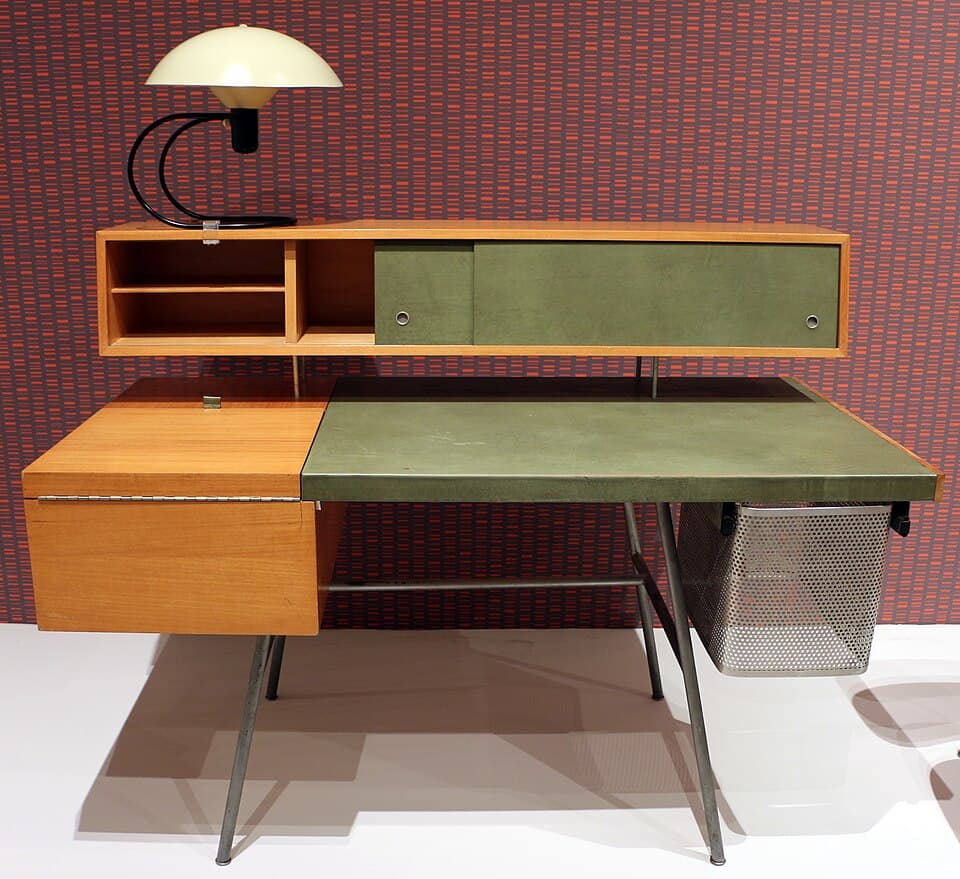
Swedish, American · Arts
Greta von Nessen
December 6, 1898 – present
Early Life and Background
Greta von Nessen was an influential industrial designer best known for her mid‑century modern lighting. She was born on 6 December 1898 in Malmö, Sweden, into a family connected with architecture.[1][4][6] Many accounts describe her as the daughter of an architect, a background that exposed her early to discussions of form, structure, and the integration of objects into built space.[2][3][4] This familial environment helped shape her later sensitivity to how lamps function both as tools and as elements of interior architecture.
Greta pursued formal training at the School for Industrial Arts in Stockholm, an institution that prepared students for careers in applied arts and design.[2][3][4][5][6][9] Her education coincided with the rise of European modernism and the spread of electrical lighting, situating her at the intersection of new materials, emerging technologies, and modern aesthetics. The curriculum emphasized practical craft, industrial processes, and aesthetic judgment, giving her the skills to work professionally in product and lighting design.
During this period she met Walter von Nessen, a German industrial designer who was in Stockholm working for her father, described as a prominent architect.[5] Their relationship bridged Swedish architectural culture and German industrial design. This cross‑cultural partnership would later become central to the development of Nessen Studios and to the shaping of American modern lighting.
Emigration to the United States and Career Beginnings
After completing her studies, Greta joined a wave of European designers who migrated to the United States. According to multiple sources, she and Walter moved to the U.S. in the mid‑1920s, most often cited as 1925.[4][5][6][9][16] They settled in New York City, then a burgeoning center of architectural practice, interior design, and new consumer products.
In New York, Greta and Walter established their lighting design firm. Different accounts give slightly varying dates: some report that the couple founded Nessen Studios in 1926, others that they opened the firm in 1927.[2][3][4][5][16] Regardless of the precise founding year, sources agree that the studio specialized in designing and fabricating architectural and electric lighting—floor lamps, table lamps, and fixtures intended to complement modern interiors.[3][4][5][9][16] The studio’s location in Manhattan’s Murray Hill neighborhood placed them near important architectural and design clients.[2]
Initially, Walter’s work received more public attention. His designs, often described as Bauhaus‑inspired, combined functionalism and new materials to create sleek, modern lamps.[2][4][5] His swing‑arm lamps, developed in the 1930s, became widely known and helped establish Nessen Studios as a leader in contemporary lighting.[3][5][16] Greta worked alongside him in the studio, collaborating on design and production and helping sustain relationships with architects and clients.[2][3][4][5][9]
The studio quickly attracted prominent architects and designers interested in modern lighting solutions. Nessen’s work was associated with figures such as Raymond Loewy, Donald Deskey, Eliot Noyes, Russel Wright, and Gilbert Rohde, placing Greta and Walter within the broader vanguard of American industrial design.[3] Although the published record tends to emphasize Walter, Greta was one of the few women active in this professional milieu, bringing Scandinavian training and architectural awareness to the firm’s products.
World War II and Transition to Independent Design
The Second World War introduced new demands and disruptions. Greta reportedly worked as a multilingual operator with the United States Office of War Information (OWI), utilizing her language skills in a government communication role.[5] This work underscores her integration into American society and her ability to deploy her European background in wartime service.
Walter von Nessen died in the early 1940s, most sources giving 1943 as the year of his death.[2][3][5][16] His passing left Greta as the surviving partner in a studio known primarily under his name. Some accounts state that she initially closed the business after his death but then reopened Nessen Studios around 1945, reviving production of many of the firm’s existing designs and beginning to develop new lamps of her own.[3][4][5][16]
This post‑war reopening marked a significant turning point. Greta moved from collaborative work within a husband‑and‑wife partnership into a role as principal designer and business leader. Operating a lighting studio as a woman in the 1940s and 1950s meant negotiating a field dominated by male designers, manufacturers, and architects. Nonetheless, she maintained the Nessen name and gradually asserted her own design identity through distinctive products.
Major Works and the Anywhere Lamp
Greta’s most celebrated creation is the Anywhere Lamp, designed in 1951aluminum and enameled steel, giving it both durability and a clean, industrial aesthetic.[1][5] Its form is often described as mushroom‑like, with a compact shade and base that allow it to sit on tables, shelves, or other surfaces. The design was conceived to be placed “anywhere,” making it adaptable to different rooms and functions.[2][5]
The Anywhere Lamp exemplifies Greta’s approach to design: she created innovative objects using components and materials that were already commonplace.<3>[2][3][5] Rather than relying on exotic technologies, she exploited the possibilities of sheet metal, standard fittings, and enamel finishes, rethinking their arrangement to produce a lamp that was both simple and visually striking. Its proportions and detailing reflect her training in industrial arts and her understanding of how lighting interacts with space.
Sources note that Greta’s work “came into its own” after Walter’s death as she pursued “game‑changing designs out of components that had long been readily available.”[2] The Anywhere Lamp became a defining example of this strategy and her most famous design. It is closely associated with early modernism and the aesthetic of the industrial era, embodying the fusion of functional utility and modern style that characterized mid‑century interiors.[2]
Beyond the Anywhere Lamp, Greta designed other mid‑century lamps and fixtures that have since been collected and sold through galleries and auction houses.[2][3][14][19][20] These works, while less widely documented by title, share similar qualities: restrained forms, metal construction, and attention to how lamps fit into architectural and domestic contexts.
Museum Exhibitions and Institutional Recognition
Greta von Nessen’s designs received important institutional recognition, particularly in the early 1950s. Her Anywhere Lamp was included in a Good Design exhibition at the Museum of Modern Art (MoMA) in New York.[1][5][9] The Good Design program, organized by MoMA and the Chicago Merchandise Mart, highlighted consumer products that combined aesthetic quality with practical utility. Inclusion signaled that a product met curatorial standards for modernist design.
Selection of the Anywhere Lamp for Good Design established Greta as a designer whose work exemplified the ideals of modern consumer objects. It also placed her within an institutional narrative that otherwise highlighted many male designers and large manufacturers. At a time when relatively few women in industrial design were publicly recognized, her presence in MoMA’s program was notable.[5][9]
By 1952, the Anywhere Lamp was not only in production but also entering museum collections. A lamp dated 1952 appears in the holdings of the Philadelphia Museum of Art, demonstrating early institutional acquisition.[9] Later accounts note that her designs have also been featured at the Museum of Modern Art and that the Anywhere Lamp is part of key museum collections.[1][2]
These exhibitions and acquisitions helped cement the Anywhere Lamp’s status as a design classic. They provided documentary evidence of Greta’s work, ensuring that examples would be preserved, cataloged, and made available for study. For historians of design, such institutional records are crucial given that many commercial products—especially those created by women—are otherwise under‑documented.
Awards, Honors, and Posthumous Recognition
In the decades following her active career, Greta von Nessen’s work continued to attract recognition. A notable honor came when the Anywhere Lamp was depicted on a United States postage stamp in the Pioneers of American Design series.[1][3][16] This series, issued by the U.S. Postal Service, celebrated major contributors to American design history through images of emblematic objects. The stamp featuring her lamp highlighted Greta as a figure whose work helped define American modern design.
The stamp issue and ongoing museum presence have led to recurring mentions of Greta in design histories, exhibitions on women designers, and scholarly discussions about mid‑century industrial design.[1][3][9][16] For example, a Women Designers feature in Antiques and the Arts Weekly, produced in connection with the Bard Graduate Center, identified Greta as a pioneer of mid‑century American design and emphasized her origins in Malmö and training in Stockholm.[6][9]
Commercial galleries, collectors, and auction houses also contribute to her recognition by cataloging and selling vintage Nessen lamps attributed to Greta. These listings, alongside museum records, help maintain her name in the marketplace and in the broader culture of design collecting.[2][14][19][20]
Personal Life
Greta’s personal and professional life were deeply intertwined. She married Walter von Nessen, whose background in German industrial design complemented her Scandinavian training.[2][3][4][5] Their partnership involved both co‑running a business and sharing design responsibilities, although surviving documentation more extensively records Walter’s individual projects.
As a married woman working in industrial design in the first half of the twentieth century, Greta’s experiences reflect the gendered structure of the field. Her early career often appears in sources primarily in relation to her husband, yet she remained in the profession after his death and developed an independent body of work.[3][4][5][16] No widely cited sources document children or extended family, and published accounts focus instead on her educational background, marriage, and professional accomplishments.
Later Life and Death
Biographical details about Greta von Nessen’s later life and death are inconsistent across sources. The English‑language Wikipedia entry lists her lifespan as December 6, 1898 – 1975 but does not give a specific date or place of death.[1] Other institutional records, such as those of the Metropolitan Museum of Art (referenced in editorial context but not in the search results here), have described her life span differently, for example as “Malmö ca. 1900–1978 Murrysville, Pennsylvania.” These discrepancies indicate that her exact year of birth and death has not been definitively established in public, citable sources.
Because neither source provides a precise, corroborated calendar date for her death, editors of reference works have treated the death date as uncertain. The available literature does agree that she died in the 1970s, after an extended career during which her designs remained in production and continued to be sold.[1][3][20] However, without consistent information from primary records or major institutions, the exact date and circumstances of her death cannot be firmly stated.
Despite these uncertainties, it is clear that Greta spent her later years associated with the legacy of Nessen Lighting. The firm, which traces its roots to the studio she co‑founded with Walter, continued to trade on the Nessen name, and contemporary Nessen Lighting materials still describe her as a founder and pioneer of mid‑century American design.[6] Her later life is thus most visible through the continuing presence of her designs in homes, museums, and the design marketplace.
Legacy and Historical Impact
Greta von Nessen’s historical significance rests primarily on her role in mid‑century lighting design and her status as one of the relatively few women recognized in twentieth‑century industrial design. Through Nessen Studios, she helped shape the look of modern interiors, bringing industrial materials and clear, functional forms into domestic spaces.[2][3][4][5][9][16]
The Anywhere Lamp has become her signature work and a symbol of mid‑century modernism. Its continued production, appearance in museum collections, and reproduction in contemporary design markets underscore its durability as a design object.[1][2][9][16] The lamp represents a design approach that values accessibility and flexibility, enabling users to adapt lighting to changing needs without complex installations.
Greta’s career also highlights the importance of acknowledging women’s contributions in fields where they have often been overlooked. For many years, Nessen’s reputation focused largely on Walter’s work. As scholarship on women designers has grown, Greta’s role—as co‑founder of the studio, post‑war leader of the firm, and designer of iconic lamps—has been more fully recognized.[3][6][9]
Her inclusion in museum exhibitions and collections, and on a U.S. postage stamp, demonstrates that her work meets the criteria of historical significance used by cultural institutions. These forms of recognition help counterbalance the scarcity of archival documentation and provide touchpoints for future research on her life and oeuvre.
In summary, Greta von Nessen stands as a key figure in the story of American mid‑century lighting. Trained in Sweden, active in New York, and long associated with Nessen Studios, she created designs that synthesized European modernism with American domestic needs. Her Anywhere Lamp remains a widely recognized object, ensuring that her contribution to design history continues to be visible to scholars, collectors, and the public.
Dated achievements
5 indexed.
- Dec061898Arts
Birth of Greta von Nessen in Malmö, Sweden
Birth of industrial designer Greta von Nessen in Malmö, Sweden.
View details Wikipedia: Greta von Nessen - Jan011925Arts
Emigration to the United States and establishment of Nessen studio
Greta emigrated to the U.S., starting her design career with her studio.