← All women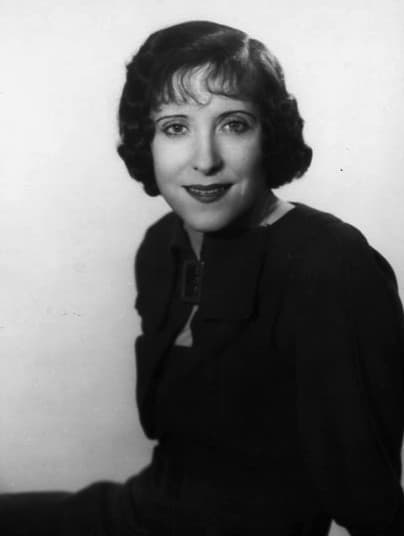
American · Arts
Gracie Allen
July 26, 1895 – August 27, 1964
Early Life and Background
Gracie Allen, born Grace Ethel Cecile Rosalie Allen, entered the world on July 26 in San Francisco, California, though sources disagree on the year, citing 1895, 1896, and 1902.[1][2][3][4] Major reference works such as Britannica and Encyclopedia.com explicitly note the uncertainty, while industry databases including the Television Academy and IMDb list 1895.[2][3][7][9] To a touring theatrical family in the early twentieth century, precise record‑keeping was often irregular, which likely contributes to the conflicting reports.
Allen was one of five children of George Allen and Margaret (Darragh) Allen, both vaudevillians.[3] Her parents were part of the Irish American show‑business community, and several sources emphasize her Irish Catholic background and early exposure to performance.[3][12] As a child, she reportedly began appearing onstage as early as age three, performing interpretive Irish dances, and later joined her sisters in an act known as the Four Colleens.[3][12][14] Growing up in this environment meant that stage work, touring, and rehearsal were ordinary aspects of family life.
Allen’s formal schooling included time at St. Rose Convent School in San Francisco, from which she is said to have graduated around 1914.[14] Her education coincided with the years when vaudeville was a thriving entertainment form, and her dual experience of classroom learning and theatrical work shaped the finely tuned timing and verbal play that later defined her comedy. The combination of Irish cultural identity, Catholic schooling, and theatrical upbringing placed her at a particular intersection of ethnic and gender expectations in early twentieth‑century America, where respectable womanhood and stage life could sometimes be in tension.
Career Beginnings in Vaudeville
Allen’s documented show‑business debut came in 1909
Through the 1910s and early 1920s, Allen worked in vaudeville across regional circuits. The Ward Irish Music Archives and biographical sketches note that she met fellow performer George Burns while working in vaudeville, with dates around 1922–1923.[1][12][14] Burns, born Nathan Birnbaum, was a seasoned performer with experience as a straight man in various acts. When the two were paired, they initially cast Gracie as the straight partner and Burns as the comic, but audiences responded more enthusiastically when Allen played the seemingly illogical character. By 1923, Allen and Burns had formally teamed up as a professional vaudeville duo.[3] They honed a distinctive comic dynamic: Burns as the calm, wry commentator, and Gracie as the cheerful, confident figure whose fractured logic undermined everyday situations. This inversion of their original roles—putting a woman at the center of the joke rather than the rational anchor—was key to their success. They toured widely, appearing at major theaters such as the Palace Theatre and building a reputation for rapid‑fire dialogue and musical numbers. As vaudeville began to wane and radio emerged as the dominant mass medium, Burns and Allen successfully transitioned to broadcast work. In the late 1920s, they appeared as guest performers on variety programs and sponsored broadcasts, gradually adapting their stage routines to the requirements of microphone and script.[1][2] Radio favored distinctive voices and recurring characters, and Allen’s high‑pitched, quick delivery proved ideally suited to the format. In 1932, Burns and Allen began headlining their own regular radio series, moving from guest spots into a dedicated program built around their married‑couple persona.[3] Over the years their series aired under various titles, including The Burns and Allen Show, often associated with sponsors such as Swan soap and Maxwell House coffee.[1][2] The basic structure remained consistent: Burns narrated and occasionally broke the fourth wall, while Gracie’s comic misunderstandings drove the plots. During the 1930s, Allen became one of radio’s most recognizable voices. Her character—a woman whose illogical reasoning never undermined her warmth or confidence—played into contemporary gender stereotypes while also subtly challenging them. Scholars have argued that her logic games and apparent confusion allowed her to question male authority and social norms under the cover of comedy, illustrating how women in entertainment could navigate restrictive expectations while exercising considerable creative control.[3][6] Film work ran parallel to radio. Allen appeared with Burns in more than twenty films, including titles such as Many Happy Returns (1934), We’re Not Dressing (1934), A Damsel in Distress (1937), and The Gracie Allen Murder Case (1939).[1][4][9] These projects leveraged their radio fame, placing Gracie’s character in cinematic situations that highlighted her verbal humor and physical timing. Though often marketed as vehicles for Burns and Allen together, many reviewers singled out Gracie’s performances as the highlight. One of Allen’s most distinctive contributions to American cultural history came in 1940, when she conducted a widely publicized satirical campaign for President of the United States on the fictional "Surprise Party" ticket.[3][5] Originating as a storyline on the Burns and Allen radio show, the campaign expanded into a full-fledged media event, complete with campaign slogans, appearances, and press coverage. Allen’s platform was deliberately absurd. She promised to solve problems through illogical but confident proposals, poked fun at political rhetoric, and used her stock phrases to highlight the theatricality of campaigning. Time magazine and later historians describe how the campaign functioned both as entertainment and as commentary on the increasing role of publicity in politics.[5][6] A major highlight occurred on March 10, 1940, when Allen held a whistle‑stop rally and radio broadcast at the Union Pacific Depot in Omaha, Nebraska, drawing large crowds.[5] Traveling by train, she greeted supporters and delivered speeches that parodied the earnestness of real candidates, while newspapers reported on her progress across the country. Although she did not actually seek office, the campaign blurred boundaries between satire and political participation, prefiguring later uses of comedy to critique electoral processes. For women’s history, the 1940 campaign is especially notable because it placed a woman comedian in the role of a presidential candidate at a time when women held few national political offices. Even within parody, Allen’s occupancy of the role expanded the imaginative possibilities for female political presence, and her success highlighted the power of radio and performance to shape public perceptions of politics.[5][6] With the advent of television, Burns and Allen once again successfully adapted their act to a new medium. In 1950, they brought their long‑running radio format to CBS television as The George Burns and Gracie Allen Show.[3][7] The series premiered on October 12, 1950, initially broadcast live before later shifting to filmed episodes.[3] The show placed Burns and Allen in a domestic setting, living next door to neighbors Harry and Blanche Morton, while continuing the interplay of Gracie’s confusion and Burns’s commentary. The television series preserved key features of their radio work—recurring supporting characters, running gags, and Burns’s habit of addressing the audience directly—while adding visual elements such as physical comedy and situational staging.[1][7] Gracie’s role was central: her misunderstandings and convoluted reasoning created the conflicts that the narrative would then resolve. The show became one of the early hit situation comedies on American television, helping to establish the template of the domestic sitcom. For women on television in the 1950s, Allen’s prominence was significant. She was not simply a supporting wife in a male‑centered program; rather, her character’s actions and dialogue drove the story week after week.[1][7] While her persona relied on the trope of the "scatterbrained" housewife, her performance demanded precise control of timing and tone. Industry accounts and Burns’s own later reflections emphasize that Gracie’s comic talent was the engine of their success.[3][7] Throughout her career and posthumously, Gracie Allen received various forms of recognition for her work in entertainment. On September 10, 1952, she was honored with a star on the Hollywood Walk of Fame, located at 6672 Hollywood Boulevard.[7][10] The star, granted for her contributions to motion pictures, symbolized her status as a major figure in mid‑century popular culture. It placed her name alongside other leading performers of the era, making her part of the physical and symbolic landscape of Hollywood. Later institutional honors further cemented her legacy. In 1988, long after her death, Gracie Allen was inducted into the Television Academy Hall of Fame along with George Burns.[7][15] The Hall of Fame tribute emphasizes the duo’s impact on the development of television comedy and acknowledges Gracie’s central role in crafting the humor that defined their radio and TV shows.[7][15] Such recognition is particularly important given the historical tendency to foreground male comics and understate women’s contributions in accounts of early broadcasting. Beyond formal honors, Allen’s work is frequently cited in histories of American comedy and broadcasting. Encyclopedia entries, biographical essays, and critical studies of radio and television often highlight her as a pioneering woman comedian whose persona helped shape audience expectations of comic wives and domestic humor.[2][3][12] These textual recognitions contribute to preserving her place in the canon of twentieth‑century entertainment. Gracie Allen’s personal life was closely intertwined with her professional career. As noted, she married George Burns on January 7, 1926, establishing a partnership that endured until her death.[3] The couple’s relationship has been widely described as affectionate and mutually supportive. Burns later spoke of Gracie with deep admiration, crediting her with the majority of their act’s comedic power.[3][7] Unable to have biological children, the couple adopted two: Sandra Jean and Ronald Jon Burns.[3] Sandra largely stayed out of the public eye, while Ronald, often called Ronnie, later joined his parents on their television show, playing a version of himself as their college‑aged son.[1][3] The inclusion of their son in the series reinforced the domestic framing of the show and blurred boundaries between the family’s real life and their on‑screen personas. Offstage, Allen was widely reported to be more reserved and serious than her public character suggested. Colleagues and biographers note that she carefully studied scripts, worked diligently on her timing, and took her responsibilities as a wife and mother seriously.[3] She faced health challenges, including heart issues, which contributed to her decision to retire from regular television work in the late 1950s.[3][4] By the late 1950s, years of intensive performance and production schedules began to take a toll on Allen’s health. After eight seasons of The George Burns and Gracie Allen Show, she filmed her final episode on June 4, 1958.[3] Shortly afterward, she retired from show business, effectively concluding a career that had spanned nearly half a century. Following her retirement, the television series continued in modified form as The George Burns Show, but without Gracie’s presence it never reached the same level of popularity.[3][7] Burns himself acknowledged that the show lost a crucial element in her absence, highlighting how central she had been to their joint success. Allen, meanwhile, withdrew from public life, focusing on her family and health. The decision to retire illustrates broader patterns affecting women performers. While male comics often continued working into old age, women—particularly those whose personas relied on youthful energy or domestic roles—sometimes faced pressures to leave the spotlight. Allen’s retirement on her own terms, rather than fading into minor roles, allowed her to preserve the integrity of her professional image. On August 27, 1964, Gracie Allen died of a heart attack at her home in Hollywood, Los Angeles, California.[2][4] She was 69 years old, based on the commonly cited 1895 birth year, though this remains subject to the broader uncertainty about her birth year.[2][4] She was interred at Forest Lawn Memorial Park in Glendale, California, in the Freedom Mausoleum’s Sanctuary of Heritage.[4][14] Her death marked the end of a remarkable life in entertainment, but her influence persisted through syndicated reruns of the Burns and Allen television show, re‑broadcasts of their radio programs, and ongoing citations in histories of American comedy. George Burns would live for more than three decades after Gracie’s passing, often speaking lovingly of her and keeping her memory alive in his own later work and interviews.[3][7] Gracie Allen’s legacy rests on several intertwined achievements. First, she was a central figure in one of the most successful comedy duos of the twentieth century, bridging vaudeville, radio, film, and television. Her ability to adapt her persona to each medium while retaining its core features—rapid‑fire delivery, confident illogicality, and warmth—demonstrates a high degree of professional skill.[1][2][3] Second, she helped shape the archetype of the comic wife in domestic comedy. Many later television series featuring married couples, from the 1950s onward, owe something to the pattern established by Burns and Allen: a husband who narrates or provides rational commentary, and a wife whose actions and misunderstandings drive the plot.[1][7] While this archetype can be critiqued for reinforcing certain stereotypes, Gracie’s performance also offered a subtle critique of logic and authority, showing that the "illogical" character could often reveal deeper truths. Third, Allen’s 1940 satirical presidential campaign has attracted scholarly attention for its early exploration of the convergence between entertainment and politics.[5][6] By turning a radio narrative into a multi‑city whistle‑stop tour, she illustrated how celebrities and media could shape public engagement with political processes, foreshadowing later phenomena in which entertainers play visible roles in electoral discourse. From a women’s‑history perspective, Gracie Allen stands out as a woman who achieved sustained, top‑billing success in fields dominated by men. She was not simply a foil to George Burns; rather, their act depended on her distinctive style, and institutional recognitions such as the Hollywood Walk of Fame star and Television Academy Hall of Fame induction affirm her centrality.[7][10][15] Her career also illustrates the labor and health costs associated with pioneering work in rapidly changing media industries. Modern audiences encountering Burns and Allen through surviving recordings often recognize Gracie as the comedic center of the act. Historians and critics continue to study her work as an example of how women performers navigated and subtly reworked gender norms through humor. In this sense, Gracie Allen’s impact extends beyond the specific jokes and plots of her programs, contributing to broader understandings of women’s roles in twentieth‑century popular culture.Rise to Radio Stardom
The 1940 Satirical Presidential Campaign
Transition to Television: The George Burns and Gracie Allen Show
Awards, Honors, and Institutional Recognition
Personal Life: Marriage and Family
Later Life and Retirement
Death
Legacy and Historical Impact
Dated achievements
7 indexed.
- Jul261895Arts
Birth of Gracie Allen
Gracie Allen was born in San Francisco, California.
View details Gracie Allen Biography - Jan071926Arts
Marriage to George Burns
Gracie Allen married comedian George Burns on January 7, 1926.
View details