← All women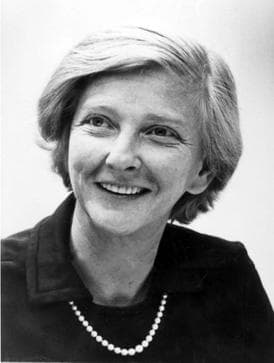
Italian, American · Science
Giuliana Tesoro
June 1, 1921 – September 29, 2002
Early Life and Background
Giuliana Cavaglieri Tesoro was born on 1 June 1921 in Venice, Italy, into a Jewish family headed by Gino and Margherita Maroni Cavaglieri.[1][2][4][5] Her childhood coincided with the rise of Benito Mussolini and the gradual imposition of fascist rule and antisemitic legislation in Italy. As the 1930s progressed, Italy adopted racial laws that severely restricted the rights of Jewish citizens, including access to education and professional opportunities.[1][3][4]
These measures directly affected Giuliana. Although she was academically talented and eager to pursue advanced study, antisemitic restrictions denied her the possibility of post‑secondary education in Italy.[1][8] The family’s situation deteriorated as the political climate became more hostile, compelling them to seek refuge abroad. In 1939, the Cavaglieri family emigrated to the United States, a move that would prove decisive for Giuliana’s development as a scientist.[1][4]
Settling in the U.S., Giuliana quickly adapted to a new language and educational system. Her experience as a refugee from fascism and antisemitism shaped her perspective on the importance of open scientific inquiry and merit-based opportunity. These formative years—marked by displacement, resilience, and the struggle against discriminatory laws—formed the backdrop to her subsequent achievements in chemistry.
Education and Academic Formation
After arriving in the United States, Giuliana Cavaglieri pursued higher education with determination. She enrolled at Yale University, one of the leading American research institutions, to study chemistry. Yale’s environment offered her access to advanced training that had been inaccessible under Italian racial laws.[6]
At Yale, she specialized in organic chemistry and undertook graduate research during the challenging years of World War II. According to Yale’s "Women in Science and Engineering" exhibit, she received her Ph.D. in Organic Chemistry from Yale in 1943.[6] Completing a doctorate at that time, particularly as a young woman and recent refugee, was exceptional. Her thesis work contributed to the broader wartime expansion of chemical research, which encompassed polymers, dyes, and materials relevant to both civilian and military applications.
Although specific details of her dissertation are less widely documented in popular accounts, her training solidified a deep understanding of organic synthesis and polymer behavior. This expertise would later underpin her influential work in textile chemistry, where she became known for innovations that improved the safety and performance of fabrics.
Career Beginnings in Industrial Research
Following her Ph.D., Giuliana Cavaglieri entered industrial research—a path chosen by relatively few women chemists at the time. In 1944, she joined Onyx Oil and Chemical Company as a research chemist.[3] Onyx, involved in dyes, chemicals, and later synthetic materials, provided an environment where her command of organic chemistry could be applied directly to industrial problems.
At Onyx, she initially worked on issues of organic synthesis relevant to dyes and polymers. Her abilities quickly became apparent, and by 1946 she had become head of the organic synthesis department, an unusually senior role for a woman scientist in a corporate laboratory at that time.[3] In this position, she directed research programs that explored new molecules and materials, establishing a track record of successful innovation.
Her responsibilities continued to grow. In 1955, Tesoro was promoted to associate director of research at Onyx.[3] Two years later, in 1957, she attained the role of assistant director.[3] These promotions signaled strong institutional confidence in her leadership and scientific judgment. Within Onyx, she helped guide the company’s research agenda in dyestuffs, polymers, and nascent textile technologies, during a period when synthetic fibers were transforming both industry and consumer markets.
Major Works, Discoveries, and Industrial Contributions
Over the course of her career, Giuliana Tesoro became best known for her pioneering work in textile chemistry, especially in the development of flame‑resistant fabrics and improvements in fabric comfort and practicality.[1][2][4][11] She is credited with earning more than 125 patents, primarily in the United States, covering innovations across multiple aspects of fiber and textile technology.[1][2][4][11]
Her research addressed several critical problems:
- Flame resistance and safety: Tesoro designed chemical treatments and fiber modifications that made textiles more resistant to ignition and flame spread, responding to concerns about the flammability of clothing and household fabrics, particularly children’s garments and upholstery.[1][2][11]
- Fiber performance and comfort: She developed processes to improve the feel, durability, and practicality of synthetic and blended fabrics, enhancing their suitability for everyday wear and specialized uses.[1][2]
- Surface chemistry and dyeing: Tesoro’s work also involved understanding and controlling how dyes and finishes interact with fibers, enabling more reliable coloring and functional surface properties.
While detailed patent-by-patent documentation is not widely summarized in general sources, multiple accounts agree that her inventions significantly influenced the high‑tech fabric industry. A profile from NYU’s Tandon School of Engineering notes that she was instrumental in shaping modern high‑performance and flame‑retardant textiles, bridging fundamental chemistry and industrial application.[11]
Tesoro’s impact was particularly important for consumer safety. As awareness grew about the dangers of highly flammable synthetic garments and furnishings, her work provided technical solutions that could be adopted by manufacturers. These innovations contributed to safer fabrics that met emerging regulatory standards and reduced fire-related injuries and deaths.
Academic Career at MIT and the Polytechnic Institute of New York
In addition to her industrial achievements, Giuliana Tesoro built a substantial academic career. According to Yale’s exhibit, she served at the Massachusetts Institute of Technology (MIT) from 1972 to 1982, holding roles as Visiting Professor, Adjunct Professor, and Senior Research Scientist.[6] At MIT, she brought her industrial experience into an academic setting, working with students and colleagues on advanced problems in polymer and textile chemistry.
Her presence at MIT was significant because women held relatively few senior positions in science and engineering departments during the 1970s. Tesoro’s appointments illustrated how industrial chemists could contribute to university research while also expanding the representation of women in high‑level academic roles. She is reported to have supervised research, taught specialized courses, and participated in collaborative projects that deepened scientific understanding of fibers, finishes, and flame‑retardant systems.
In 1982, Tesoro joined the Polytechnic Institute of New York (today part of New York University) as a Research Professor.[6] In this engineering-focused environment, she continued her work on polymers and textiles, contributing to both teaching and research. She remained in this position until 1996, according to Yale’s exhibit.[6] At the Polytechnic Institute, she helped shape curricula in chemical and materials engineering and mentored students who would go on to work in industry and academia.
Her roles at MIT and the Polytechnic Institute highlight a career that spanned both industrial laboratories and university departments, embodying the increasingly interconnected nature of applied chemistry and engineering education in the late twentieth century.
Awards, Honors, and Recognition
Sources emphasize Tesoro’s reputation as a leading textile chemist and prolific inventor, though detailed listings of specific awards are less commonly summarized in general overviews.[1][2][4][11] She was widely recognized within the textile and polymer communities for her contributions to flame‑resistant fabrics and functional materials.
Her more than 125 patents themselves functioned as a form of professional recognition, demonstrating sustained creativity and impact over several decades.[1][2][4][11] Industrial and academic colleagues cited her work as foundational in developing safer, more versatile fabrics for clothing and interiors.
Biographical writings and institutional profiles—such as those from Yale and NYU—underscore her status as a notable figure in the history of women in science and engineering, positioning her alongside other women chemists who helped open scientific and industrial careers to future generations.[6][11]
Personal Life
Giuliana Cavaglieri married and became known as Giuliana Tesoro, adopting her married surname in professional contexts.[1][2][4][5][7] The widely used form "Giuliana Tesoro" appears in scientific and popular accounts, reflecting her identity as an Italian-born American chemist.
Biographical summaries focus primarily on her scientific and academic achievements and provide limited detail on her family life, children, or other personal relationships. However, her experience as a Jewish refugee from fascist Italy and her subsequent naturalization and life in the United States are central to understanding her personal trajectory. Living and working in New York and other U.S. locations, she built a career that integrated her European origins with American scientific and industrial culture.[1][2][4][5]
Legacy and Historical Impact
Giuliana Tesoro’s legacy lies chiefly in her transformative contributions to textile chemistry and her role as a trailblazing woman in industrial and academic research. Her developments in flame‑resistant and improved-performance fabrics have had lasting consequences for consumer safety, industrial practice, and regulatory standards.[1][2][4][11]
By demonstrating that textiles could be engineered for specific functional properties—such as reduced flammability, greater durability, and better comfort—Tesoro helped shape what is now recognized as the high‑tech fabric industry.[11] Her work influenced not only clothing and furnishings but also specialized applications where fabric performance is critical, including protective gear and industrial materials.
From a historical perspective, Tesoro’s career also illustrates the contributions of refugees and women to twentieth‑century science. Forced to leave Italy because of antisemitic laws, she found opportunities in the United States and used them to build a career that benefitted society at large. In industrial laboratories, she rose to leadership positions rarely held by women at the time, challenging gender norms within corporate research. In academia, her roles at MIT and the Polytechnic Institute expanded the presence of women in senior scientific posts and offered a model for subsequent generations of women chemists and engineers.[6][11]
Her inclusion in lists of notable Italian Americans and profiles of women inventors reflects broader recognition of her importance.[10][11] As women’s history initiatives and institutional exhibits highlight her story, Tesoro’s life stands as an example of how scientific innovation, resilience in the face of discrimination, and cross‑national movement have intersected to shape modern materials science.
Later Life and Death
After concluding her formal appointment as Research Professor at the Polytechnic Institute of New York in 1996, Tesoro’s active institutional roles diminished, though her scientific contributions continued to be cited and applied in industry and research.[6] She lived in Dobbs Ferry, New York, a community in Westchester County.
Giuliana Tesoro died on 29 September 2002 in Dobbs Ferry at the age of 81.[1][2][4][5][9] A paid death notice in the New York Times confirms the date and location of her passing.[9] Obituaries and memorial notices recognized her as a distinguished chemist and inventor whose work had improved fabric safety and performance and who had served in significant academic positions.
Her death marked the end of a life that spanned the turbulent decades of fascist Europe, wartime and postwar industrial expansion, and the growth of modern polymer and textile science. Today, her contributions endure in the fabrics that people wear and use daily and in the ongoing efforts to design materials that are safer, more comfortable, and more functional.
Dated achievements
10 indexed.
- Jun011921Science
Birth of Giuliana Cavaglieri Tesoro
Giuliana Cavaglieri Tesoro was born in Venice, Italy, on June 1, 1921.
View details Giuliana Cavaglieri Tesoro - Yale WISE Online Exhibit - Jun011943Science
Ph.D. in Organic Chemistry from Yale University
Tesoro earned her Ph.D. in Organic Chemistry from Yale University, an extraordinary achievement for a woman in the field at the time.