← All women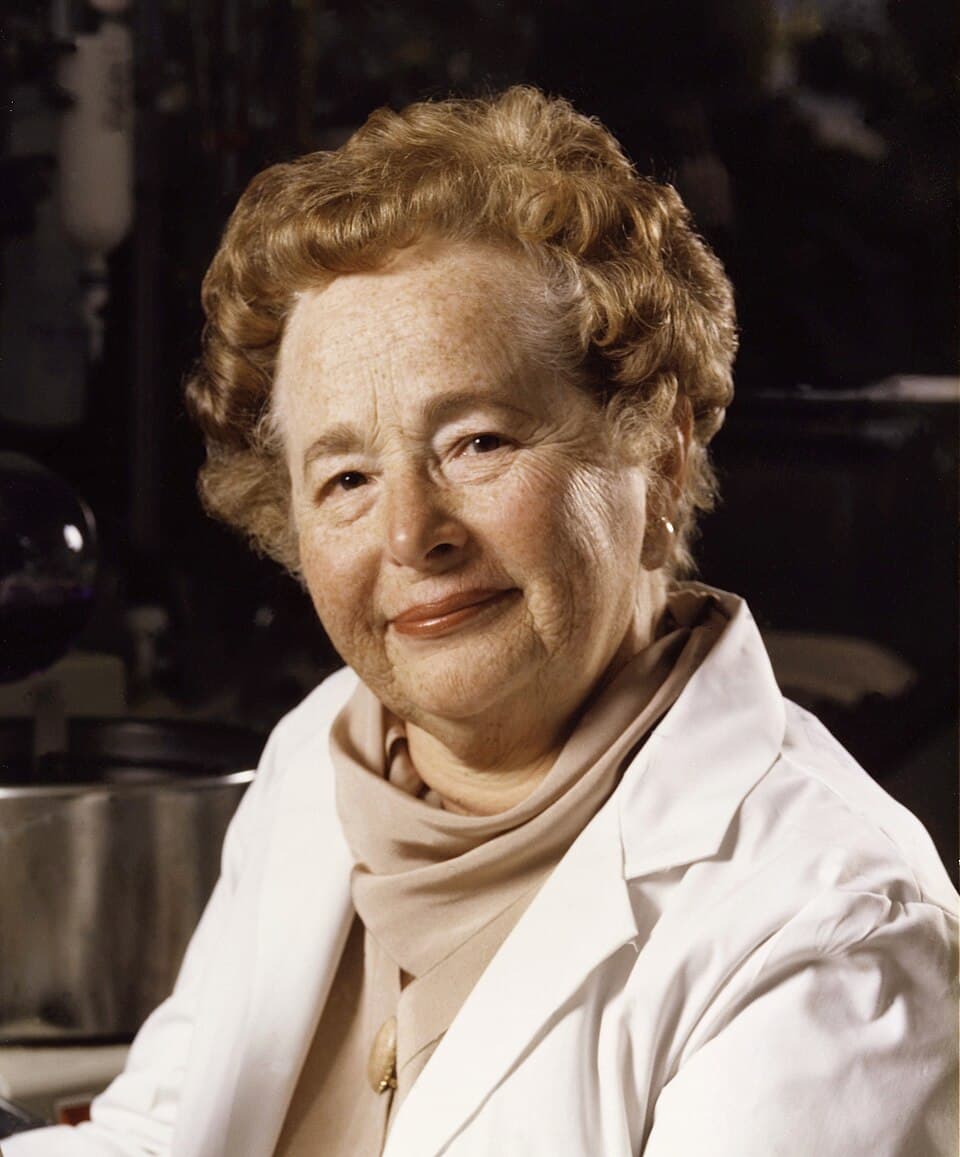
American · Science · Medicine
Gertrude Elion
January 23, 1918 – February 21, 1999
Early life and background
Gertrude Belle Elion was born on January 23, 1918, in New York City, New York, to a family of immigrant roots and modest means. Her father, Robert Elion, was a dentist, and her mother, Bertha Cohen Elion, helped sustain the household in a period marked by economic uncertainty. Elion grew up in the Bronx and from an early age showed strong academic ability and curiosity. Later accounts consistently note that her interest in medicine was deeply personal: as a teenager, she watched her maternal grandfather die of cancer, an experience that persuaded her to devote her life to finding better treatments for serious disease.
Elion entered the field at a time when women faced steep barriers in science. The professional world of chemistry and pharmacology was still overwhelmingly male, and women often encountered skepticism about whether they should even pursue laboratory careers. Elion nevertheless excelled academically, earning an A.B. in chemistry from Hunter College in 1937. She continued her studies at New York University, where she earned an M.S. in chemistry in 1941. Although she had the aptitude for advanced academic research, the era’s limitations for women scientists shaped her path: job opportunities were scarce, and she did not enter the traditional Ph.D. track that was then regarded as the standard route to a major scientific career.
Those early obstacles mattered profoundly. Elion’s later achievements would come not through elite credentialing, but through rigor, persistence, and a willingness to learn by doing. Her life became one of the clearest examples of how women in twentieth-century science often had to build careers outside the conventional pipelines established for men. Rather than treating that as a dead end, Elion turned practical laboratory work into a platform for innovation.
Career beginnings
During the Second World War, shortages in the scientific workforce created openings for women in laboratory work that had previously been closed or difficult to access. Elion found employment in this environment, eventually entering pharmaceutical research. In the mid-1940s she joined Burroughs Wellcome in Tuckahoe, New York, where she began a long professional partnership with biochemist George H. Hitchings. That collaboration would last for decades and become one of the most productive in modern drug discovery.
At Burroughs Wellcome, Elion and Hitchings rejected the dominant trial-and-error model of drug development. Instead, they pursued what would later be described as rational drug design: identifying biological differences between normal and diseased cells and then designing compounds to exploit those differences. Their approach was rooted in biochemistry and in an increasingly molecular view of disease. This was not only a scientific innovation but also an institutional one. It challenged assumptions about how pharmaceuticals should be discovered and showed that precision could outperform randomness.
Elion’s laboratory work involved meticulous synthesis, testing, and refinement of compounds. She became known for her technical skill, intellectual discipline, and ability to move between chemistry, pharmacology, and medical application. In a time when women scientists were often expected to occupy supporting roles, Elion proved central to the inventive process itself.
Major discoveries and scientific achievements
Elion’s work in the 1950s and beyond transformed treatment across several disease categories. One of her earliest major successes was 6-mercaptopurine (6-MP), which emerged around 1950 and later became a cornerstone of chemotherapy for childhood leukemia. The drug interfered with the growth of leukemia cells and represented a major step toward targeted cancer treatment. It was followed by Purinethol, the patented form of 2-amino-6-mercaptopurine, for which a U.S. patent was issued on June 23, 1959. These breakthroughs helped establish Elion and Hitchings as pioneers in antimetabolite therapy.
Another landmark was azathioprine, patented on July 31, 1962. Marketed as Imuran, it became the first widely used immunosuppressive drug and made organ transplantation significantly more successful by reducing rejection. This was a major advance not only in medicine but also in the practical possibilities of surgery. Before azathioprine, transplantation remained highly experimental because the immune system so often destroyed donor tissue. Elion’s work helped move the field toward routine clinical reality.
Elion’s research also influenced antiviral therapy. In the 1970s she and her team developed acyclovir, which became the first successful antiviral drug for herpes. Approved in 1977, acyclovir represented a major breakthrough because it showed that viruses could be attacked selectively without overwhelming harm to healthy cells. Her laboratory’s broader research program also contributed to the later development of AZT, the first widely used drug against AIDS. Even when she was not the sole inventor, Elion’s scientific framework shaped the discoveries made under her leadership.
Her achievements extended beyond a single therapeutic area. Over the course of her career she helped develop drugs used against malaria, gout, bacterial infections, and leukemia. Together, these inventions demonstrated the power of biochemical targeting and helped define modern molecular pharmacology. Her 1988 Nobel recognition confirmed what clinicians and researchers had already come to understand: Elion’s work had changed the way medicine discovers and deploys therapies.
Awards, honors, and recognition
Elion’s achievements drew increasing recognition over time. She received the Garvan-Olin Medal in 1968, an important honor for women chemists. In 1969, she was awarded honorary doctorates from the University of Michigan and Columbia University. As her reputation widened, she continued to be honored by scientific, educational, and civic institutions for both the practical impact of her medicines and the originality of her methods.
In 1988, she shared the Nobel Prize in Physiology or Medicine with George H. Hitchings and Sir James Black for discoveries of important principles for drug treatment. That prize marked the apex of her scientific recognition, but it was followed by additional high honors. On September 16, 1991, President George H. W. Bush presented her with the National Medal of Science. On February 13, 1991, she became the first woman inducted into the National Inventors Hall of Fame. On October 5, 1991, she was inducted into the National Women’s Hall of Fame.
Other honors included the Engineering and Science Hall of Fame induction in 1992, the Lemelson-MIT Lifetime Achievement Award in 1997, and numerous honorary degrees. These accolades reflected not only her scientific productivity but also her role as a model for women in science. Her career helped alter the public image of the inventor from a lone male genius to a collaborative, interdisciplinary scientist working at the intersection of chemistry and medicine.
Personal life
Elion never married and had no children. Biographical sources consistently note that she devoted most of her life to research, teaching, and mentoring younger scientists. Her personal life is often discussed in relation to her professional dedication rather than through marriage or family networks, which in itself reflects the historical context of her career: many women scientists of her generation had to choose between conventional domestic expectations and the demands of serious research careers.
She was also widely respected for her mentoring style. Accounts of her laboratory emphasize that she supported junior researchers and valued collaborative credit. In a field where women were often overlooked or assigned subordinate roles, Elion’s willingness to elevate colleagues’ work helped foster a more inclusive scientific culture. That habit of sharing recognition was not incidental; it was part of her broader understanding of how scientific teams should function.
Legacy and historical impact
Elion’s legacy lies in both the medicines she helped create and the scientific method she championed. Her work demonstrated that drugs could be designed around the known biology of disease rather than discovered by accident. That shift helped lay the groundwork for modern antiviral therapy, cancer chemotherapy, transplantation medicine, and later targeted treatments in many areas of medicine. The significance of her approach extended far beyond the compounds she personally helped synthesize.
She is also remembered as a barrier-breaking woman in science. She advanced through a system that offered women fewer credentials, fewer institutional openings, and less public recognition than men received. Yet she built a career of extraordinary impact without conforming to the traditional academic path. Her success provided a visible counterexample to assumptions that women were peripheral to major scientific invention.
Elion died on February 21, 1999, in Chapel Hill, North Carolina. By then, the field she helped transform had become foundational to modern medicine. Her life remains significant not just because she won a Nobel Prize, but because she helped invent a way of thinking that continues to guide the search for new therapies. In women’s history, she stands as a powerful example of intellectual independence, persistence, and scientific leadership.
Dated achievements
8 indexed.
- Jan231918Science
Birth of Gertrude Belle Elion
Gertrude Belle Elion was born in New York City, New York, United States.
View details Gertrude B. Elion - Wikipedia - Jun231959Medicine
U.S. patent issued for 2-amino-6-mercaptopurine (Purinethol)
U.S. Patent 2,893,839 for 2-amino-6-mercaptopurine was issued to Elion and Hitchings.