← All women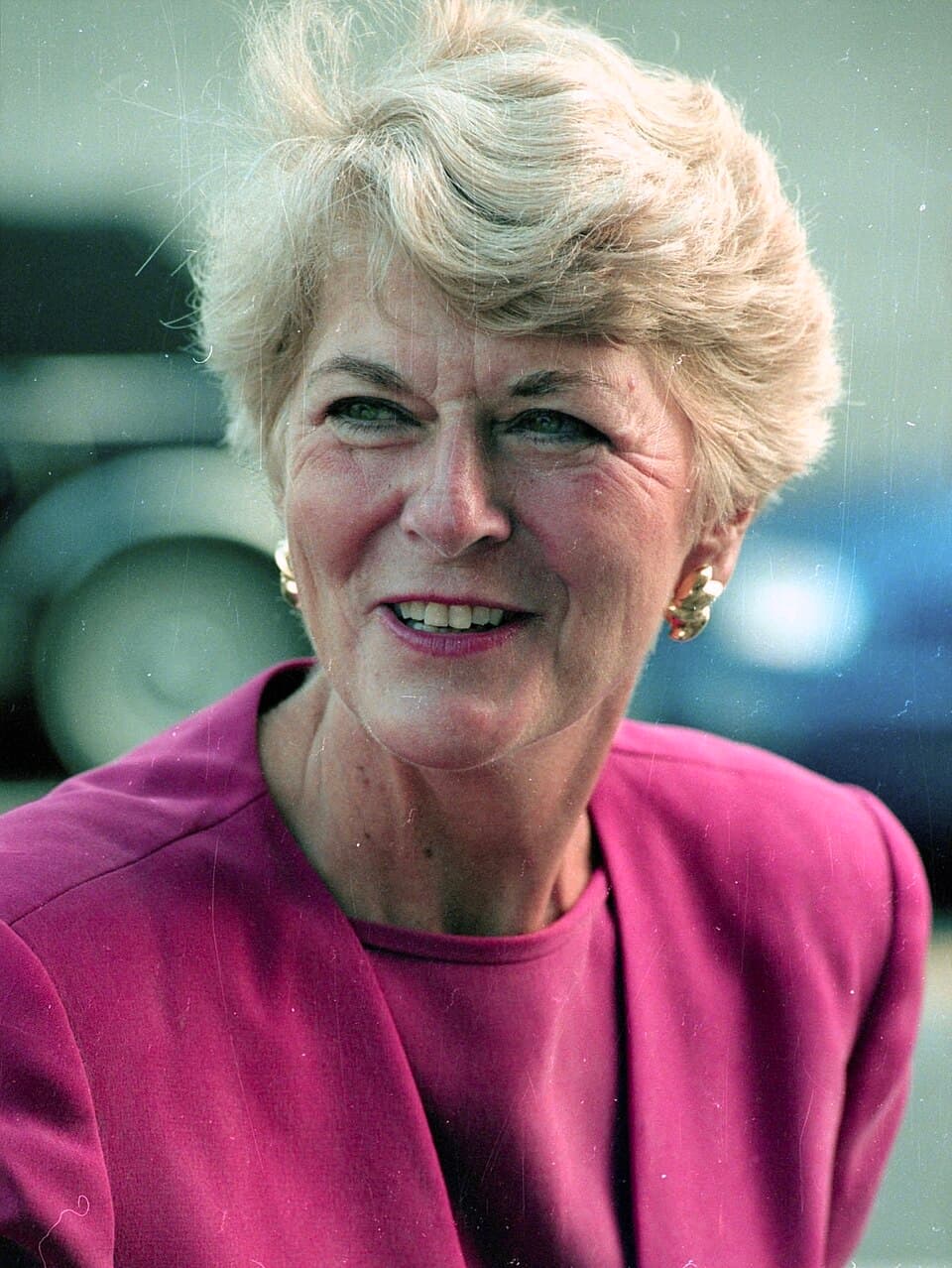
American · Politics
Geraldine Ferraro
August 26, 1935 – March 26, 2011
Early Life and Education
Geraldine Anne Ferraro was born on August 26, 1935, in Newburgh, New York, the youngest of three surviving children of Domenic and Antonetta Ferraro, Italian immigrants who had settled in the Hudson Valley. Her father owned a small restaurant and notions shop, and the family, though not wealthy, maintained a comfortable existence during Geraldine's earliest years. This stability was shattered when she was just eight years old and her father died suddenly, leaving Antonetta to raise her children largely alone during the difficult years of the Great Depression's aftermath and World War II.
Antonetta Ferraro moved the family to the South Bronx and supported her children by working as a seamstress, sewing beaded evening gowns and other garments late into the night. She instilled in Geraldine a fierce belief in the value of education, sending her to Catholic schools and later to a boarding school on scholarship. Ferraro often credited her mother's sacrifices—embodied in the family motto "Finish the job"—as the foundation of her own drive and resilience.
Ferraro attended Marymount Manhattan College, graduating in 1956 with a degree in English, becoming the first woman in her family to earn a college diploma. She initially worked as a public school teacher in Queens while attending Fordham University School of Law at night, one of only two women in her graduating class. She earned her Juris Doctor with honors in 1960, overcoming the significant gender barriers that then existed in American legal education, where women were often discouraged from pursuing law as a serious profession.
Early Legal Career and Family Life
After graduating from law school, Ferraro worked briefly in private practice, often on real estate and civil matters, before taking time to raise her three children—Donna, John, and Laura—with her husband John Zaccaro, a New York real estate developer whom she married on June 10, 1959. Notably, Ferraro chose to retain her maiden name professionally, a decision she said honored her mother's struggles and sacrifices—an unusual and somewhat controversial choice for a woman of her generation.
In 1974, at the urging of her cousin, Queens District Attorney Nicholas Ferraro, Geraldine returned to legal practice as an Assistant District Attorney in Queens County. She was assigned to establish and lead the county's new Special Victims Bureau, one of the earliest specialized units in the country dedicated to prosecuting sex crimes, child abuse, and crimes against the elderly. This work was groundbreaking, introducing victim-sensitive prosecutorial practices at a time when such crimes were frequently mishandled or minimized within the traditional criminal justice system. Ferraro's experiences prosecuting these cases deepened her commitment to protecting vulnerable populations, a commitment that would define much of her subsequent political career.
Election to Congress
In 1978, Ferraro ran for and won a seat in the U.S. House of Representatives, representing New York's 9th Congressional District, which included working- and middle-class neighborhoods of Queens. Her campaign slogan—"Finally... a tough Democrat"—played cleverly on both her prosecutorial toughness and the novelty of a serious female candidate, helping her overcome skepticism about women's electability in a district known for its conservative Democratic leanings.
Sworn into office on January 3, 1979, as part of the 96th Congress, Ferraro quickly built a reputation as an effective and hardworking legislator. She secured seats on the influential House Budget Committee and later the Public Works Committee, and she became a leading advocate for women's economic issues, co-sponsoring the Economic Equity Act to address gender disparities in pensions, insurance, and taxation. She also championed legislation supporting displaced homemakers and stronger child support enforcement, drawing on her earlier prosecutorial experience.
Her political skill and party loyalty led House Speaker Tip O'Neill to appoint her Secretary of the House Democratic Caucus in 1981, making her the highest-ranking woman in the House Democratic leadership at that time. In 1984, she was selected to chair the Democratic Platform Committee ahead of that year's presidential election—a position that placed her prominently before the national party and set the stage for the historic decision that would follow.
The 1984 Vice-Presidential Campaign
On July 12, 1984, Democratic presidential nominee Walter F. Mondale announced that he had selected Ferraro as his running mate, making her the first woman ever nominated for national office by a major American political party. The announcement came after sustained pressure from women's political organizations, including the National Organization for Women, which had explicitly called on Mondale to choose a female running mate. Ferraro's combination of legislative experience, prosecutorial toughness, and relatable immigrant-family background made her an especially compelling choice.
On July 19, 1984, Ferraro formally accepted the nomination at the Democratic National Convention in San Francisco, delivering a speech before a jubilant crowd in which she declared that America was a land "where the daughter of an immigrant can be chosen as her party's candidate for vice president of the United States." Television audiences of tens of millions witnessed the historic moment, a watershed instant in the long struggle for women's full political representation in the United States.
The subsequent campaign was marked by intense scrutiny. Ferraro's husband's business finances became the subject of a prolonged media and legal investigation, an unprecedented level of examination that many observers noted would not have been directed at a male candidate's spouse in the same way. Ferraro also faced persistent, often sexist, questioning about whether a woman could handle the pressures of national security and executive decision-making, and her Catholic faith combined with her pro-choice political stance drew criticism from some religious leaders.
On November 6, 1984, the Mondale-Ferraro ticket faced incumbent President Ronald Reagan and Vice President George H. W. Bush in the general election. Despite a spirited campaign, the Democratic ticket lost by a wide margin, carrying only Minnesota (Mondale's home state) and the District of Columbia. Nevertheless, Ferraro's candidacy was widely regarded as historically transformative, and at the close of the year, Time magazine named her its Woman of the Year for 1984, recognizing the profound and lasting impact of her candidacy on American political culture.
Later Career and Public Service
After leaving Congress at the end of her third term in January 1985, Ferraro remained active in public life. She authored a bestselling memoir, Ferraro: My Story, and worked as a television and radio commentator, becoming a familiar voice in American political media throughout the late 1980s and 1990s.
Ferraro sought to return to elected office twice, launching U.S. Senate campaigns from New York on March 10, 1992, and again on March 10, 1998. In 1992, she narrowly lost the Democratic primary to State Attorney General Robert Abrams; in 1998, she lost the primary to Congressman Charles Schumer, who went on to win the general election. Though neither campaign succeeded, they demonstrated her continued relevance and commitment to public service nearly a decade after her historic national candidacy.
In 1993, President Bill Clinton appointed Ferraro as the U.S. Ambassador to the United Nations Human Rights Commission, a role in which she extended her advocacy work into the arena of international human rights diplomacy, addressing issues including women's rights and religious freedom on the global stage.
Illness and Death
In 1998, Ferraro was diagnosed with multiple myeloma, a cancer of the plasma cells. She became a public advocate for cancer research and treatment access, participating in clinical trials for emerging myeloma therapies and speaking openly about her diagnosis to raise awareness. She survived with the disease for over a decade, considerably longer than typical prognoses of the era, a testament both to medical advances and to her characteristic determination.
Geraldine Ferraro died on March 26, 2011, in Boston, Massachusetts, at the age of 75. Her death prompted tributes from political leaders across the spectrum, including President Barack Obama and Secretary of State Hillary Clinton, who honored her as a pioneering figure who fundamentally reshaped the possibilities for women in American public life.
Legacy
Following her death, Ferraro continued to be honored for her historic contributions. On May 1, 2011, a portrait of Ferraro was unveiled at the U.S. Capitol, permanently recognizing her role as the first woman nominated for vice president by a major party. On September 30, 2012, she was posthumously inducted into the National Women's Hall of Fame in Seneca Falls, New York.
Ferraro's 1984 candidacy remains a foundational moment in the history of American women in politics, frequently cited as having paved the way for subsequent female candidates for national executive office. Her legacy is preserved through institutions such as the Ferraro Papers archive at Fordham University's Walsh Library, scholarship programs bearing her name, and continued public recognition of her role as a trailblazer who proved that a woman could stand at the threshold of the nation's highest offices.
Dated achievements
14 indexed.
- Aug261935Politics
Birth of Geraldine Ferraro
Geraldine Anne Ferraro was born in Newburgh, New York, to Italian immigrant parents Domenic and Antonetta Ferraro.
View details History, Art & Archives – United States House of Representatives - Jun101959Politics
Marriage to John Zaccaro
Ferraro married John Zaccaro, a New York real estate developer, on June 10, 1959.