← All women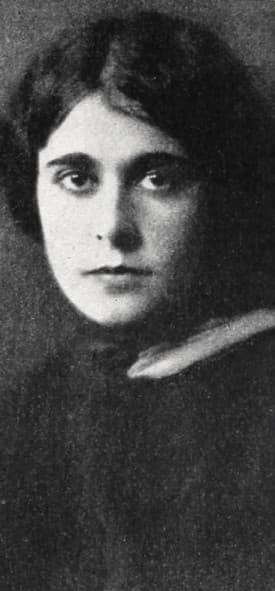
American · Arts
Frederica Sagor Maas
July 6, 1900 – January 5, 2012
Early Life and Background
Frederica Sagor was born on July 6, 1900, in New York City to a Russian immigrant family. Her passion for storytelling and writing was evident from a young age, and she pursued journalism at Columbia University. This educational background played a crucial role in shaping her skills as a screenwriter, which later defined her professional career in Hollywood.
Career Beginnings and Development
Frederica entered the film industry as a scenario editor for Universal Pictures, where her career in screenwriting was launched. Despite the male-dominated environment, she quickly established herself with her adept storytelling and creative flair. Her work included adaptations and original scripts, contributing to the silent film era's rich tapestry.
Major Works, Discoveries, or Accomplishments
One of her most notable contributions was writing the screenplay for 'The Plastic Age' (1925), which was a significant hit at the time. Working often without credit, she scripted or supervised several influential films such as 'His Secretary' (1925) and co-wrote well-received films like 'Beau Broadway' (1928). Her work remains a testament to her craft and resilience in an era where women’s contributions were frequently marginalized.
Awards, Honors, and Recognition Received
Though Frederica did not receive many awards during her career due to the nature of the industry's gender biases, her legacy was acknowledged later in life, notably with the publication of her memoir, 'The Shocking Miss Pilgrim: A Writer in Early Hollywood' in 1999, which brought overdue recognition to her contributions.
Personal Life
Frederica married Ernest Maas, a fellow writer, and they remained together until his death in 1986. Their partnership extended beyond marriage; they collaborated on numerous screenplays, underscoring the compatibility of their professional ambitions.
Legacy and Historical Impact
Sagor Maas’s memoir offered a candid revelation of the challenges faced by women in early Hollywood. Her firsthand account illuminated the gender biases pervasive in the industry and inspired many aspiring female writers and filmmakers. Her longevity, living to 111 years old, showcased her enduring spirit and highlighted a woman who outlasted and witnessed the evolution of cinema.
Later Life and Death
Frederica lived a long life, retiring from screenwriting by the 1930s but re-emerging in public discourse with her memoir. Her detailed recount of her life and challenges faced in old Hollywood provided a rich historical document for film historians. She passed away on January 5, 2012, leaving behind a complex legacy that highlights both her resilience and the challenges faced by women in film.
Dated achievements
2 indexed.
- Jul061900Arts
Birth of Frederica Sagor Maas
Frederica Sagor Maas was born on July 6, 1900, in New York City.
View details Frederica Sagor Maas - Gerontology Wiki - Jan052012Arts
Death of Frederica Sagor Maas
Frederica Sagor Maas passed away on January 5, 2012, at 111 years old.
View details