← All women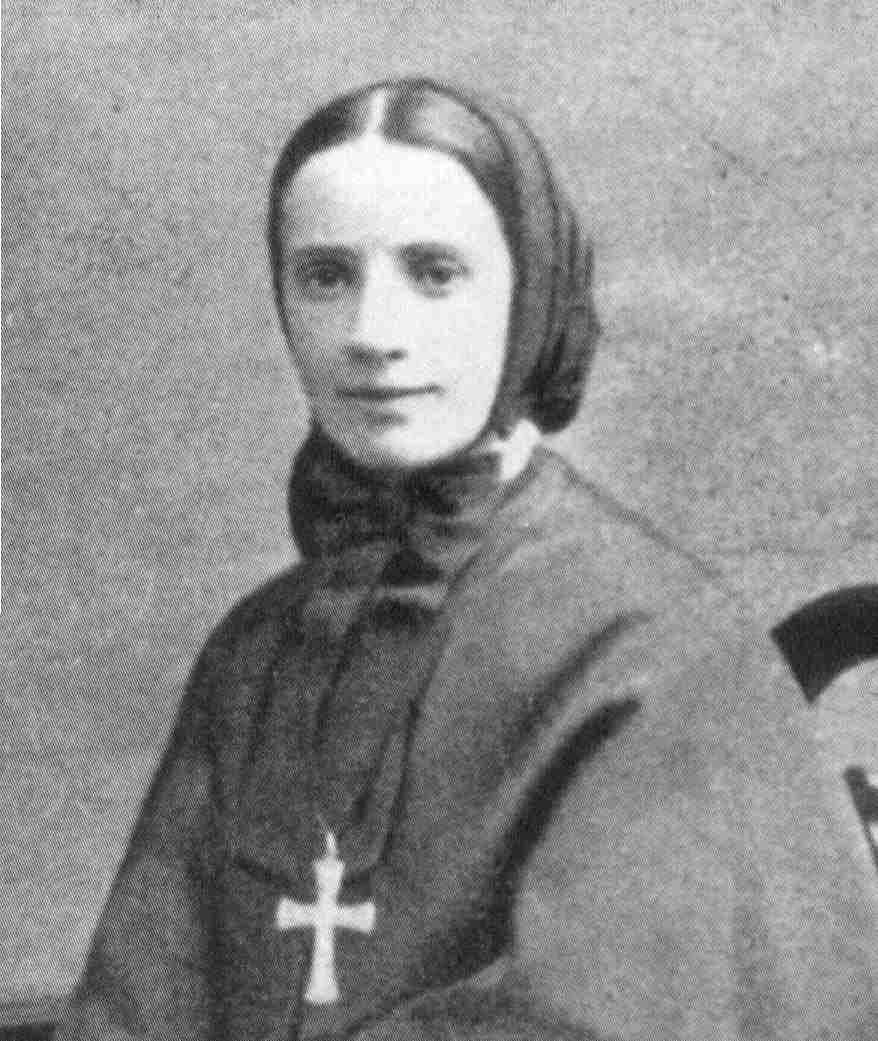
Italian, American · Activism
Frances Xavier Cabrini
July 15, 1850 – December 22, 1917
Early Life and Background
Frances Xavier Cabrini, born Maria Francesca Cabrini, entered the world on July 15, 1850, in the small agricultural town of Sant’Angelo Lodigiano in Lombardy, then part of the Kingdom of Lombardy–Venetia under the Austrian Empire.[2] She was the youngest of thirteen children in the family of Agostino Cabrini, a farmer, and Stella Oldini Cabrini, who raised their large household in a deeply Catholic and rural environment.[7][9] Several of her siblings died young, and her own health was fragile; some accounts note that she was born prematurely and baptized the same day, reflecting concern for her survival.[9]
From an early age, Cabrini was exposed to religious instruction and storytelling that emphasized missionary endeavors and the lives of saints. She was particularly inspired by accounts of St. Francis Xavier, whose example of missionary zeal would later shape her chosen religious name.[1][7] Despite limited educational opportunities for rural girls in nineteenth‑century Italy, she received a modest yet solid education from local clergy and schools, learning literacy, catechism, and practical skills that prepared her for teaching.[6][9]
The political context of Cabrini’s youth was turbulent: the Italian unification process, wars of independence, and social change affected Lombardy, exposing her to both national upheaval and the persistent poverty of peasant families. These conditions fostered in her a sensitivity to social injustice and the precarious position of the poor, themes that would later dominate her work among migrants and urban laborers.[7][9]
Early Vocation and Formation
Cabrini long desired to enter religious life, but her path was marked by obstacles. In her late teens and twenties, she applied to several convents and was repeatedly refused, largely due to concerns about her weak health and perceived inability to withstand the rigors of cloistered or missionary service.[7][9] Around 1868 she began teaching in a rural school in Lombardy, a common avenue for women seeking both livelihood and a quasi‑religious vocation.[7]
Her formal entry into religious work came through the House of Providence Orphanage in Codogno, Lombardy, where she started as a lay worker caring for orphaned and abandoned children.[3][7] She made religious vows there in 1874 and eventually became director of the orphanage, demonstrating organizational skill and spiritual leadership.[7][9] This experience gave her insight into the vulnerabilities of children in an era of industrialization, migration, and limited social welfare, and taught her how to manage institutions with scarce resources.
When the local bishop decided to close the orphanage in 1880, he simultaneously recognized Cabrini’s talent by asking her to found a new religious community.[3][9] With seven women from the orphanage, she formed the nucleus of a congregation that would become central to Catholic social work among immigrants.
Founding of the Missionary Sisters of the Sacred Heart of Jesus
In November 1880, Cabrini formally founded the Missionary Sisters of the Sacred Heart of Jesus (MSC) in Codogno, Lombardy, with seven companions committed to a spirituality centered on the Sacred Heart and a mission to serve the poor and marginalized.[9] Although sources identify the founding month and year rather than the exact day, this step marked the beginning of an institutional framework through which Cabrini could pursue extensive charitable and missionary activities.
The early years of the MSC were spent establishing orphanages and schools in northern Italy. Between 1881 and 1886, Cabrini opened institutions in Lombardy and surrounding regions, focusing on girls’ education and care for children without families.[9] Her approach combined spiritual formation with practical training, seeking to equip young people for work and responsible citizenship in a rapidly changing society.
Cabrini’s administrative acumen quickly became evident. She recruited and trained sisters, negotiated with local bishops and civic authorities, and developed financial strategies for sustaining the community’s works. At a time when women’s public leadership was often limited, she exercised authority within her congregation and in negotiations with male hierarchy, balancing deference with clear advocacy for her mission.[7][8]
Turning Toward the Americas
Initially, Cabrini imagined her congregation’s missionary work would be directed toward China, inspired by her childhood fascination with foreign missions.[3] In 1887 she traveled to Rome to seek ecclesiastical approval for overseas work and to discuss possible missions.[9] There she encountered Pope Leo XIII, who directed her attention instead to the massive wave of Italian emigration to the Americas, telling her, in effect, to go "not to the East, but to the West," where immigrants were in spiritual and material need.[3][9]
Italian migration to the United States and Latin America was reshaping urban demographics in cities such as New York, Chicago, and Buenos Aires. Many migrants faced language barriers, exploitative labor conditions, discrimination, and limited access to education or health care. The Church struggled to provide pastoral and social support to these rapidly growing communities. Cabrini’s readiness to respond positioned her at the intersection of missionary work and emerging transatlantic migration.
Arrival in New York and Expansion in the United States
On March 31, 1889, Cabrini arrived in New York City with six Missionary Sisters of the Sacred Heart, answering an invitation from Archbishop Michael Corrigan and responding to the pope’s directive.[9] She found the conditions of Italian immigrants in Manhattan and surrounding boroughs harsh: overcrowded tenements, dangerous factory work, little schooling, and religious disaffection.
Almost immediately, she and her sisters established the Sacred Heart Orphan Asylum, which provided shelter, education, and religious instruction to children who had been orphaned or abandoned in the migration process.[9] This first U.S. foundation became a model for subsequent institutions, combining charity with structured pedagogy.
In the following years, Cabrini expanded her work across the United States. She opened schools and orphanages in New York, then moved into other regions, including Chicago, Denver, and the Pacific Northwest.[1][4][6] Her institutions typically served Italian immigrants but often welcomed other poor and marginalized groups as well. She insisted on high educational standards and practical training, believing that schooling was essential to social mobility and the preservation of faith among migrants.[3][6]
International Foundations: Nicaragua and Latin America
Cabrini’s vision quickly extended beyond the United States. In 1891, she founded a school in Nicaragua, expanding the Missionary Sisters’ reach into Central America.[7] While sources do not provide the exact month and day, this foundation reflected her transnational approach to immigrant and local needs, linking communities across national borders through education and religious formation.
She later established works in other Latin American countries, including Argentina, where Italian immigrants formed significant communities. These institutions often combined catechesis with literacy and vocational preparation, reinforcing her belief that religious life should be integrated with practical efforts to alleviate poverty and enable upward mobility.[7][9]
Hospitals and Health Care: Columbus Hospital and Beyond
Health care became a central component of Cabrini’s mission. In 1892, she opened Columbus Hospital in New York City to serve immigrants and the working poor, who frequently lacked access to medical treatment.[7] The hospital provided not only clinical care but also a compassionate environment that respected patients’ cultural and religious identities.
Cabrini later helped establish other hospitals, including a Columbus Hospital in Chicago, designed to address the needs of Italian immigrants there.[4] These medical institutions were pioneering in that they were organized and administered by a women’s religious congregation, at a time when professional health care leadership was overwhelmingly male.
Her hospitals and clinics operated within the broader context of late nineteenth‑ and early twentieth‑century urbanization, industrial injury, and epidemics. By offering care to those who could not afford private medicine, Cabrini and her sisters contributed significantly to the development of Catholic health care systems in the United States, influencing how religious institutions engaged with public health.
Leadership, Citizenship, and Congregational Governance
As her congregation expanded, Cabrini’s role as a leader intensified. In 1909, she became a naturalized U.S. citizen in Seattle, Washington, formalizing her legal status in the country where much of her work was concentrated.[7][12] This step further anchored her identity as an Italian‑American religious figure and symbolized the integration of immigrant communities into the civic fabric of the United States.
In 1910, she was named superior for life of the Missionary Sisters of the Sacred Heart, giving her permanent authority over the congregation she had founded.[7] This decision reflected the confidence of Church authorities in her governance and recognized her indispensable role in directing the order’s global network of institutions.
Cabrini’s leadership style combined spiritual intensity with practical realism. She personally inspected foundations, negotiated funding and property acquisitions, and corresponded extensively with bishops, benefactors, and civil officials. She encouraged her sisters to be both contemplative and active, insisting on discipline, compassion, and adaptability.
Personal Life and Spirituality
Cabrini never married and had no biological children; her primary relationships were with her religious community and the countless migrants, children, and patients she served.[7] She took the religious name "Frances Xavier" in honor of the Jesuit missionary, reflecting her aspiration to global evangelization.[1][7]
Her spirituality emphasized trust in the Sacred Heart of Jesus, perseverance amid adversity, and a willingness to cross cultural boundaries. She reportedly suffered from a lifelong fear of water, yet crossed the Atlantic more than two dozen times—some sources say over thirty—demonstrating the extent to which religious conviction propelled her beyond personal limitations.[3][1]
Letters and testimonies from her sisters describe her as demanding but deeply caring. She expected high standards in teaching and nursing, yet was attentive to individual needs and encouraged initiative. Her personal austerity contrasted with her ambition for institutional excellence; she sought the best possible conditions for those in her care while living simply herself.
Later Life and Death
In her final years, Cabrini continued to travel among foundations, even as her health declined. World War I intensified hardship for immigrants and the poor, and her institutions provided crucial support during this period.[9] She spent considerable time in Chicago, where Italian immigrant communities were growing and where her health care and educational works played a key role.
On December 22, 1917, Mother Cabrini died in Chicago, Illinois, at Columbus Hospital, one of the institutions she had helped establish.[2][11] She was 67 years old. Accounts note that she succumbed to complications related to illness—some sources specifically mention malaria—and died in the midst of the network of care she had created for others.[3][4]
At the time of her death, her congregation had spread across multiple countries, and she was widely regarded as a champion of immigrants, children, and the poor. The Missionary Sisters of the Sacred Heart of Jesus continued her work, maintaining and expanding schools, hospitals, and social service centers in Europe and the Americas.[1][6]
Beatification, Canonization, and Honors
After her death, devotion to Cabrini grew among Catholic communities, especially those composed of Italian immigrants and their descendants. Reports of answered prayers and miracles attributed to her intercession led to formal investigations by the Church.
In November 1938, she was beatified, formally declared "Blessed" by the Catholic Church, marking a major step toward sainthood.[7] The date November 13 is widely cited for her beatification and later became her liturgical feast day in the United States.[2][5] This recognition emphasized her exemplary charity and missionary zeal.
On July 7, 1946, Pope Pius XII canonized Frances Xavier Cabrini, officially declaring her a saint.[7][9] She became the first naturalized U.S. citizen to be elevated to sainthood, a milestone that underscored the spiritual contributions of immigrants to American religious life.[5][8] Her canonization resonated strongly in postwar discussions of migration, identity, and the role of the Church in social welfare.
In 1950, the Church named her the Universal Patroness of Immigrants, affirming her particular significance for all who leave their homelands in search of safety or opportunity.[9][2] She is also recognized as patron saint of hospital administrators, missionaries, and so‑called "impossible causes," reflecting her association with daunting undertakings and seemingly insurmountable challenges.[2]
Legacy and Historical Impact
Frances Xavier Cabrini’s legacy is multifaceted. Historically, she stands out as an Italian‑American religious leader who helped shape Catholic responses to mass migration during the late nineteenth and early twentieth centuries. Through the Missionary Sisters of the Sacred Heart of Jesus, she founded 67 schools, orphanages, and hospitals across Italy, the United States, and Latin America, creating a transnational network of social support for vulnerable populations.[1][3][6]
Her work advanced education for immigrant children, especially girls, at a time when opportunities for formal schooling were limited. By insisting on rigorous academics and practical training, she contributed to the upward mobility of immigrant families and helped them navigate new cultural and economic environments.[3][6]
In health care, Cabrini’s hospitals and clinics addressed the needs of those excluded from mainstream medical institutions due to poverty, language, or prejudice. The institutions she founded became part of a wider tradition of Catholic health care that continues to influence medical provision in urban centers across the Americas.[4][6]
Her example also expanded the perceived scope of women’s leadership in the Church. As foundress and superior for life of an international congregation, she exercised administrative authority, negotiated with male hierarchy and civic leaders, and directed complex social enterprises. Her success demonstrated that women religious could be effective organizers and innovators in education and health, challenging narrow conceptions of female religious roles.[7][8]
Beyond institutional impacts, Cabrini’s canonization as the first naturalized U.S. citizen saint made her a symbol of immigrant contributions to American society. Her story has been invoked in contemporary debates about immigration, inclusion, and social responsibility, often to illustrate the positive influence of migrant communities and the importance of compassionate policy.
Numerous shrines, schools, and hospitals bear her name, including national shrines in Chicago and New York, and public commemorations such as Cabrini Day in Colorado celebrate her humanitarian legacy.[4][9] Her life continues to inspire religious and secular advocates working with refugees, migrants, and the poor.
Assessment and Continuing Influence
From a historical perspective, Frances Xavier Cabrini can be understood as a pioneering figure in both women’s religious activism and immigrant social welfare. Her ability to combine spiritual motivation with institutional innovation allowed her to respond effectively to the challenges of industrialization, urbanization, and mass migration.
Her story illustrates how a woman from a modest rural background, initially deemed too frail for religious life, became a global organizer of educational and health services. The Missionary Sisters of the Sacred Heart of Jesus, still active in multiple countries, embody the lasting structural impact of her vision, continuing to serve the poor, educate young people, and provide health care.[1][9]
In the broader context of women’s history, Cabrini’s life challenges assumptions about the limited public roles available to women in the nineteenth and early twentieth centuries. Operating within the framework of the Catholic Church, she nonetheless exercised significant agency, directing resources, shaping policies, and advocating for vulnerable populations.
Her canonization and designation as patroness of immigrants ensure that she remains a touchstone for discussions of migration and humanitarian responsibility. For scholars, activists, and religious communities, Frances Xavier Cabrini stands as an enduring example of how faith‑driven service, strategic institution‑building, and persistent advocacy can alter the social landscape and leave a lasting historical imprint.
Dated achievements
5 indexed.
- Jul151850Activism
Maria Francesca Cabrini was born in Lombardy, Italy
Maria Francesca Cabrini was born on July 15, 1850, in Lombardy, Italy. She founded the Missionary Sisters of the Sacred Heart of Jesus.
View details Saint Frances Xavier Cabrini - Mar311889Activism
Cabrini arrives in NYC and starts her first U.S. mission
Frances Cabrini arrived in New York City on March 31, 1889, beginning her mission to aid Italian immigrants.