← All women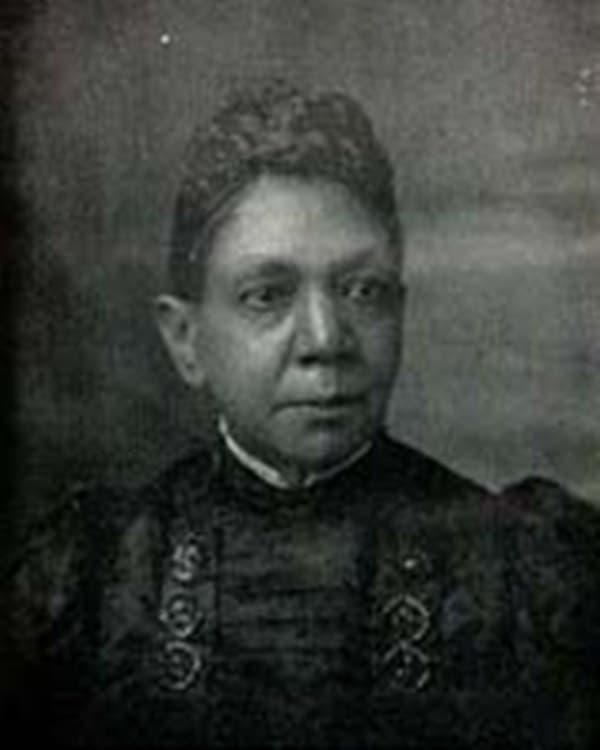
American · Activism · Literature
Fanny Jackson Coppin
October 15, 1837 – January 21, 1913
Early Life and Background
Fanny Marion Jackson, later known as Fanny Jackson Coppin, was born on October 15, 1837, in Washington, D.C., into slavery.[2][3][5] Her mother, often identified as Lucy Jackson, was enslaved, and Fanny’s early childhood was shaped by the insecurity and deprivation that defined life for enslaved African Americans in the nation’s capital.[4] While still a young girl, her freedom was purchased by an aunt for $125, an act noted across biographical accounts as a turning point that enabled her to pursue an education.[3][7][8]
After being bought into freedom, Jackson lived first with an aunt in New Bedford, Massachusetts, and later in Newport, Rhode Island.[1][8][9] As a child and adolescent she worked as a domestic servant, including employment in the household of writer George Henry Calvert, using her limited free time for study.[1][6][9] By age fourteen she was supporting herself while striving to secure schooling wherever possible.[1] These experiences of labor and self-directed study instilled in her a deep conviction that education was the path to uplift for herself and for her people.
Determined to become a teacher, Jackson prepared to enter a formal teacher-training institution and studied to qualify for the Rhode Island State Normal School at Bristol.[1][3] Her early years thus combined economic hardship, racial discrimination, and a persistent search for learning. The fact that an enslaved girl, freed by the sacrifice of relatives, could aspire to formal teacher training in the antebellum period was itself extraordinary, laying the foundation for the barrier-breaking career that followed.
Education and Formative Influences
Jackson’s formative educational experience began when she attended the Rhode Island State Normal School, where she trained in pedagogy and classroom practice.[1][3] Normal schools were created to professionalize teaching, and her attendance there signaled her emerging identity as an educator. She then sought higher education at a college that admitted both Black and female students—a rarity in the mid-19th century.
In 1860, supported by a scholarship from the African Methodist Episcopal (AME) Church and financial assistance from her aunt, Jackson enrolled at Oberlin College in Ohio, the first American college to offer admission regardless of race and to educate women alongside men.[2][3][7] At Oberlin she studied in the classical course, a program emphasizing Latin, Greek, mathematics, and philosophy, which many contemporaries believed unsuitable for women.[3][6]
While at Oberlin, Jackson became the first Black student-teacher (or pupil-teacher) and the first Black teacher in the Oberlin Academy, the college’s preparatory department.[1][2][6] She also insisted on enrolling in what was called the "gentlemen’s course," challenging gendered expectations about academic rigor.[6] Oberlin later recognized her as one of the first Black alumnae of the institution.[2][3]
In 1865, Jackson graduated from Oberlin with a Bachelor of Arts degree, becoming one of the earliest Black women in the United States to earn a college degree and among Oberlin’s first Black female graduates.[2][3][6] Her Oberlin education provided her with advanced intellectual training and direct experience as a teacher, equipping her with the skills and authority to assume a leadership role in Black education.
Career Beginnings: Institute for Colored Youth
Immediately after her graduation in 1865, Jackson accepted a position at the Institute for Colored Youth (ICY), a Quaker-founded school for African American students in Philadelphia.[1][2][3] She began by teaching Latin, Greek, and mathematics and serving as principal of the girls’ high school or Ladies Preparatory Department.[3] The ICY was one of the few institutions devoted to rigorous academic instruction for Black youth, and Jackson’s appointment there placed her at the center of post–Civil War debates about African American education.
Her teaching at the ICY reflected both her Oberlin training and her commitment to high academic standards. At a time when many argued that freedpeople should focus on industrial or agricultural skills instead of classical study, Jackson defended the value of advanced intellectual work for African Americans. She believed that strong academic preparation was essential for training teachers and professionals who could lead Black communities in the aftermath of emancipation.[3][9]
As a teacher, Jackson quickly gained a reputation for discipline, intellectual seriousness, and dedication to her students’ progress. Her position as a Black woman teaching classical subjects to Black youth challenged prevailing racial and gender hierarchies, making her classroom a site of both learning and social change.[3][6]
Principalship and Major Educational Reforms
In 1869, when ICY principal Ebenezer D. Bassett was appointed U.S. minister to Haiti, the school’s board selected Fanny Jackson as head principal of the Institute.[3][9] With this appointment she became the first African American woman in the United States to head an institution of higher learning and is widely considered the first Black woman school principal.[2][3][6]
As principal, Jackson undertook major reforms. She introduced a practice-teaching system that allowed students preparing for careers in education to gain supervised classroom experience, an innovation in teacher education for African American schools.[3] She expanded the curriculum to include an Industrial Department, integrating vocational and mechanical training with academic study so that students could secure employment and economic independence.[1][3][6]
Jackson also established a Women’s Industrial Exchange, which provided a venue for young women to display and sell their mechanical and artistic work.[1][6] Recognizing the challenges faced by women who migrated to cities for work, she founded a Home for Girls and Young Women to house female workers from out of town.[1][6] These initiatives reflected her belief that education should serve both intellectual development and practical needs, particularly for women and the poor.
Under her leadership, the ICY maintained strong academic standards while broadening access to training that could lead to teaching positions and other skilled occupations. Her dual emphasis on classical education and vocational preparation distinguished the Institute from many contemporaneous schools and helped shape the evolution of Black teacher training in the late 19th century.[1][3]
Later accounts also credit Jackson as becoming the first African American superintendent of a school district in the United States, though sources do not consistently provide the date or jurisdiction for this role.[2][6] This recognition underscores the breadth of her influence within educational administration.
National Leadership and Club Work
Beyond her responsibilities at the ICY, Fanny Jackson Coppin emerged as a national leader in Black women’s activism. In the 1890s, she was one of the early vice presidents of the National Association of Colored Women (NACW), an organization formed through the merger of local women’s clubs to address racial injustice, women’s rights, and community uplift.[2][6][7] Through NACW she worked alongside other prominent figures such as Mary Church Terrell to advocate for education, employment, and suffrage.
Coppin also participated in the Colored Women’s League, an influential club that promoted social reform and mutual aid among Black communities.[7][9] Her speeches and lectures emphasized the importance of education, moral development, and economic self-sufficiency. As an activist, she used her platform to argue that Black women should be fully involved in public life, including voting and employment in professional fields.[6][7]
During her later years, Coppin was connected to the Fanny Jackson Coppin Club in Alameda County, California, a Black women’s organization that worked to expand voting rights, secure fair employment opportunities, and support education for Black students.[2][7] The club became a notable force in the California suffrage movement, illustrating how her name and example continued to inspire activism beyond the East Coast.[2][5][7]
Personal Life and Missionary Work
In the early 1870s, Fanny Jackson married Levi Jenkins Coppin, an African Methodist Episcopal minister who would later become a bishop.[2][4][9] Most sources date their marriage to 1881, although the exact day is not consistently recorded.[1][9] Following her marriage, she became known as Fanny Jackson Coppin, integrating her identity as educator with her role in religious and missionary work.
The couple’s partnership extended into shared religious and social missions. Levi Coppin’s rise within the AME Church connected Fanny to networks of Black religious leadership at home and abroad. In the early 1900s, after her retirement from the ICY, she accompanied her husband on a missionary journey to South Africa, where he served as a bishop.[1][2][3]
In South Africa, Fanny Jackson Coppin engaged in counseling African women and supporting educational and religious initiatives.[1][3] Her experiences on this mission broadened her perspective on race, colonialism, and women’s roles in Africa, and she later reflected on them in her writing. Her work there forms part of the larger history of Black American missionary activity and cross-Atlantic religious connections at the turn of the 20th century.
Fanny and Levi’s relationship was built around shared commitments to faith, education, and social uplift. While little is recorded about any children, biographical accounts focus on their mutual influence within the AME Church and Black educational circles.[1][2][4]
Writing and Educational Philosophy
Among Coppin’s important contributions is her book Reminiscences of School Life and Hints on Teaching, published in the early 20th century and available today through archival collections.[10] In this work she recounts her experiences as a student at Oberlin, as a teacher and principal at the Institute for Colored Youth, and as a missionary, while articulating a philosophy of education rooted in discipline, moral development, and practical training.
Her "hints on teaching" provide guidance on classroom management, curriculum design, and the cultivation of character, illustrating how she integrated her Christian beliefs with a progressive understanding of pedagogy.[10] She emphasized the teacher’s responsibility to model integrity and diligence, and she argued for high expectations for Black students, rejecting the idea that limited schooling should be acceptable for African Americans.
The book stands as a rare first-person account by a 19th-century Black woman educator, offering insight into both the challenges and strategies involved in leading a prominent Black institution. It has become an important primary source for historians studying Black education, women’s leadership, and the intellectual life of African American communities in the post–Civil War era.[10]
Later Life, Retirement, and Death
After decades of service, Coppin retired from her position as principal of the Institute for Colored Youth in 1902.[2][3] By that time she had influenced two generations of teachers and students and had firmly established the ICY as a leading institution for African American education. Her reforms in teacher training and industrial education continued to shape the school’s mission even after her retirement.
Following retirement, she devoted more time to missionary work and writing. Around 1907, she traveled to Cape Town, South Africa, with her husband Levi, who was then an AME bishop.[2][3] There she worked among local communities, focusing particularly on women’s spiritual and educational needs.[1][3] Eventually, she returned to Philadelphia and spent her final years completing her autobiography and maintaining connections with the educational and religious communities that had defined her career.[6][10]
On January 21, 1913, Fanny Jackson Coppin died in Philadelphia, Pennsylvania.[2][3][5] She was approximately 75 years old. Her death was noted by contemporaries who recognized her pioneering leadership as a Black woman educator and missionary. Reference works such as Encyclopaedia Britannica and modern biographies consistently record this date and location, affirming her status as a major figure in American educational history.[2][3]
Awards, Honors, and Posthumous Recognition
During her lifetime, Coppin’s principalship at the ICY and her role in national organizations such as the NACW functioned as de facto honors, indicating the respect she commanded among educators and activists. Formal award records from the period are limited, reflecting both archival gaps and the broader reality that Black women’s achievements were rarely celebrated through official prizes in the 19th century.
Posthumously, however, her contributions have been honored through institutional namings and commemorations. In 1926, the Baltimore High and Training School was renamed the Fanny Jackson Coppin Normal School in her honor, recognizing her groundbreaking work in teacher training and educational leadership.[1][2] This institution later developed into Coppin State University, a public historically Black university that continues to bear her name.[1][2]
More recently, schools and community organizations have been renamed or established to honor her legacy, and she has been featured in Black History Month profiles and educational materials that celebrate her role as a "Black History All Star" and a pioneer in Black women’s suffrage and education.[6][7] These honors underline the enduring significance of her life’s work.
Legacy and Historical Impact
Fanny Jackson Coppin’s legacy is multifaceted, encompassing educational reform, Black women’s leadership, and missionary work. As one of the first Black women to earn a college degree and the first African American woman to head an institution of higher learning, she opened pathways that had previously been closed to Black women.[2][3]
Her leadership at the Institute for Colored Youth helped shape the development of Black teacher education in the United States. By combining classical studies with industrial training, and by instituting practice-teaching systems, she prepared generations of African American educators who would disseminate her standards and philosophies to schools across the country.[1][3][6]
Within the realm of women’s activism, Coppin played a significant role in the National Association of Colored Women and related organizations, helping to define agendas focused on education, employment, and suffrage.[2][6][7] Her influence extended to the West Coast through the Fanny Jackson Coppin Club, which contributed to the California suffrage movement and broader efforts to secure voting rights and equal opportunities for Black Americans.[2][5][7]
Historians regard Coppin as a key figure in the long struggle for Black educational equity and women’s rights. Her life demonstrates how an individual born into slavery could, through education and determination, become a national leader shaping institutions and movements that improved the lives of thousands. Modern scholarship and public history projects continue to draw on her writings and example to illuminate the intersection of race, gender, and education in American history.[2][3][6]
Assessment and Continuing Relevance
In contemporary discussions of educational equity and Black women’s leadership, Fanny Jackson Coppin remains a relevant figure. Her insistence on high academic standards for Black students, coupled with attention to vocational and industrial training, anticipates current debates about how best to prepare marginalized students for both college and careers.[3][6]
Her career also highlights the importance of institutional leadership by women of color. By serving as principal—and possibly as a superintendent—she demonstrated that Black women could manage complex educational organizations, shape curricula, and influence public policy. This example continues to resonate as schools and universities seek more diverse leadership.
Finally, Coppin’s life underscores the role of education in broader movements for civil rights and social justice. She viewed schooling as a means to achieve personal dignity, economic independence, and civic participation. In this respect, her work aligns with later figures such as W.E.B. Du Bois and Mary McLeod Bethune, who likewise treated education as a central strategy for racial uplift.
For students, educators, and activists today, Fanny Jackson Coppin’s story offers both inspiration and a historical foundation for ongoing struggles to expand access to quality education and leadership opportunities for Black women and other underrepresented groups.
Dated achievements
6 indexed.
- Oct151837Activism
Birth of Fanny Marion Jackson
Fanny Marion Jackson was born in Washington, D.C., into a family of enslaved people.
View details Wikipedia: Fanny Jackson Coppin - Sep011860Activism
Enrollment at Oberlin College and pioneering role as first Black student-teacher
Fanny Jackson enrolled at Oberlin College in 1860, becoming its first Black student-teacher.