← All women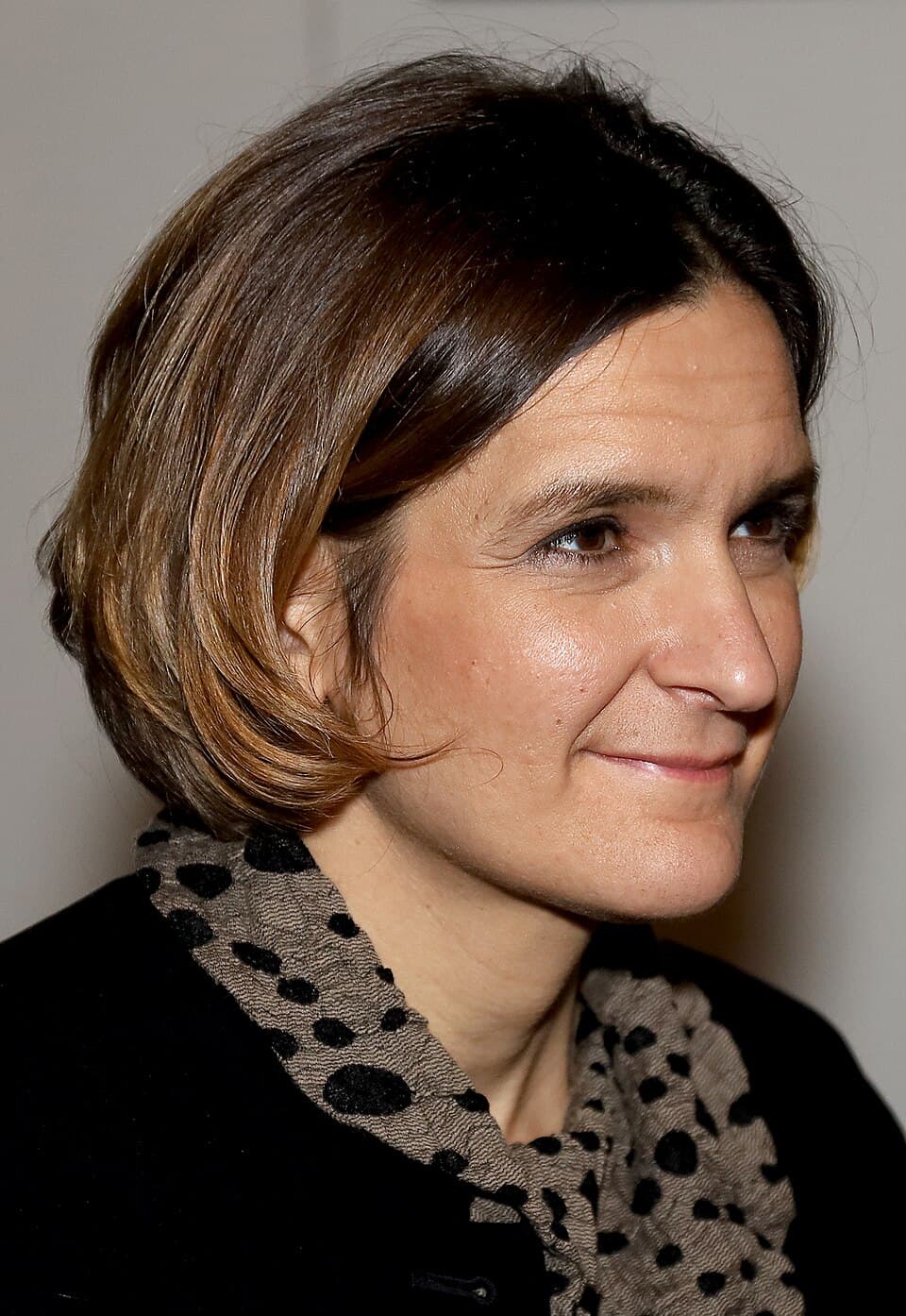
French, American · Science
Esther Duflo
October 25, 1972 – present
Early Life and Background
Esther Caroline Duflo was born on 25 October 1972 in Paris, France.[4][5] She grew up in a household strongly shaped by science and education: her mother was a pediatrician, and her father a professor of mathematics.[5][12] This environment exposed her to both quantitative thinking and a deep concern for human welfare. Duflo has described how this combination of influences helped orient her toward questions about how societies care for their most vulnerable members.
As a student, Duflo initially gravitated toward the humanities. She studied history and developed a keen interest in international relations and the politics of post–Cold War Europe.[1][3] Her intellectual curiosity about Eastern Europe, particularly Russia, led her to spend time there in the early 1990s, observing economic transition and social change.[1] These experiences sharpened her awareness of how economic and political reforms affect ordinary people, and convinced her that economic tools could be used to address pressing social problems.
Duflo enrolled at the École normale supérieure (ENS) in Paris, one of France’s elite institutions of higher education.[14] At ENS she obtained a maîtrise in 1994 and an M.A. in 1995 from the Department and Laboratory of Applied and Theoretical Economics.[14] Her studies combined rigorous economic theory with an openness to interdisciplinary approaches, laying the groundwork for her later innovation in empirical and experimental methods.
After completing her degrees in France, Duflo moved to the United States to pursue doctoral studies in economics at the Massachusetts Institute of Technology (MIT). She earned her Ph.D. in 1999, writing a dissertation that already displayed her interest in micro-level empirical work and the economic lives of poor households.[1][14] Her training at MIT exposed her to cutting-edge econometrics and to mentors and peers who were beginning to explore the potential of randomized evaluations in economics.
Career Beginnings and Development
Immediately after receiving her Ph.D., Duflo joined the MIT Department of Economics as an assistant professor in 1999.[14] Apart from a period of leave at Princeton University, she has spent her academic career at MIT.[5] Her early work focused on development economics, using detailed microdata to study how policies and institutions affect poor communities in countries such as India and Indonesia.
From the outset, Duflo was drawn to empirical research that engaged directly with policy. She conducted fieldwork to understand how people respond to incentives and constraints at the ground level. Her studies of school construction, teacher incentives, and local governance in India helped demonstrate that seemingly small design choices in public programs can have large effects on outcomes such as educational attainment and health.[3]
A pivotal phase in her career began in the early 2000s, when she and colleagues started designing randomized controlled trials (RCTs) to test specific development interventions. RCTs, long used in medicine, were still relatively rare in economics. Duflo recognized their potential to generate credible causal evidence about what works and what does not in anti-poverty policy.[1][3]
In 2003, together with Abhijit Banerjee and Sendhil Mullainathan, she co-founded the Abdul Latif Jameel Poverty Action Lab (J-PAL) at MIT.[2][3] J-PAL was created to promote the use of randomized evaluations in development economics and public policy, and to build partnerships with governments and NGOs willing to test their programs. Under Duflo’s leadership as co-director, J-PAL grew from a small group of researchers to a global network with regional offices in Asia, Africa, Europe, and the Americas.[2][15]
Within MIT, Duflo’s academic trajectory was rapid. By 2005 she had become the Abdul Latif Jameel Professor of Poverty Alleviation and Development Economics, a chair that recognized both her scholarly achievements and her institution-building at J-PAL.[2][14] Her teaching contributed to training a generation of economists fluent in rigorous empirical methods and committed to field-based research in low-income settings.
Major Works, Discoveries, and Contributions
Duflo’s core contribution lies in integrating randomized controlled trials into the daily practice of development economics and public policy. Working with collaborators, she designed and analyzed experiments on topics including education, health care, microcredit, savings behavior, gender norms, and political accountability.[1][3]
In education, her research examined how factors such as teacher attendance, class size, and remedial tutoring affect learning outcomes. In one influential set of studies in India, she and colleagues evaluated programs providing remedial tutoring to low-performing children and computer-assisted learning. The results showed large gains in test scores for targeted students, demonstrating the power of tailored interventions over more uniform increases in spending.[3][15]
In health, Duflo studied issues such as immunization uptake and preventive care. Field experiments tested how small incentives or improved access can significantly increase immunization rates among poor households, and how information campaigns affect health behaviors. These studies revealed that logistical and behavioral barriers, rather than simple lack of awareness, often limit the effectiveness of health programs.[1][3]
Her work on microfinance and savings challenged widely held assumptions. Evaluations of microcredit programs showed that, while they can be useful financial tools for some households, they do not generally produce dramatic escapes from poverty in the way often claimed by advocates. Other experiments investigated how offering different savings products, or labeling accounts for specific purposes, can help households smooth consumption and invest in education or health.[3][15]
Duflo has also engaged deeply with issues of gender and social norms. Some of her research explored how quotas for women in local political councils in India affect policy outcomes and perceptions of women leaders. The findings suggested that exposure to female leaders can change voters’ attitudes and improve the provision of local public goods, highlighting the importance of institutional representation for gender equality.[3]
Beyond specific studies, Duflo’s influence is encapsulated in her coauthored book Poor Economics: A Radical Rethinking of the Way to Fight Global Poverty, written with Abhijit Banerjee and first published in 2011.[3][8] The book synthesizes years of field experiments and microeconomic analyses, arguing that effective anti-poverty policy must start with a detailed understanding of the lives, constraints, and aspirations of poor people. It won major awards, including the Financial Times and Goldman Sachs Business Book of the Year, and helped popularize the use of experimental evidence in development debates.
Methodologically, Duflo has been a leading advocate for treating development policy as an iterative, evidence-based process. She has argued that grand theories should give way to modest, carefully tested interventions that respond to local realities. This stance is reflected in her Nobel lecture, "Field Experiments and the Practice of Policy", delivered on 8 December 2019, where she emphasized humility, experimentation, and collaboration as principles for effective development work.[5]
Awards, Honors, and Recognition
Duflo’s innovative work has earned an extraordinary range of honors. In 2002, she received the Elaine Bennett Research Prize from the American Economic Association (AEA), awarded to a female economist under the age of 40 for outstanding research contributions.[3] In 2005, she was selected for the Best Young French Economist Award (Prix du meilleur jeune économiste de France) by Le Monde and the Cercle des économistes, recognizing her as a leading figure in French economics.[3][11]
Her international profile increased further in 2009, when she was named a MacArthur Fellow, often referred to as a "genius grant," for her pioneering use of empirical methods to study poverty.[14] That same year she became the first recipient of the Calvó-Armengol International Prize from the Barcelona Graduate School of Economics, acknowledging her contributions to the study of social networks and development.[3]
In 2010, the AEA awarded Duflo the John Bates Clark Medal, given to an economist under the age of 40 judged to have made the most significant contribution to economic thought and knowledge.[2][3] The medal is one of the most prestigious honors in the profession, often considered second only to the Nobel Prize. Also around this period she received the International Calvó-Armengol Prize, reflecting the broad impact of her research.[3]
Her recognition extended to scientific institutions in France. In 2011, she received the CNRS Medal of Innovation (Médaille de l'innovation du CNRS), awarded by the French National Centre for Scientific Research for groundbreaking work with substantial societal impact.[3] The same year, her book Poor Economics won the Financial Times and Goldman Sachs Business Book of the Year Award, making her research accessible to a global business and policy audience.[3]
On 3 November 2011, the Harvard Kennedy School announced Duflo as the recipient of the Thomas C. Schelling Award, honoring intellectual work that transforms public policy.[11] Later that month, on 21 November 2011, the Association for Public Policy Analysis & Management named her the winner of the David N. Kershaw Award, recognizing distinguished contributions to public policy analysis and management by a scholar under 40.[11]
In 2013, Duflo received the John von Neumann Award, and on 17 February 2013, the Dan David Prize announced her as a laureate in the category "Poverty" for her innovative research on development and poverty.[11]
The year 2014 brought further recognition: she received the Albert O. Hirschman Prize from the Social Science Research Council (shared with Abhijit Banerjee and J-PAL), and the Erna Hamburger Prize from the EPFL-WISH Foundation.[3] On 13 November 2014, the Infosys Science Foundation announced her as the winner of the Infosys Prize in Social Sciences (Economics) for pioneering development economics.[4]
In 2015, Duflo was awarded the A.SK Social Science Award by the WZB Berlin Social Science Center.[3] She was also named one of Time magazine’s 100 most influential people and appointed by U.S. President Barack Obama as a member of the President’s Global Development Council, reflecting her influence on public discourse and policy beyond academia.[3]
On 3 June 2015, the Princess of Asturias Foundation announced Duflo and other economists as co-recipients of the Princess of Asturias Award for Social Sciences for their work on poverty and welfare.[11]
Her impact continued to be recognized in subsequent years. In 2020, she won the Deutscher Wirtschaftsbuchpreis (German Business Book Prize) for a business book of the year.[3] In 2022, she received a Golden Plate Award from the Academy of Achievement and the Blue Metropolis "Lumières sur les Inégalités" award.[1][3] In 2026, she was honored with MIT’s Frank E. Perkins Award for Excellence in Graduate Advising, highlighting her commitment to mentoring younger scholars.[3]
The pinnacle of her honors, however, came on 14 October 2019, when the Royal Swedish Academy of Sciences announced that Duflo, Abhijit Banerjee, and Michael Kremer had been awarded the Sveriges Riksbank Prize in Economic Sciences in Memory of Alfred Nobel "for their experimental approach to alleviating global poverty".[1][3] She thereby became the youngest-ever laureate in Economic Sciences at age 46 and only the second woman to win the prize.[3][5]
On the same date, media and institutional coverage noted that Duflo and Banerjee were the first married couple jointly awarded the Economics Nobel, sharing the prize with Michael Kremer.[6][8] On 8 December 2019 she delivered her Nobel lecture, and on 10 December 2019 she received the medal at the Nobel Prize Award Ceremony in Stockholm.[5]
Personal Life
Duflo’s personal life is closely intertwined with her professional work. She married her research colleague Abhijit Banerjee, an Indian-born economist with whom she has coauthored numerous papers and the book Poor Economics, and with whom she shared the 2019 Nobel Prize.[3][5] Their partnership is both intellectual and familial, and media accounts have emphasized how they balance research, teaching, and family responsibilities.[8]
Sources note that Duflo has children, and she has spoken publicly about the challenges and possibilities of combining motherhood with an intensive academic career, particularly in a field historically dominated by men.[8] Her experiences have informed her advocacy for better institutional support for parents in academia and for greater diversity and inclusion in economics.
Despite her prominence, Duflo is known for maintaining a relatively low public profile regarding personal details, focusing public attention on research, policy impact, and institutional work rather than on her private life. This choice reflects her broader emphasis on the collective nature of scientific progress and the importance of teams and institutions such as J-PAL.
Legacy and Historical Impact
Esther Duflo’s legacy is closely tied to the transformation of development economics from a field dominated by theoretical models and observational data to one grounded in rigorous experimental evidence. Through hundreds of randomized evaluations conducted by J-PAL and its partners, her approach has influenced how governments, international organizations, and NGOs design and assess programs targeting poverty.[1][2][15]
She has helped institutionalize the idea that policies should be tested, refined, and scaled based on credible evidence rather than ideology. This "evidence-based" paradigm has spread across sectors and regions: ministries of education and health, microfinance institutions, and large NGOs increasingly incorporate randomized evaluations into their decision-making processes, often in collaboration with J-PAL researchers.[2][15]
For women’s history, Duflo stands out as a trailblazing woman economist in a discipline where women have long been underrepresented, particularly in senior positions and among major prize winners. Being the second woman and the youngest person to receive the Nobel Prize in Economic Sciences underscored both the progress and the remaining gaps in gender equality in the field.[3][5][6]
Her visibility and success have inspired initiatives to support women and underrepresented minorities in economics, including mentorship programs and efforts to address bias in hiring and promotion. Duflo herself has spoken about the need to broaden the profession’s demographic base and to ensure that economics engages more fully with questions of equity and social justice.[6][8]
Beyond methodology and gender representation, Duflo’s work has reshaped how scholars and policymakers think about poverty. By emphasizing the complexity of poor people’s lives and the importance of small, context-specific changes, she has challenged simplistic narratives that either blame individuals or treat poverty as an intractable macro-level phenomenon. Her research shows that meaningful improvements are possible when interventions are carefully designed, tested, and targeted.
The institutions she has helped build—especially J-PAL—constitute a major part of her legacy. These organizations have trained large numbers of researchers and practitioners, disseminated findings, and created frameworks for collaboration between academia and policy-makers. As of the 2010s and 2020s, J-PAL and allied networks have influenced policies affecting millions of people worldwide.[2][15]
Later Life and Continuing Work
As of the mid-2020s, Esther Duflo remains an active scholar, teacher, and institutional leader. She continues to serve as the Abdul Latif Jameel Professor of Poverty Alleviation and Development Economics at MIT and as co-founder and co-director of J-PAL.[2][3] She also holds positions such as chair in "Poverty and Public Policy" at the Collège de France and president of the Paris School of Economics, reflecting her transatlantic role in shaping economic research and education.[2]
Her later work extends the experimental approach to new domains, including climate policy and social protection systems, while maintaining a focus on the practical details of implementation. She remains engaged in public debates on development, inequality, and the future of capitalism, often emphasizing the need for humility, empathy, and empirical rigor in policy design.[5][8]
Duflo’s contributions to graduate advising and mentorship were recognized in 2026 with MIT’s Frank E. Perkins Award for Excellence in Graduate Advising.[3] This honor underscores her commitment not only to advancing knowledge but also to supporting the next generation of economists.
She continues to write and speak about the role of economics in society, including in interviews and essays that reflect on her career, the evolution of development economics, and the responsibilities of researchers working with vulnerable populations.[8] Her ongoing work suggests that her legacy will be shaped not only by past achievements but also by future innovations and institutional reforms.
Esther Duflo is alive and active, and her influence on economics, public policy, and women’s representation in the social sciences continues to grow. Her career illustrates how rigorous empirical research, when coupled with moral commitment and institutional entrepreneurship, can change both academic disciplines and the lives of millions of people.
Dated achievements
11 indexed.
- Oct251972Science
Birth in Paris, France
Esther Duflo was born in Paris, France, later becoming a French-American economist known for her work on development economics and global poverty.
View details Britannica - Esther Duflo - Nov212011Science
David N. Kershaw Award announcement
Announced as winner of the 2011 David N. Kershaw Award for policy analysis.