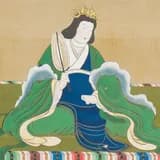
Death of Empress Suiko in 628, ending a landmark reign in early Japanese history.
Empress Suiko died on 15 April 628 in Yamato after a reign of more than three decades. Her death closed one of the most consequential chapters of early Japanese history, ending the reign of the first historically attested woman to govern the country in her own right.
Suiko’s death was significant because it marked the end of the political order that had sustained the early reforms of the Asuka period. During her reign, Buddhism gained court legitimacy, bureaucratic and ritual innovations advanced, and the Yamato state developed a more coherent governing identity. Her passing inevitably raised the question of succession in a court where personal authority, clan influence, and ritual legitimacy all mattered deeply.
Her legacy outlived her. The institutions and cultural orientations associated with her reign—especially Buddhist patronage, court reform, and continental diplomatic engagement—continued to shape Japanese state formation after her death. In the long arc of Japanese history, Suiko is remembered as a sovereign who helped bridge clan politics and early monarchy, while also demonstrating the political reach of women in a male-dominated succession system.