← All women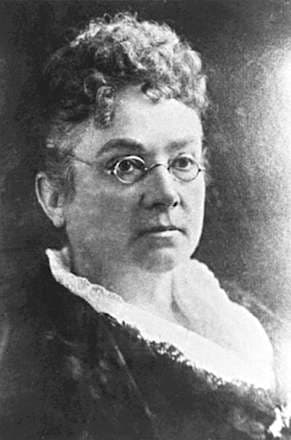
Canadian · Medicine · Activism
Emily Stowe
May 1, 1831 – April 30, 1903
Early Life and Background
Emily Howard Jennings Stowe was born on May 1, 1831, in Norwich Township, Oxford County, Upper Canada. She was the daughter of Hannah Howard and Solomon Jennings, who were committed to providing Emily with a strong educational foundation. Encouraged by her mother's advocacy for women’s education, Emily attended her local school. Her ambition led her to a career in teaching, following her graduation from the Normal School for Upper Canada in 1853, an uncommon pursuit for women of her time.
Career Beginnings and Development
Stowe initially worked as a principal at a public school in Brantford, marking her as the first woman to hold such a position in Ontario. However, her interests shifted towards medicine following her husband's diagnosis with tuberculosis. At that time, women were not admitted to Canadian medical schools, prompting Stowe to apply to the New York Medical College for Women, which she graduated from in 1867.
Upon returning to Canada, she encountered resistance from the medical establishment and began practicing without a license. Her advocacy led to a formal acknowledgment of her education, and she became the first woman to practice medicine in Canada. In 1880, Stowe officially gained her Canadian medical license.
Major Works, Discoveries, or Accomplishments
Stowe was a key figure in the women's suffrage movement in Canada. She co-founded the Toronto Women's Literary Club in 1876, a group that evolved into the Canadian Women’s Suffrage Association. Her leadership in these organizations was critical in improving women's access to education and employment.
Her commitment to women's health became her signature achievement, promoting revolutionary ideas for that era about gynecology and hygiene.
Awards, Honors, and Recognition
During her lifetime, Stowe didn't receive many formal accolades, which is reflective of the societal constraints of her era. However, her posthumous recognition includes her induction into the Canadian Medical Hall of Fame, celebrating her as a groundbreaking force in medicine and women's rights.
Personal Life
Emily married John Fiuscia Michael Heward Stowe, and they had three children. Her daughter, Augusta Stowe-Gullen, followed in her footsteps to become a renowned physician, further solidifying Emily’s legacy in medicine and women's rights.
Legacy and Historical Impact
Emily Stowe's impact on Canadian society is profound, marking her as a symbol of perseverance and advocacy for gender equality. Her challenges and triumphs paved the way for women in medicine, influencing multiple generations of female professionals.
Later Life and Death
Stowe continued advocating for women's medical education until her death on April 30, 1903, in Toronto, Ontario. Her life’s work left an indelible stamp on both the medical field and the women’s rights movement in Canada, inspiring continued efforts for gender equality in professional fields.
Dated achievements
3 indexed.
- May011831Medicine
Birth of Emily Stowe
Emily Stowe, pioneering physician and activist, was born on May 1, 1831.
View details Emily Stowe - Wikipedia - Jan231867Medicine
Graduated from New York Medical College for Women
Emily Stowe graduated from New York Medical College for Women on January 23, 1867.
View details