← All women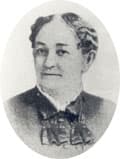
American · Medicine
Emeline Roberts Jones
1836 – 1916
Early Life and Background
Emeline Roberts Jones (often spelled Emmeline in some sources) is widely recognized as the first woman to practice dentistry in the United States.[2][3][5][10] Most historical accounts give her birth year as 1836, though at least one institutional source, Harvard Medical School’s "Perspectives of Change," lists 1838, and the exact day and month are not reliably documented.[2][3][5][10] Her place of birth is variously reported, with some accounts noting New York and others Connecticut, underscoring the fragmentary nature of primary records for women of her era.[11][13]
Details of Jones’s childhood are sparse in surviving sources, a common situation for women who did not belong to elite families and whose early lives were not systematically recorded. Some secondary accounts describe her as having worked as a schoolteacher before turning to dentistry, while others emphasize that her interest in dentistry arose through proximity to her husband’s practice.[11] What is consistent across references is that she grew up in a context where women’s formal access to higher education—especially in medicine and dentistry—was severely limited, and that she showed early intellectual curiosity and manual dexterity suited to clinical work.
In her late teens, Jones married Dr. Daniel Jones, a practicing dentist.[2][3][5] French-language sources specify that she married him at 18, which aligns with mid-19th-century norms for women’s marital age.[5] This marriage placed her in daily contact with dental work at a moment when the profession was rapidly professionalizing through the creation of dedicated dental colleges—institutions that, crucially, did not admit women.[3][8][10] Being close to a dental practice exposed her to the emerging science and technical challenges of the field, even as prevailing gender ideologies sought to confine her to domestic and supportive roles.
Barriers to Formal Education and Self-Directed Training
In the mid-1800s, dentistry in the United States was undergoing significant change. New dental colleges were being established, and the field was moving toward standardized education and licensing. However, these institutions explicitly excluded women, reflecting broader prejudices in medicine and science.[3][8][10] According to the Harvard "Perspectives of Change" resource, Jones "wanted to learn dentistry, but the newly formed dental colleges did not admit women."[3][8] Her husband, Daniel Jones, initially shared the era’s skepticism about women’s capacity for dental surgery, reportedly believing that women’s "frail and clumsy fingers" made them unsuitable.[9]
Confronted with institutional and marital resistance, Jones adopted an unusual strategy: she became a self-taught dentist. Multiple accounts note that she began secretly practicing fillings and extractions on discarded teeth obtained from her husband’s practice.[3][8][9][10] She also studied anatomy and other scientific subjects to ground her practical skills in theoretical knowledge.[8] This clandestine training allowed her to build a portfolio of hundreds of teeth she had successfully treated, which she eventually presented to her husband as evidence of her competence.[8][9]
Her method of learning—through self-directed study and practical experimentation on extracted teeth—illustrates both the ingenuity and desperation of women who sought professional careers in a system that barred them from formal pathways. In an era when observation and apprenticeship were standard modes of learning even for male practitioners, Jones’s work was particularly radical because it challenged both institutional rules and domestic expectations about women’s roles.
Career Beginnings: Joining the Dental Practice (1855) and Partnership (1859)
The turning point in Jones’s early career came in 1855, when her husband finally allowed her to join his dental practice in Danielsonville, Connecticut.[3][7][8][10] After seeing the evidence of her dexterity and successful experimental work, Daniel Jones permitted her to treat patients in his office.[8][9] Glidewell Dental’s "By the Numbers" feature and several historical overviews identify 1855 as the year she began working as an assistant and then as a practitioner in his practice.[7][10]
This step is widely referenced as the moment when Jones became the first woman to practice dentistry in the United States.[2][3][5][7][10] Unlike later pioneers such as Lucy Hobbs Taylor, who would become the first woman to earn a dental degree (DDS) in the U.S., Jones entered the field through experiential learning and practice rather than formal schooling.[2][9][10] Her work in 1855 predated both the admission of women to dental colleges and the awarding of dental degrees to women, making her pioneering status distinct and earlier in time.
By 1859, Jones’s role had evolved from assistant to formal partner in her husband’s practice.[3][9] Harvard’s "Perspectives of Change" notes that she became his partner and was reputed to be a skilled dentist.[3] Other narrative accounts similarly describe 1859 as the year when she was publicly recognized as such.[9] This partnership status signaled her acceptance as a professional colleague within at least one segment of the male-dominated dental community.
During these years, she treated patients alongside her husband, building clinical experience in extractions, fillings, and other routine procedures. The practice’s success, coupled with her emerging reputation, challenged the entrenched belief—articulated by figures such as Dr. George Baker, editor of the Dental Times, who wrote that "the very form and structure of woman unfits her for its [dental surgery] duties"—that women were inherently incapable of dental work.[4] Unbeknownst to such critics, Jones had already been treating patients successfully for years, providing a living refutation of their claims.
Widowhood and Independent Traveling Practice (1864)
In 1864, Daniel Jones died, leaving Emeline a widow with two small children.[3][7][8][9][10] Rather than leaving dentistry or relying solely on family support, she chose to continue practicing independently. Multiple sources describe how she traveled with a portable dental chair, offering care across eastern Connecticut and Rhode Island.[3][7][8][9][10]
This itinerant phase of her career required considerable resilience. Travel in the 1860s was challenging, and the idea of a woman traveling alone or with children to provide medical services was socially unconventional. Nonetheless, Jones built a clientele by bringing dental care directly to patients, many of whom lived far from established urban practices.[3][8]
Her work during this period not only ensured economic survival for her family but also expanded access to dental services in semi-rural communities. It further cemented her professional identity as a clinician in her own right, no longer shielded by the presence of a male partner. The image of Jones carrying a portable chair from town to town has become a symbolic representation of her determination to practice despite social and logistical obstacles.
Establishing a Long-Term Practice in New Haven (1876–1915)
After more than a decade of traveling practice, Jones settled in New Haven, Connecticut in 1876, where she opened a permanent dental office.[3][7][8][9][10] Sources agree that this practice soon became highly successful, and she maintained it continuously until her retirement in 1915.[3][7][8][9]
New Haven, home to Yale University and an emerging professional class, provided a stable environment for Jones’s work and access to a larger patient base. The New Haven Free Public Library’s "Celebrating Notable Women from New Haven" highlights her as a significant local figure, noting that she "maintained a practice in New Haven from 1876 until her retirement in 1915."[3] Her presence in a prominent city made it harder for the profession to ignore the reality of a successful woman dentist.
Jones’s practice in New Haven eventually became a family enterprise. The Sindecuse Museum of Dentistry notes that her son first studied dentistry with her and later earned a DDS from Harvard and an MD from Yale before joining her practice.[8] This detail underscores her role not only as a practitioner but also as a mentor within her family, contributing to the training of a next-generation dentist and physician.
Throughout these decades, she continued to improve her skills and stay abreast of developments in dental science and technology. While sources do not detail specific clinical innovations attributable to her, the longevity and success of her practice suggest deep competence and adaptability in a rapidly changing field.
Professional Recognition, Societies, and Honors
Formal recognition of Jones’s pioneering role came relatively late in her career. In 1893, she was nationally recognized as the first woman dentist at the World’s Columbian Dental Congress, held in Chicago in conjunction with the World’s Columbian Exposition.[2][5][8][9][10] The Sindecuse Museum emphasizes that she was "nationally recognized as the first woman dentist" at this event.[8] French sources and English-language accounts further note that she served on the Woman’s Advisory Council of the Congress.[2][5] This advisory role indicates that she was regarded not only as a curiosity but as a respected voice on women’s participation in dentistry.
That same year, Jones became the 18th dentist to be licensed in Connecticut, according to the Sindecuse Museum.[8][9] The relatively low license number reflects the early stage of Connecticut’s formal licensing system and highlights Jones’s seniority among her peers. Other sources add that she became the first female member of the Connecticut State Dental Society around this period, although specific dates are more clearly documented for her honorary memberships later.[5]
In 1912, Jones was elected to an honorary membership in the Connecticut State Dental Society, and in 1914, she received honorary membership in the National Dental Association (a predecessor to the American Dental Association).[2][5] These honors, awarded near the end of her career, signaled the profession’s formal acknowledgment of her contributions and pioneering status. They also show that, despite the lack of a dental degree, her decades of practice and leadership were considered worthy of institutional recognition.
Posthumously, Jones continued to receive honors. The French Wikipedia notes that in 1994, she was inducted into the Connecticut Women’s Hall of Fame, recognizing her as a trailblazer for women in professional life.[5] Contemporary articles and tributes, such as Dew.Life’s "The History of Women in Dentistry" and various Women’s History Month essays, reiterate this induction and situate her in a broader lineage of women who challenged gender barriers in health professions.[1][10]
The Sindecuse Museum of Dentistry and the National Museum of Dentistry in Baltimore also highlight Jones in their exhibits on women in dentistry, underscoring her continued visibility in educational and historical contexts.[6][8] These institutional recognitions ensure that new generations of dental students and professionals encounter her story as part of the profession’s history.
Personal Life and Family
Jones’s personal life, though less documented than her professional achievements, played a significant role in shaping her career. Her marriage to Dr. Daniel Jones connected her to dentistry but initially restricted her to subordinate roles. Over time, however, she transformed this relationship into an opportunity for learning and eventual partnership.[3][5][9]
Following Daniel Jones’s death in 1864, Emeline was left with two small children to support.[3][8][9][10] Rather than remarrying or leaving the profession, she relied on her dental skills to provide for her family, traveling with her portable dental chair across Connecticut and Rhode Island.[3][8][9] Her dual role as a single mother and professional dentist was highly unusual for the era and underscored her determination and independence.
Her son, whose name is not consistently recorded in accessible sources, later became both a dentist and a physician, earning advanced degrees from Harvard and Yale before joining her New Haven practice.[8] This intergenerational connection illustrates how Jones’s influence extended beyond her own career to shape the educational and professional trajectory of her family.
Some later secondary accounts also suggest that Jones was sympathetic to broader movements for women’s education and rights, although firm evidence of her involvement in specific organizations is limited. Given the era and her experiences, many writers infer that her life’s work functioned as a quiet form of activism: by practicing successfully in a male-dominated field, she embodied arguments for women’s intellectual and professional equality.[1][6][11]
Legacy and Historical Impact
Jones’s most enduring legacy lies in her status as the first woman to practice dentistry in the United States.[2][3][5][7][10] This pioneering role is consistently emphasized in scholarly and popular histories of women in dentistry. Her career demonstrates that women’s exclusion from formal dental education did not prevent them from acquiring expertise and providing high-quality patient care.
By entering practice in 1855, Jones anticipated and helped make possible later developments such as the admission of women to dental schools and the awarding of dental degrees to women. Her work preceded and complemented that of figures like Lucy Hobbs Taylor, who became the first woman to earn a dental degree in 1866.[2][9][10] Together, such early women practitioners broadened the profession’s understanding of who could be a dentist.
Jones’s life story also illuminates the challenges and strategies of women seeking entry into closed professions. Her reliance on self-directed study, secret experimentation on discarded teeth, and practical apprenticeship under her husband illustrates how women carved alternative pathways around institutional barriers.[3][8][9] Her transition from assistant to partner, then to independent traveling dentist, and finally to established urban practitioner forms a narrative arc that has inspired many contemporary retellings.
Modern tributes, including Women’s History Month articles and social media campaigns by dental organizations, frequently highlight her courage and perseverance.[1][6][12][15] These accounts often connect her achievements to the increasing proportion of women in dental education and practice today; for example, Dew.Life’s article notes that by 2015, nearly half of first-year dental students in the U.S. were female, a change that would have been unimaginable in Jones’s time.[1]
Institutionally, her legacy is preserved through museum exhibits and hall-of-fame inductions. The Sindecuse Museum of Dentistry’s profile, the National Museum of Dentistry’s recognition, and the Connecticut Women’s Hall of Fame all contribute to her ongoing visibility.[1][6][8] These recognitions ensure that Jones is not merely a footnote but a central figure in the story of women in dentistry.
Later Life, Retirement, and Death
Jones continued to practice in New Haven until her retirement in 1915, closing a career that had spanned approximately sixty years.[3][7][10] By this time, dentistry had undergone major transformations, including the adoption of modern anesthetics, improved restorative materials, and more rigorous standards of training and licensure. Jones had witnessed and adapted to many of these changes, maintaining a viable and respected practice into advanced age.
In the final years of her career, she received formal honors from professional societies, including honorary memberships in the Connecticut State Dental Society (1912) and the National Dental Association (1914).[2][5] These recognitions, coming close to her retirement, served as public acknowledgment of her pioneering contributions and long service.
Jones died in 1916 at about 80 years of age, with sources consistently agreeing on the year but not providing a specific date.[2][5][10] Her death marked the end of a remarkable professional life that had begun in secrecy and advanced into public acclaim. Obituaries and early historical references have not survived in large numbers, but later historians and institutions have worked to reconstruct and celebrate her story.
In the decades after her death, her name gradually entered the historical record of women’s achievements in dentistry and medicine. By the late 20th century and early 21st century, she was firmly established as a key figure in women’s professional history, frequently cited in discussions of gender and access to medical education.[1][3][6][10]
Historical Debates and Sources
As with many 19th-century women, the historical record for Jones contains some inconsistencies. Her birth year appears as 1836 in many references, including English and French Wikipedia and various dental histories, while Harvard’s "Perspectives of Change" lists 1838.[2][3][5][10] Her birthplace is variously reported, and there is limited documentation of her early non-dental education.
These discrepancies highlight broader challenges in reconstructing the lives of women whose contributions were not fully documented contemporaneously. Nevertheless, core elements of her story—her secret training, entry into practice in 1855, independent work after 1864, New Haven practice from 1876 to 1915, 1893 recognition, and 1916 death—are corroborated across multiple independent sources and institutions.[2][3][5][7][8][9][10]
Despite lacunae in the record, the consensus among historians and professional organizations is clear: Emeline Roberts Jones stands as the first woman to practice dentistry in the United States, and her life and work significantly shaped the subsequent history of women in the profession.[2][3][5][7][10]
Dated achievements
8 indexed.
- Jan011855Medicine
First woman to practice dentistry in the United States
Emeline Roberts Jones begins dental practice, becoming the first woman in the U.S.
View details Harvard Medical School Perspectives of Change - Jan011859Medicine
Becomes partner in husband’s dental practice
Emeline is recognized as a dental practice partner, reflecting her skill.