← All women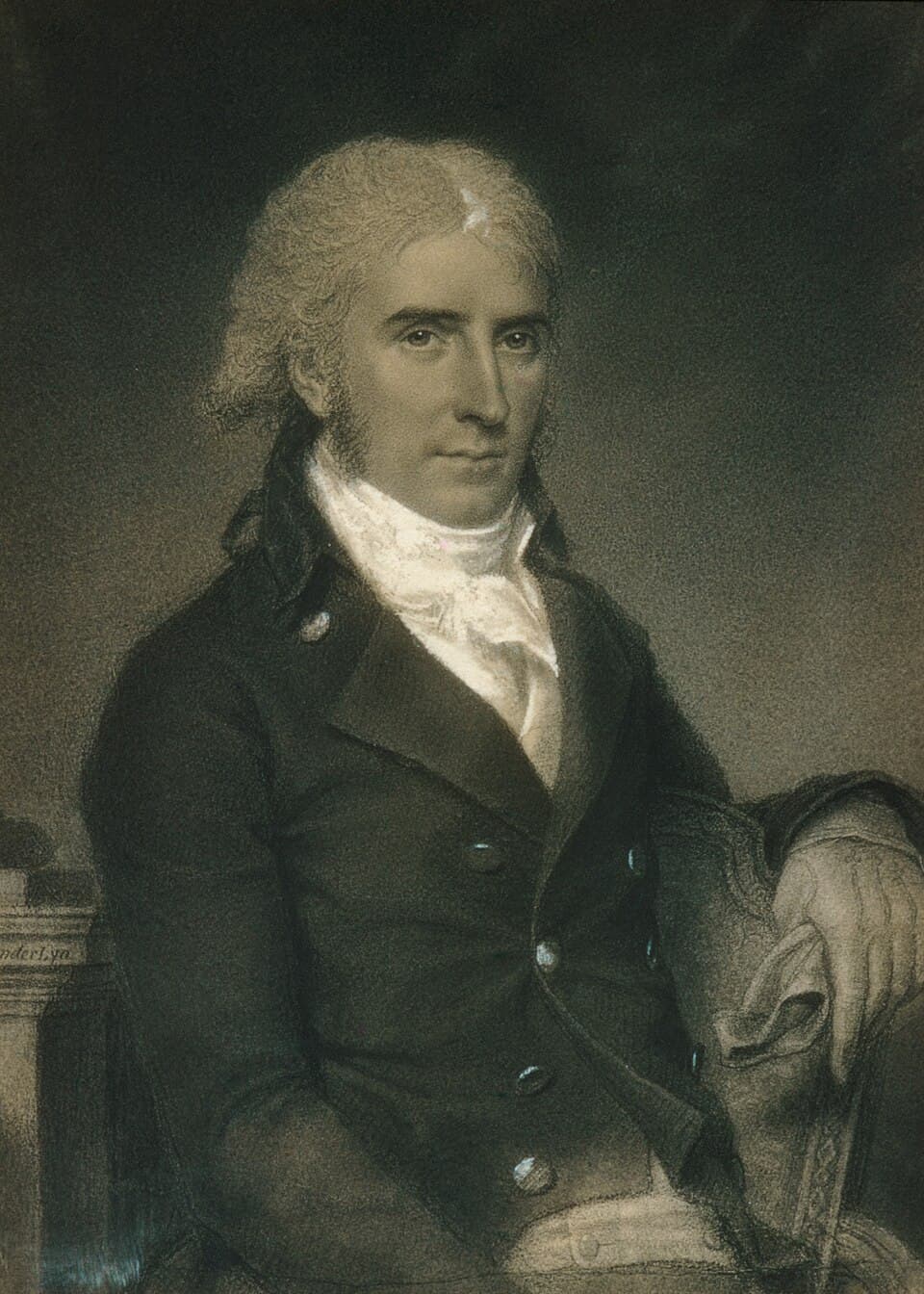
American · Science
Ella Church Strobell
June 26, 1862 – 1920
Early life and background
Ella Church Strobell was born on 26 June 1862 in the United States. The available record on her early life is limited, but the sources indicate that she was educated privately by tutors. That pattern was common for women of her era, particularly those whose families valued education but who still faced social and institutional barriers to advanced scientific training.
Strobell came from a family connected to the Strobel and Church lines, and later accounts note that she was descended from Daniel Strobel Jr., Anna Church Strobel, and Elizabeth Maria Church, figures represented in family portraits preserved in museum and archival contexts. Such references underscore that her name appears in both scientific and cultural histories: she is remembered not only for her own work, but also through the documentary traces left by her family and by the art objects associated with them.
Because women in the nineteenth century were often excluded from formal research pathways, the significance of Strobell’s later scientific career lies partly in what it implies about access. Her education through tutors suggests a cultivated background, but her move into cytology and zoology would still have required persistence in a professional environment where women’s contributions were frequently minimized, mediated through male institutions, or recorded incompletely.
Entry into scientific work
Strobell is described in the available sources as an American cytologist and zoologist and as a member of the Society of Zoologists. Her most important scientific association was with Katherine Foot, a zoologist and cytologist with whom she collaborated frequently. Foot’s better-documented career helps illuminate Strobell’s role: the two worked together in laboratory research, contributing to the study of eggs, chromosomes, and early developmental stages.
Strobell’s career developed during a period when microscopy was transforming biology. Cytology—the study of cells—was emerging as a crucial discipline for understanding heredity and development. Laboratory practice required meticulous preparation of specimens, precise adjustment of instruments, and patient observation. For women scientists, access to this work was itself a barrier-breaking accomplishment, since institutional biology departments and professional societies often remained male-dominated.
Her collaborations with Foot likely took place in an academic and laboratory context that depended on persistence and technical skill more than formal titles. Even when women were admitted to research, they were often not credited equally. Strobell’s surviving record is therefore an important reminder that many women contributed to scientific innovation without receiving the lasting recognition afforded to their male contemporaries.
Major scientific contributions
The most clearly documented milestone in Strobell’s career is the 1907 cytological study of the egg of Allolobophora foetida, published with Foot. Sources describe this as a detailed investigation that employed a method of preparing very thin sections at low temperatures for microscopic work. The technique mattered because biological tissue is fragile and difficult to cut cleanly; colder conditions could help preserve structure and make sections more legible under the microscope.
That research belonged to the rapidly advancing field of experimental cytology. At the turn of the twentieth century, scientists were trying to identify how chromosomes, cell division, and reproduction related to inheritance. The precision required for such work made technical innovation as important as theoretical insight. Strobell’s contribution therefore lies not only in the subject of the study but in the method itself. The ability to create usable microscopic sections from delicate material was a practical advance that helped expand what biologists could observe.
The sources also note that Strobell and Foot were among the early researchers to photograph microscopic samples instead of relying only on hand-drawn illustrations. That shift was significant because it strengthened the evidentiary basis of biology. Photomicrography allowed researchers to preserve and compare images with greater consistency, improving the reproducibility of observations. Even where a discovery was not publicly framed as the absolute “first” of its kind, the work helped normalize a more modern scientific standard.
These contributions were made in a period when women’s technical labor was often overlooked. Strobell’s name appears less frequently in the literature than Foot’s, which itself reflects a common pattern in the history of women in science: collaborative work was real, but archival survival and later citation were uneven. Her scientific record therefore has special value as evidence of the many women whose careful technical labor underpinned the development of modern biology.
Professional standing and recognition
Strobell is identified in the sources as a member of the Society of Zoologists. That membership indicates professional recognition at a time when women were still fighting for inclusion in learned societies and research communities. For a woman scientist in the late nineteenth and early twentieth centuries, affiliation with such a group signaled both expertise and persistence within a system not designed to welcome women as equals.
Unlike many contemporary scientists, Strobell does not appear to have received major prizes or widely publicized honors in the available record. Her recognition instead came through publication and collaboration. In women’s history, that pattern is itself revealing: scientific accomplishment was often documented unevenly, and many women’s honors were informal, local, or embedded in collaborative papers rather than in standalone medals or offices.
Her professional legacy is therefore cumulative rather than ceremonial. She helped advance experimental methods in microscopy, contributed to early cytological research, and participated in a scientific culture that was slowly opening to women, though still unequally. That quiet form of recognition is a recurring theme in the history of women’s science.
Personal life
Sources available in the research corpus provide very little detail about Strobell’s marriage, children, or domestic life. That absence should not be mistaken for insignificance; rather, it reflects the limits of the surviving record. Many women scientists of her generation were documented primarily through their work, while their private lives were either underreported or preserved only in family papers not easily accessible to the public.
The historical evidence does note that in 1917 Strobell bequeathed several paintings by John Vanderlyn and miniature portraits by Louisa C. Strobel to the Metropolitan Museum. This donation reveals something of her personal and family context: she was connected to art and family memory, and she took part in the preservation of objects associated with her ancestry. While this event is not included as a dated achievement here because the exact day is not specified in the source summary available for this profile, it remains a meaningful part of her life story.
Beyond that, little is securely documented in the accessible sources about her intimate relationships or household life. For editorial biography, the responsible approach is to avoid speculation and to note only what can be supported.
Later life and death
The available sources state that Ella Church Strobell died in 1920, but they do not provide a precise day and month. In accordance with the research instructions, her death date is therefore left unrecorded in full. The year of death nonetheless marks the close of a life that intersected with the rise of modern laboratory biology.
Her death occurred after the most active years of her documented scientific work. By that time, cytology had become a more established discipline, and the methods she helped advance—especially microscopic sectioning and photomicrographic practice—were becoming increasingly important in biological research. Even where her name did not remain widely known to the public, her work belongs to the broader transition from nineteenth-century natural history to twentieth-century experimental life science.
Legacy and historical significance
Ella Church Strobell’s historical importance lies in the intersection of women’s scientific labor, methodological innovation, and the development of cytology. Her work with Katherine Foot contributed to a generation of research that made biological structure visible in new ways. The move toward thin-section preparation and photographic documentation mattered not just as a technical refinement, but as part of a broader change in how science established evidence.
She is also significant as a case study in the history of women in science. Her career illustrates the obstacles faced by women who pursued laboratory work in an era when training was often private, recognition was uneven, and archival survival was precarious. Strobell’s surviving biography is brief, but that brevity is historically meaningful: it shows how easily women’s contributions could be compressed into footnotes even when their work helped shape a field.
In recovering her story, historians restore a fuller picture of early twentieth-century biology. Strobell stands for the many skilled women whose technical intelligence, patience, and collaborative work were essential to scientific progress, even when their names were not always foregrounded in the record.
Dated achievements
2 indexed.
- Jun261862Science
Birth of Ella Church Strobell
Ella Church Strobell was born on 26 June 1862 in the United States; she became a noted cytologist and zoologist celebrated for pioneering microscopy techniques.
View details Ella Church Strobell - Wikipedia - Jan011907Science
Publication of earthworm egg cytology study with Katherine Foot
Strobell and Foot published a detailed cytological study of the earthworm egg (Allolobophora foetida), introducing an innovative low-temperature thin-sectioning method.