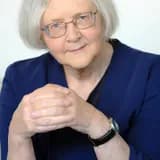
Elizabeth Blackburn presents her Nobel Lecture on telomeres and telomerase at Karolinska Institutet.
On 7 December 2009, Elizabeth H. Blackburn delivered her official Nobel Lecture at Karolinska Institutet in Stockholm, just days before receiving the Nobel Prize in Physiology or Medicine. Introduced by Professor Thomas Perlmann, her lecture synthesized decades of research on telomeres and telomerase.
In the lecture, Blackburn traced the path from early observations of chromosome ends to the elucidation of telomeric DNA sequences and the discovery of telomerase. She explained how telomeres safeguard chromosomes during replication and how telomerase activity influences cellular aging, stem cell function, and cancer development. The talk showcased both her scientific rigor and her ability to make complex molecular mechanisms accessible to a broad audience.
Historically, this lecture is significant because it captured, in a single, authoritative narrative, one of the most important advances in late‑20th‑century molecular biology. It was delivered by a woman scientist at a time when women were still underrepresented among Nobel laureates, reinforcing her role as a trailblazer for gender equity in elite science.
The 7 December lecture has had lasting impact. It serves as a key educational resource for students and researchers, marking a moment when telomere biology moved fully into the scientific mainstream. For women’s history, it documents Blackburn not only as a discoverer but also as a leading public explainer of transformative biological ideas, demonstrating the importance of scientific communication in consolidating paradigm‑shifting work.