← All women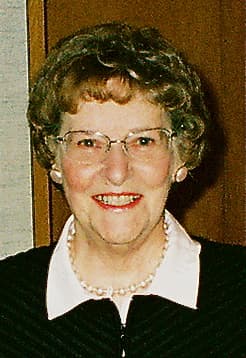
American · Science
Elizabeth Feinler
January 1, 1931 – present
Early Life and Education
Elizabeth Jocelyn "Jake" Feinler was born on 2 March 1931 in Wheeling, West Virginia, United States.[3][4] Growing up in the Ohio Valley during the Great Depression and World War II, she came of age at a time when women had limited access to scientific careers and computing as a profession scarcely existed. Her early schooling and interest in science led her to pursue higher education in the natural sciences.
Feinler studied biochemistry, reflecting the postwar expansion of science and technology education in the United States.[4][6] Like many women of her generation who entered scientific fields, she encountered structural barriers and uneven opportunities. Her eventual pivot from laboratory science into information management and computing mirrored broader shifts in how research institutions organized knowledge and technical documentation.
Career Beginnings and Move into Information Science
In the late 1950s and early 1960s, Feinler’s career moved from biochemistry toward information science. She joined Stanford Research Institute (SRI International) in 1960, working in its Information Research Department.[4][6][9] SRI, located in Menlo Park, California, was then one of the major contract research organizations serving U.S. government agencies and industry. Its environment exposed her to cutting-edge work in computing, human–computer interaction, and networked information systems.
At SRI, Feinler’s early work involved organizing and managing complex bodies of technical information. As computer networks began to emerge, the problem of how to document, catalog, and make sense of distributed resources became increasingly critical. Her skills as an editor, organizer, and information scientist positioned her to play a central role in the development of network information services just as the U.S. Defense Advanced Research Projects Agency (ARPA) began building the ARPANET.
Joining the Augmentation Research Center and ARPANET Work
By 1969, as the ARPANET was starting to grow, Feinler was working for SRI at the Network Information Center (NIC), one of the first institutions included in the network.[9] ARPANET initially linked a handful of research sites; users needed guidance to understand available resources, protocols, and contacts. Feinler was hired to work specifically on organizing this information, providing reference services by mail and phone to researchers and administrators across sites.[7][9]
In 1972, she joined Doug Engelbart’s Augmentation Research Center (ARC) within SRI to work on the ARPANET Resource Handbook.[2][6] Engelbart’s group was renowned for pioneering work in interactive computing, including the mouse, hypertext systems, and collaborative tools. Within this environment, Feinler edited and compiled the Resource Handbook, which became a central directory and guide to ARPANET services. Through this work she became an expert on the evolving network, documenting standards, catalogs of hosts, and lists of services in ways that made the infrastructure intelligible to its users.[6][9]
Her role involved maintaining a directory of people connected to the network, documenting protocols and host responsibilities, and coordinating with site liaisons to ensure that information stayed current.[4][7][9] These tasks, though often invisible, were foundational: they allowed the ARPANET to function as a usable system rather than an opaque collection of machines.
Director of the Network Information Center
From 1972 until 1989, Feinler served as director of the Network Information Systems Center at SRI, and her group operated the Network Information Center (NIC) for the ARPANET as it evolved into the Defense Data Network (DDN) and, ultimately, the early internet.[3][4][6][9] In 1973, she became principal investigator for the ARPANET NIC and, later, for the DDN NIC under contracts with the U.S. Department of Defense.[2][4]
Under Feinler’s leadership, the NIC provided a wide variety of services:
- Publishing the Protocol Handbook and other key network documents, which described standards and procedures for ARPANET and DDN.[4][6]
- Maintaining a directory of people and sites on the network, including contacts at each host.[7][9]
- Supplying user support and reference services by mail and telephone for scientists, engineers, and administrators across the growing network.[7][9]
- Coordinating with site liaisons at each network host to keep information accurate and up to date.[4][7]
This work was instrumental in turning ARPANET and DDN from experimental networks into robust, scalable systems. The NIC under Feinler’s direction functioned as the information backbone of the early internet, mediating between technical standards, organizational practices, and everyday use.
Development of WHOIS, Naming Systems, and Top-Level Domains
Feinler’s most historically significant contributions involve the organization of naming and directory services for the internet. Her group at the NIC developed the first “yellow pages” and “white pages” servers for the network—early online directory services that allowed users to look up hosts and people.[2]
Building on this work, Feinler and her team created the first query-based host name and address server, which became known as WHOIS.[1][2][7] This system allowed users to query a centralized registry to obtain information about network hosts and contacts. Because Feinler oversaw the directory and registry operations, she is widely recognized as the “mother of WHOIS.”[7] Her compilation efforts became the core of what internet users around the world still refer to as WHOIS.[1]
As the ARPANET and DDN grew, numeric host addresses proved increasingly unwieldy. Under contracts to the Department of Defense, Feinler’s group managed the Host Naming Registry for the internet from 1972 to 1989.[2] In this capacity they developed the generic top-level domain (TLD) naming scheme that remains foundational to the modern internet. Feinler and her team helped design and implement TLDs such as .com, .edu, .gov, .mil, .org, and .net.[2][4][5][6][9]
These TLDs were intended to reflect the organizational nature of registrants—commercial entities, educational institutions, government agencies, military organizations, and non-profits. Feinler’s group not only proposed the scheme but also administered the registration of host names under these domains, effectively running the first Internet Naming Authority, a precursor to the later Internet Assigned Numbers Authority (IANA).[1][2][7]
The significance of this work cannot be overstated. By providing human-readable host names and a hierarchical domain structure, Feinler’s systems allowed the network to scale, become more user-friendly, and support diverse communities. Without the naming conventions and registry services she helped develop, the internet would have been far more difficult for non-specialists to use and for administrators to manage.
The First Commercial Domain and Internet Commercialization
One of the notable milestones associated with Feinler’s NIC is the registration of symbolics.com as the first widely recognized commercial domain name. On 15 March 1985, Symbolics, a computer manufacturer, registered symbolics.com under the .com top-level domain, using the naming and registry infrastructure managed by Feinler’s group.[6][9]
This event marked an early step in the commercialization of the internet. It demonstrated that domain naming systems originally devised for government and research networks could support private-sector identities. The registration of symbolics.com is frequently cited as the first commercial .com domain and illustrates how Feinler’s administrative and conceptual work opened the door to commercial use while preserving the integrity of the naming structure.[6]
As more organizations sought domain names, the NIC’s processes—WHOIS queries, host naming rules, and TLD conventions—became central to internet governance. Feinler’s leadership ensured that these systems remained coherent and responsive during a period of rapid expansion.
Professional Service and Influence in Technical Communities
Beyond her direct work at SRI and the NIC, Feinler was active in professional societies and policy discussions related to libraries and information centers. She was appointed a Delegate at Large to the White House Conference on Libraries and Information Centers, reflecting her role in shaping national conversations about information infrastructure.[2]
She has been a member of major professional organizations, including the Association for Computing Machinery (ACM), the American Society for Information Science (ASIS), and the Institute of Electrical and Electronics Engineers (IEEE).[2] She was also a founding member of the Internet Engineering Task Force (IETF), which became one of the principal standards bodies for the internet.[2]
These affiliations underscore Feinler’s dual identity as both a practitioner and a community-builder. She contributed to technical standards and documentation while also helping to cultivate the institutional frameworks—societies, conferences, and working groups—that sustain the internet’s ongoing development.
Retirement from SRI and Continued Engagement
Feinler retired from SRI in 1989, after more than a decade and a half leading the NIC and overseeing the host naming registry.[3][9] Her retirement coincided with a period when responsibility for domain name administration and internet governance structures began to migrate to other entities, culminating in the creation of organizations such as IANA and, later, the Internet Corporation for Assigned Names and Numbers (ICANN).
Even after leaving SRI, Feinler remained engaged with the history and documentation of the internet. She amassed an extensive personal archive of papers related to her work—close to 1,500 shelf feet of documents—highlighted in professional profiles.[10] These materials have helped historians reconstruct the early development of ARPANET and the internet, ensuring that the organizational and informational aspects of its growth are not overshadowed by more visible hardware and protocol innovations.
Awards, Honors, and Recognition
Feinler’s contributions have been recognized by several significant honors. She was elected to the Internet Hall of Fame in 2012, cited for pioneering and managing the ARPANET and DDN network information centers and for her group’s development of early directory services and the top-level domain naming scheme.[2] This recognition places her among a select group of figures whose work was foundational to the internet’s creation and evolution.
In 2000, she was inducted into the SRI Alumni Hall of Fame, acknowledging her long-standing impact on the institution and on networked information services more broadly.[2] She has also received the Jonathan B. Postel Service Award for her contributions to early internet administration through her direction of the NIC for ARPANET, as noted in French-language sources.[8]
The Computer History Museum has profiled Feinler for her “inspiring and creative leadership” of the Network Information Centers that helped shape today’s internet, emphasizing her technical and managerial contributions as well as her mentorship of younger colleagues.[4] In addition, ICANN and other organizations have publicly celebrated her role, describing her as the woman behind WHOIS and highlighting her work in selecting some of the first top-level domains.[1][7]
Mentorship, Advocacy, and Role Model for Women in Technology
Feinler worked in a field that was overwhelmingly male-dominated during the 1960s–1980s. The Computer History Museum and ICANN both emphasize that she served as a mentor and advocate for women in technology, encouraging colleagues to believe in themselves, embrace opportunities, and take chances.[1][4][7]
Her leadership style combined technical rigor with inclusivity. She mentored staff within the NIC and beyond, demonstrating that women could hold senior positions in network administration and information science. By occupying a visible leadership role and contributing decisively to core internet infrastructure, she helped challenge stereotypes about women’s capabilities in computing.
Historians and commentators have increasingly highlighted Feinler as one of the “unsung” pioneers of the internet whose work in organization and naming has often been overshadowed by more celebrated protocol designers and hardware engineers.[5][6][9] Her story helps broaden the narrative of internet history to include information management, documentation, and administrative labor—areas where women have frequently played critical but under-recognized roles.
Personal Life
Publicly available sources focus largely on Feinler’s professional achievements and do not provide extensive detail about her personal life, such as marriage, children, or family relationships.[3][4][6][9] This reflects both her own preference for privacy and a tendency in technical histories to foreground institutional roles over personal biography.
What is documented is her long-standing nickname, “Jake”, used affectionately by colleagues and in many formal profiles.[1][2][3][4][6][9] The adoption of a gender-ambiguous nickname may have helped her navigate male-dominated environments, though this is more an inference than a documented fact. Her professional presence and mentorship, rather than details of private life, form the core of the historical record.
Later Life and Public Recognition
Feinler remains alive as of the early 2020s and has participated in interviews, talks, and retrospectives on the history of the internet.[3][6][7] ICANN has produced video tributes and blog posts describing her as the woman behind WHOIS and celebrating her impact on International Women’s Day.[1][7] The New-York Historical Society and other institutions have featured her in exhibitions and essays that highlight women’s roles in shaping the internet.[9]
Her legacy is preserved not only through honors and institutional profiles but also through archival collections such as those at the Computer History Museum, which document the work of the NIC and the early development of network information systems.[4] As internet governance debates continue, her experience administering host naming and directory services provides historical perspective on the challenges of balancing technical efficiency, organizational clarity, and user accessibility.
Legacy and Historical Impact
Elizabeth J. “Jake” Feinler’s legacy lies primarily in her pioneering work on network information centers, directory services, WHOIS, and domain naming systems. By orchestrating the informational infrastructure of ARPANET and DDN, she helped transform a small, experimental research network into a scalable, usable system that could support diverse communities.
Her development of the first yellow- and white-pages servers, the host naming registry, and the WHOIS query service created tools that are still part of the internet’s core architecture.[1][2] The generic top-level domains she helped design—.com, .edu, .gov, .mil, .org, .net—remain among the most widely used TLDs worldwide and shape how organizations present themselves online.[2][4][5][6][9]
In addition, Feinler’s work illustrates the importance of information science and administration in technology history. While protocol design and hardware innovation are often celebrated, the success of complex systems like the internet depends equally on documentation, naming, and governance. Her career demonstrates how expertise in organizing information can be as transformative as coding or engineering.
From a women’s-history perspective, Feinler stands as a significant figure who navigated and reshaped a male-dominated field. Her leadership of the NIC, mentorship of colleagues, and recognition by institutions such as the Internet Hall of Fame underscore the roles women have played in building the infrastructure of the digital age.[2][4][7][9] As scholarship on the social history of the internet expands, her story offers a critical lens on how administrative and informational work—often carried out by women—has quietly underwritten technological revolutions.
Dated achievements
8 indexed.
- Jan011931Science
Birth of Elizabeth Jocelyn "Jake" Feinler
Elizabeth Jocelyn Feinler was born in Wheeling, West Virginia, in 1931. Exact month and day are not documented in available sources.
View details Elizabeth (Jake) Feinler - Computer History Museum - Jan011960Science
Joined SRI International
Feinler joined SRI International in 1960, marking her transition from biochemistry into the emerging field of information science.