← All women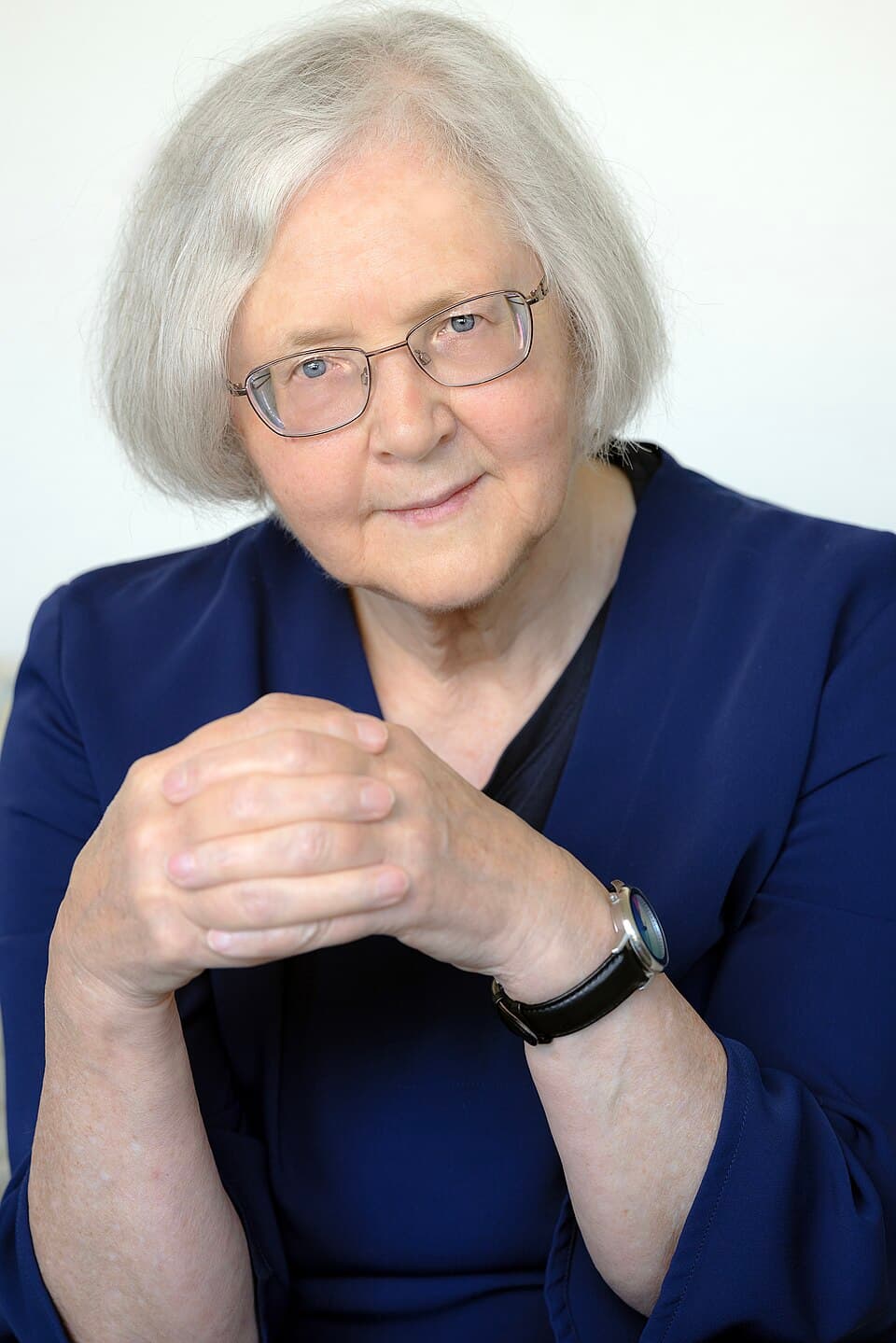
Australian, American · Science · Medicine
Elizabeth Blackburn
November 26, 1948 – present
Early Life and Background
Elizabeth Helen Blackburn was born on 26 November 1948 in Hobart, Tasmania, Australia, the second of seven children in a family of physicians. Both of her parents were medical doctors, and their profession exposed her early to the idea that science could improve human health.[1][2][4] Growing up in Launceston and other Tasmanian towns, she developed a fascination with living organisms, collecting insects and observing animals, which nurtured her curiosity about biology.[1][3]
Blackburn attended Broadland House Church of England Girls’ School in Launceston and later Hobart High School, institutions that provided strong academic foundations despite being far from major scientific centers.[1] Her interest in biochemistry intensified during high school, where she excelled in science and mathematics. Coming of age in the 1960s, she pursued tertiary education at a time when relatively few Australian women entered advanced scientific training, reflecting both her determination and a supportive family environment.[4]
She studied at the University of Tasmania and then transferred to the University of Melbourne, where she completed a Bachelor of Science and a Master of Science in biochemistry.[1][4] Her master’s work focused on purine metabolism in bacteria, giving her hands-on experience with biochemical techniques and reinforcing her interest in molecular mechanisms of life.[1] The Australian university system was then expanding its research capacity, and Blackburn benefited from mentors who encouraged her to continue her scientific career abroad.
Education and Training
In the early 1970s, Blackburn moved to England to undertake doctoral study at the University of Cambridge, working at the Medical Research Council (MRC) Laboratory of Molecular Biology.[1][4] Under the supervision of Frederic Sanger, a pioneer of DNA sequencing, she studied bacteriophage DNA and acquired rigorous training in nucleic acid biochemistry.[1] Cambridge and the MRC Laboratory were among the world’s leading centers for molecular biology, and her exposure to this environment proved formative.
After receiving her Ph.D., she pursued postdoctoral research at Yale University in the United States.[1][4] At Yale she began to investigate the DNA of the ciliated protozoan Tetrahymena, work that would eventually lead her toward telomeres—the protective structures at chromosome ends. The move from the United Kingdom to the United States reflected broader patterns of international mobility among scientists and positioned her within an emerging network of molecular biologists who were transforming genetics and cell biology.
Career Beginnings and Development
Blackburn’s first independent academic appointment was at the University of California, Berkeley, where she joined the faculty in the mid‑1970s.[1][4] At Berkeley she continued her studies of Tetrahymena DNA. In 1978, she isolated and precisely described telomeres, the specialized structures at the ends of chromosomes, greatly enhancing understanding of DNA end organization.[3] Her work revealed that telomeres were not random end fragments but had a distinct molecular architecture.
In 1980, Blackburn discovered that telomeres are composed of repeating DNA sequences, defining the molecular nature of telomeric DNA.[3][4] This insight established that chromosome ends consist of tandem repeats and suggested a mechanism by which cells might maintain these sequences through cell division. Her early telomere research was notable for focusing on a relatively obscure organism, yet it generated concepts applicable across eukaryotic life.
Blackburn later moved to the University of California, San Francisco (UCSF), which became her primary institutional home for much of her career.[1][4] At UCSF she built a productive laboratory that attracted graduate students and postdoctoral fellows interested in chromosome biology, and she became a prominent figure in American biochemistry and molecular biology.
Major Scientific Discoveries
Blackburn’s most famous contributions center on telomeres and the enzyme telomerase. In 1982, working with geneticist Jack W. Szostak, she demonstrated that telomeric DNA sequences from Tetrahymena could protect yeast chromosomes from degradation.[3] This experiment showed that the telomeric sequence performed a conserved protective function at chromosome ends, bridging work in protozoa and yeast and emphasizing the fundamental nature of telomere biology.
On Christmas Day 1984, Blackburn’s graduate student Carol W. Greider detected activity of a previously unknown enzyme in Tetrahymena extracts—work conducted in Blackburn’s UCSF laboratory that led to the co‑discovery of telomerase.[1][4][8] Blackburn and Greider established that telomerase adds telomeric repeat sequences to chromosome ends, replenishing telomeres as cells divide. Although many sources describe the discovery by year rather than exact day, the mid‑1980s period marked a turning point in chromosome biology and the understanding of cellular aging.
By 1985, Blackburn and Greider had shown that telomerase is a ribonucleoprotein containing an RNA component that serves as a template for telomere repeat synthesis.[3] This finding clarified the enzymatic mechanism by which telomeres are maintained, revealing a new type of enzyme that uses its own RNA to guide DNA addition. Their research linked telomere dynamics to processes such as replicative senescence, the limit to how many times a cell can divide, and provided molecular tools to probe telomere function.
Blackburn’s work had far‑reaching implications. Telomere shortening became recognized as a key factor in cellular aging, while aberrant telomerase activation was identified as a common feature of cancer cells.[1][4][8] These insights spurred efforts to develop telomerase inhibitors for cancer therapy and to explore whether modulating telomere maintenance could influence age‑related diseases. Blackburn later collaborated on studies connecting telomere length with psychosocial stress and health outcomes, illustrating the breadth of telomere biology’s impact.
Institutional Leadership and Public Service
Beyond her laboratory research, Blackburn played important roles in scientific policy and institutional governance. She served on various editorial boards and advisory committees, including membership on the President’s Council on Bioethics in the United States.[1][4] Her tenure on that council, and her public disagreement with some of its positions, highlighted her commitment to evidence‑based reasoning in ethical debates involving biomedical research.
At UCSF, Blackburn rose through academic ranks, eventually holding the Morris Herzstein Professorship of Biology and Physiology.[12][18] She mentored numerous young scientists, many of whom became leaders in telomere research and related fields. Her laboratory was known for its rigorous biochemical approaches coupled with openness to interdisciplinary collaboration.
In 2016, she took on a major leadership role as president of the Salk Institute for Biological Studies.[8] Effective 1 January 2016, she became the first woman to lead the renowned institute, which is celebrated for high‑impact research across biology and neuroscience.[8] Her presidency was later featured in TIME’s "Firsts: Women Leaders" project, recognizing her as a trailblazer in scientific leadership.[8] At Salk she oversaw strategic planning, fundraising, and efforts to support diverse research programs, demonstrating that a Nobel‑winning scientist could also excel in complex administrative roles.
Awards, Honors, and Recognition
Blackburn’s contributions have been recognized with numerous awards. Early in her career, she received the NAS Award in Molecular Biology in 1990, acknowledging her pioneering work on telomeres.[11] She was elected a Fellow of the Royal Society (FRS) in 1992, an honor reserved for scientists who have made substantial contributions to knowledge.[6][11] Additional distinctions included the Australia Prize (1998), the Harvey Prize (1999), the Dickson Prize (2000), and the Heineken Prize in biochemistry.[11]
In 2004, Blackburn shared the prestigious Albert Lasker Award for Basic Medical Research and the Louisa Gross Horwitz Prize with Carol Greider and Jack Szostak, honors that often presage Nobel recognition.[11] She received the Meyenburg Prize (2006) and the L’Oréal‑UNESCO Award for Women in Science (2008), the latter specifically highlighting her role as a woman whose research had transformed biomedicine.[6][11]
Her most famous accolade came in 2009, when she was co‑awarded the Nobel Prize in Physiology or Medicine with Greider and Szostak "for the discovery of how chromosomes are protected by telomeres and the enzyme telomerase."[2][4][9] The Nobel Prize facts and press materials emphasize that she shared the prize equally, reflecting the collaborative nature of telomere research.[2][9] She was also named one of TIME magazine’s 100 most influential people in 2007, underscoring the broader cultural resonance of her work.[1]
Blackburn has received honorary degrees from institutions around the world and has been recognized by societies such as the American Association for the Advancement of Science and the American Society for Cell Biology.[1][11] In professional biographies, she is frequently described as an "Australian‑born American" molecular biologist, reflecting her dual national identity and transnational career.[2][4][10]
Personal Life
Elizabeth Blackburn married John W. Sedat, a fellow molecular biologist who became a professor at the University of California, San Francisco.[1][4] The couple have one son. Their shared scientific interests created an intellectually rich environment, and both contributed to UCSF’s reputation as a major center for structural and molecular biology.
Biographical accounts describe Blackburn as someone who balances intense focus in the laboratory with engagement in teaching, mentorship, and public communication about science.[3][18] Later in her career, she became increasingly involved in discussions of the social and ethical implications of biomedical research, including issues related to stem cells and human cloning, although specific policy positions are documented in separate sources.
Legacy and Historical Impact
Blackburn’s legacy rests primarily on her elucidation of telomere structure and function and the co‑discovery of telomerase, which together transformed modern biology’s understanding of chromosome ends. Telomeres and telomerase are now central concepts in research on aging, cancer, and genomic stability, with her work providing the conceptual and methodological foundation for entire subfields.[1][4][8]
Her discoveries showed that chromosome ends are dynamic structures whose maintenance determines how long cells can keep dividing. This insight gave rise to the idea that telomere shortening acts as a biological clock for cellular aging, while uncontrolled telomerase activation allows cancer cells to proliferate indefinitely.[4][8] These concepts have proven influential not only in basic research but also in biotech and pharmaceutical efforts to develop therapies targeting telomerase.
In women’s history, Blackburn is celebrated as the first Australian woman Nobel laureate, a milestone reached in 2009.[1][10][11] Her presence among Nobel winners challenges historical patterns in which women scientists were often overlooked or relegated to supporting roles. The Nobel Foundation’s "Women Who Changed Science" series explicitly frames her as a model for future generations, highlighting both her scientific contributions and the persistence required to succeed in male‑dominated environments.[3]
Her leadership at the Salk Institute further extends her impact, demonstrating that women can occupy top executive roles in elite research institutions.[8] Through mentoring and public engagement, she has contributed to efforts to diversify the scientific workforce and to encourage young people—especially girls—to pursue careers in STEM fields.
Later Life and Continuing Influence
After her tenure as Salk Institute president, Blackburn has remained active as a professor emeritus at UCSF and as a speaker on science and society.[8][18] Interviews and video features produced by UCSF and the Nobel Foundation reflect on her Nobel‑winning discoveries and her continuing inspiration to scientists.[13][15][18] She has participated in discussions about stress, telomere length, and health, illustrating how the basic biology of chromosome ends intersects with public concerns about aging and well‑being.
As of the mid‑2020s, Blackburn is alive and continues to be referenced in scientific literature and popular science writing. Her career trajectory—from Tasmanian student to Nobel laureate and institutional president—remains a compelling narrative of scientific achievement and gender barrier‑breaking. She is widely profiled in encyclopedias, institutional biographies, and women‑in‑science showcases, ensuring that her contributions are documented for future historians and practitioners of science.[1][2][4][8]
Blackburn’s work has inspired continuing research into telomere biology, including efforts to understand how lifestyle, environment, and genetics jointly shape telomere dynamics. As biomedical science progresses, her discoveries remain foundational, and her story exemplifies how careful, curiosity‑driven research can yield insights that reverberate across disciplines and decades.
Dated achievements
6 indexed.
- Nov261948Science
Birth of Elizabeth Blackburn
Elizabeth Helen Blackburn was born in Hobart, Tasmania, Australia.
View details The Nobel Prize in Physiology or Medicine 2009 Facts - Oct052009Science
Nobel Prize in Physiology or Medicine 2009 announced
Elizabeth Blackburn was announced as a Nobel laureate in 2009 for her work on telomeres.