← All women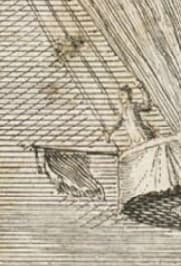
French · Aviation · Exploration
Elisabeth Thible
March 8, 1757 – February 13, 1785
Early life and background
Élisabeth Thible was born in Lyon, France, on 8 March 1757. She is also found in the historical record under the maiden name Estrieux, and some sources spell her surname as Thible or Tible. Like many women of the eighteenth century who did not belong to the political or aristocratic elite, Thible’s early life is only sparsely documented. The surviving sources do not provide a detailed account of her schooling, family circumstances, or professional training, but they do place her firmly within the social and cultural world of Lyon, one of the major urban centers of France.
Lyon in the mid-eighteenth century was a city of commerce, craft production, and performance. It was also a place where public entertainments and scientific demonstrations could attract attention from elite and popular audiences alike. That environment matters because early ballooning was not yet a settled science or a professionalized field. It was a spectacular novelty, displayed before crowds and often connected to courtly or civic celebration. Thible’s later appearance in one of the earliest balloon flights involving a woman reflects this world of showmanship, curiosity, and experimentation.
The historical record is thin on the specifics of her youth, but later references describe her as an opera singer or performer. Some modern accounts also note a marriage contract with Claude Thible, suggesting that she entered adult life under the social conditions typical for women of her era, when marriage often defined legal and social identity. Because the sources are inconsistent on several biographical details, the safest conclusion is that Thible’s early life remains partially obscured while her later significance is well established.
Career beginnings and public context
Thible’s historical emergence was not through a long institutional career but through participation in the dramatic culture of late Enlightenment France. The balloon ascent that made her famous occurred only months after the first crewed balloon flights in Europe, when aeronautics was still experimental, risky, and spectacular. Such flights were part scientific demonstration, part public amusement, and part aristocratic display. In that atmosphere, women were sometimes present as spectators, but they were not usually recorded as participants in the technical act of flight.
For that reason, Thible’s involvement was remarkable. Her place in the balloon basket at Lyon positioned her inside one of the most visible technological frontiers of the age. Whether she was already known as a singer or was brought into the event through social and artistic networks, her name became attached to a moment when a woman crossed into a domain dominated by men, inventors, and military and scientific patrons. The event is important not merely because it was unusual, but because it was well enough documented to become a lasting historical marker.
The flight of 4 June 1784
On 4 June 1784, Thible flew aboard La Gustave with Monsieur Fleurant. The balloon was named in honor of King Gustav III of Sweden, who was visiting Lyon. Accounts describe the ascent as lasting roughly 45 minutes, covering about 4 kilometers and rising to an estimated 1,500 meters. Some later retellings add theatrical detail, including the claim that Thible dressed in costume and sang during the ascent, underscoring how closely early ballooning blended scientific novelty and public performance.
This flight is remembered as the first documented free balloon flight by a woman. In historical terms, that distinction is crucial. The age of ballooning began only shortly before Thible’s ascent, and the field had almost no established gender role for women. Flight itself had not yet become a regular mode of travel; it was a frontier of human experience. Thible’s participation therefore carried symbolic weight far beyond the duration of the journey. She did not simply witness the emergence of aeronautics; she embodied a woman’s presence within it at a moment when such presence was unusual enough to be recorded as newsworthy.
The barriers she crossed were cultural as much as technical. Eighteenth-century European society generally restricted women’s access to scientific institutions, technical invention, and public demonstration. By appearing in a balloon basket that ascended freely over Lyon, Thible entered a realm associated with risk, modernity, and discovery. Later writers repeatedly identified her as the first woman to fly, the first female aeronaut, or the first woman to make a free balloon ascent. Even where later aviation history became crowded with better-documented figures, Thible’s name retained its pioneering status because of the clarity of the date and the novelty of the event.
Historical significance and recognition
Thible’s fame rests almost entirely on her 1784 flight, but that single event has made her one of the foundational figures in women’s aviation history. Modern institutional and historical accounts continue to cite her as the first woman known to make an untethered balloon flight. Her story appears frequently in discussions of women in flight because it illustrates both the early openness and the later exclusion that shaped the field. In the beginning, ballooning was so new that formal barriers had not yet hardened, yet women still required exceptional circumstances to be included in public demonstrations.
Her achievement also matters because it precedes the era of powered aviation by more than a century. Before airplanes, women’s access to flight was largely limited to balloon ascents, airship rides, and other experimental forms of aeronautics. Thible thus occupies a special place in the chronology of flight: she stands at the very beginning of women’s involvement in aerial technology. The fact that her name remains attached to this first is a testament to the endurance of symbolic firsts in historical memory.
Later writers sometimes offered conflicting details about her name, birth, occupation, or exact personal circumstances. That uncertainty does not weaken the historical importance of the 1784 event; rather, it shows how a woman could become famous in an era when many aspects of women’s lives were underdocumented. Her recognition in modern scholarship comes largely from the repeated preservation of that one unmistakable milestone.
Personal life
The documentation surrounding Thible’s personal life is limited. Some sources identify her as née Estrieux, and a marriage contract associated with Claude Thible appears in later discussions of her biography. Other details, including her family background, exact household circumstances, and possible professional life as a performer, are not consistently established across sources. Because of this, historians treat many aspects of her private life cautiously.
What can be said with confidence is that she lived during a period in which women’s identities were often recorded only in relation to marriage, family, or singular public events. Thible’s surviving identity is therefore unusual: she is remembered not for a salon career, a literary circle, or a political role, but for a technological first. That makes her personal life less visible in the record, even though she almost certainly lived within a broader social world of marriage, performance, and urban culture.
Later life and death
Thible died in Paris on 13 February 1785. The sources consulted do not provide a detailed account of the circumstances of her death, and no major public honors are recorded in connection with it. Her life ended less than a year after the flight that made her famous, leaving historians with a vivid achievement but a brief biographical trail.
The brevity of her life has contributed to the mythic quality of her place in aviation history. She did not live long enough to participate in later developments in ballooning or to see the far-reaching transformations that would eventually lead to modern aviation. Yet her single ascent remained enough to secure her a lasting role in the history of women and flight.
Legacy
Élisabeth Thible’s legacy lies in the fact that she is remembered as the first woman documented to fly in a free balloon. This was a genuine first, not merely a symbolic one, and it has remained important across generations of aviation historians. Her flight demonstrates that women were present at the beginning of aeronautical history, even if later narratives often centered male inventors, engineers, and pilots.
Her story has particular value in women’s history because it shows how a single act could alter historical memory. In a field where women were often excluded from formal institutions, Thible’s public ascent created a permanent reference point. Later generations of women pilots and aeronauts could look back to her as an early predecessor, even though she worked in a very different technological world. In this sense, her legacy is not only that she flew, but that she expanded the historical imagination of who could fly.
Thible’s name continues to appear in encyclopedias, aviation histories, and discussions of trailblazing women because her flight is one of the clearest examples of a woman entering a new technological domain at its inception. The documentary record is limited, but the significance of her achievement is not. Élisabeth Thible remains a foundational figure in the history of women in aviation.
Dated achievements
3 indexed.
- Mar081757Science
Birth of Élisabeth Thible in Lyon, France
Élisabeth Thible (née Estrieux) was born in Lyon, France, on 8 March 1757.
View details Élisabeth Thible - Wikipedia - Jun041784Aviation
First woman to fly in an untethered hot-air balloon
Thible flew aboard the balloon La Gustave over Lyon with Monsieur Fleurant, becoming the first woman recorded to fly in a free, untethered balloon.