← All women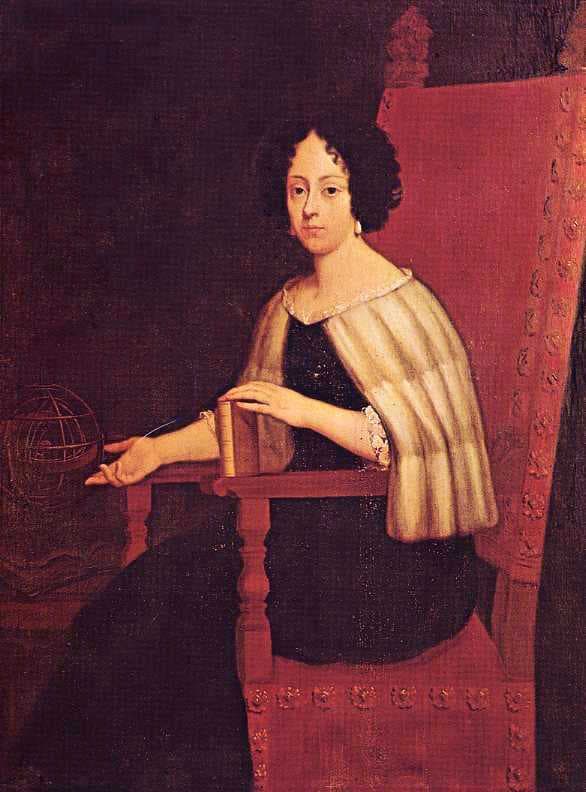
Italian · Science · Literature
Elena Comaro Piscopia
June 5, 1646 – July 26, 1684
Early Life and Background
Elena Lucrezia Cornaro Piscopia, often referred to in English as Helen Cornaro, was born on 5 June 1646 in the Cornaro family palace, Ca’ Loredan, in Venice, then part of the Republic of Venice.[1][2][5] She belonged to one of Venice’s most illustrious patrician families: the Cornaro (Corner) clan, which had produced multiple doges and high officials.[1][4] Her father, Giovanni Battista Cornaro Piscopia, was a nobleman and procurator of San Marco, one of the highest financial officers in the Venetian state.[1][17] Her mother, Zanetta Boni, was of common birth, and Elena was described as a “natural” daughter, reflecting the era’s social distinctions between aristocratic and non-aristocratic unions.[17][14]
Elena was one of several children—often cited as the fifth of seven—growing up in a household that combined great wealth and political influence with complex social dynamics owing to her mother’s status.[17][14] Despite any stigma that might have attached to her birth, her father recognized her remarkable intellectual promise. He arranged for her to receive an unusually broad and rigorous education that far exceeded the expectations for girls in seventeenth-century Europe.
From an early age, Elena studied languages, including Latin, Greek, Hebrew, Spanish, French, and Arabic, quickly gaining a reputation as a prodigious linguist.[1][2] She also learned philosophy, mathematics, astronomy, and theology, working with distinguished tutors linked to the University of Padua and Venetian intellectual circles.[2][5][8] Contemporary accounts emphasize her extraordinary memory, analytical capacity, and religious devotion, which led her to join the Benedictine order as an oblate later in life.[2]
Venice in the mid-seventeenth century was a cosmopolitan trading and cultural center, with strong ties to universities and learned societies. This environment provided Elena access to scholarly networks, manuscripts, and debates, even though formal university enrollment for women was virtually unheard of. Her early education within a patrician household thus laid the foundation for a career that would challenge entrenched gender boundaries in European higher education.
Education and Intellectual Formation
Elena’s education unfolded largely through private tutoring and informal association with academic circles. She studied under renowned scholars, including members of the clergy and university professors, who recognized the depth of her talents.[1][2] By her twenties, she was widely acknowledged as an accomplished philosopher, theologian, and mathematician, and she could deliver learned discourses in multiple languages.
Her intellectual development was strongly shaped by Aristotelian philosophy and scholastic traditions prevalent at the University of Padua, one of Europe’s leading centers of learning.[1][13] She mastered classical texts and commentaries, and she engaged with theological controversies of the period, though her gender limited her ability to participate officially in ecclesiastical disputations.
Sources stress Elena’s profound religious commitment. At some point in adulthood she became a Benedictine oblate, dedicating her life to piety and scholarship while remaining in the world rather than entering a cloistered convent.[2] This position allowed her to maintain contact with the university and urban intellectual life while adopting a lifestyle marked by modesty, charity, and spiritual discipline.
Her erudition attracted attention beyond Venice. Letters, manuscripts, and reports circulated among scholars in Italy and abroad, presenting Elena as a living example of female intellectual capability. Such recognition, however, did not easily translate into formal academic status, given the legal and cultural barriers that excluded women from degree-granting institutions.
Barriers to Formal Study: The Theology Doctorate Refused
By the 1670s, Elena’s reputation had grown to the point that her supporters proposed her for a doctorate in theology at the University of Padua.[1][2] This was a bold proposal: theology degrees were tightly regulated by ecclesiastical authorities, and no woman had previously been admitted to such an examination.
The Bishop of Padua, consulted on the matter, refused to authorize her candidacy, arguing that granting a theology doctorate to a woman was inappropriate and contrary to church custom.[1][2] This refusal is frequently cited by historians as a clear illustration of institutional barriers that women faced in seventeenth-century higher education and ecclesiastical structures.
Despite this setback, Elena and her supporters did not abandon the idea of a doctorate. Instead, they redirected their efforts toward the field of philosophy, which, while still prestigious, did not fall under the same direct ecclesiastical jurisdiction as theology. This strategic shift created the conditions for the historic event that would make her name famous.
Doctor of Philosophy and Firsts in University History
In 1678, at age thirty-two, Elena was formally presented for a doctorate in philosophy at the University of Padua.[1][2][13] Because of the intense public interest and the large number of people who wished to attend, university and civic authorities decided to hold her oral examination in Padua’s cathedral, rather than in a standard lecture hall.[2][12] The event drew nobles, knights, city officials, professors, students, clergy, and curious citizens.
On 25 June 1678, Elena delivered her examination, answering complex questions on Aristotelian and scholastic philosophy with exceptional clarity and learning.[12][7] At its conclusion, the examiners unanimously conferred upon her the title Magistra et Doctrix Philosophiae—Teacher and Doctor of Philosophy.[1][7] Contemporary accounts describe the ceremony as solemn and celebratory, with formal inscriptions and public recognition of her achievement.
With this degree, Elena became, in the consensus of major reference works, the first woman in recorded history to obtain a doctorate and a university degree.[2][4][6][13][17] Some sources phrase this as the first woman to receive a Ph.D.-level doctorate; others as the first woman to receive any university degree or as the first documented female university graduate.[2][4][16] While the wording varies, the underlying claim is that no earlier woman is known, from surviving records, to have earned a formal academic degree from a university.
The ceremony’s symbolism was profound. It publicly demonstrated that a woman could meet the highest standards of university scholarship and be recognized on an equal footing with male doctors. It also established an enduring precedent: future campaigns for women’s admission to universities would point back to Elena Cornaro Piscopia as proof that women had successfully earned degrees centuries earlier.
Academic and Scholarly Activity
Following her doctorate, Elena continued to be active in scholarly life. Sources indicate that she lectured at the University of Padua, particularly in mathematics and philosophy, and she remained involved in intellectual circles until her death.[8] She was known not only for her academic prowess but also for her humility and reluctance to seek public honors.
Elena’s range of expertise was extensive. She was conversant with mathematics and astronomy, contributing to discussions that intersected with natural philosophy.[2][5] Her deep engagement with theology and religious texts also informed her teaching and writing, even though the formal theology doctorate had been denied to her.
Although relatively few of her writings are widely cited today compared to male contemporaries, biographical accounts emphasize that she produced scholarly works, translations, and commentaries. Her renown, however, rests less on a specific treatise than on the totality of her intellectual accomplishments and the institutional breakthrough represented by her degree.
Major Works, Accomplishments, and Recognition
Elena’s most substantial and historically visible accomplishment is her 1678 doctorate in philosophy, which marked a turning point in the history of women’s education.[1][2][12] This achievement encapsulated her mastery of the philosophical curriculum of the University of Padua and demonstrated that women could attain the highest academic credentials.
In addition to her doctorate, Elena was celebrated for her polyglot abilities and broad scholarly range. She reportedly spoke or read Latin, Greek, Hebrew, Arabic, Spanish, French, and Italian fluently, and she used these skills to engage with original texts across theological, philosophical, and scientific fields.[1][2] Her contemporaries admired her as a living embodiment of humanist ideals, combining classical learning with Christian piety.
During her lifetime, she received honors from learned societies and individual scholars who corresponded with her or sought her opinion on complex questions. While specific titles and awards are less documented than modern academic distinctions, her reputation functioned as a form of recognition: she was held up as an example of female erudition in memoirs, letters, and later historical works.[2][4]
Subsequent centuries brought additional forms of recognition. The University of Padua and the city of Venice have commemorated Elena with plaques, statues, and institutional references acknowledging her as the first woman to earn a university degree.[17] Biographical dictionaries, encyclopedias, and scholarly monographs have continued to revisit her story, situating her within the longer trajectory of women in science, philosophy, and higher education.[2][4][5]
Personal Life and Character
Elena Cornaro Piscopia did not marry, and there is no evidence that she had children.[1][2] Her life appears to have been devoted primarily to study, teaching, and religious practice. As a Benedictine oblate, she lived a disciplined, modest life, avoiding ostentatious displays despite her noble background.[2]
Accounts of her character emphasize her humility, charity, and devotion. She reportedly gave much of her income to the poor and maintained a simple lifestyle that contrasted with the luxury often associated with Venetian nobility.[2][9] At the same time, she moved comfortably in elite circles, conversing with high officials, clergy, and scholars.
Her personal choice not to marry, in a context where aristocratic women were often used to cement political alliances through marriage, may have helped preserve her autonomy for study and teaching. It also reflects the tension between traditional gender roles and the demands of advanced scholarship in her era: devoting herself to academic and religious pursuits left little space for the expectations of domestic life.
Later Life and Death
In the final years of her life, Elena continued to work in Padua, maintaining her connections to the university and to religious institutions. Some sources suggest that she suffered from chronic illness, possibly tuberculosis or another serious condition, which progressively weakened her health.[3][8][9]
On 26 July 1684, she died in Padua at the age of thirty-eight.[1][2][3][6][11][16] Her relatively early death curtailed what might have been an even more extensive scholarly career, limiting her capacity to produce a large written corpus or to mentor a broad cohort of female students. Nonetheless, by the time of her death she had already secured a place in history through her groundbreaking doctorate and public reputation.
Elena was buried in Padua, and memorials later noted her exceptional learning and virtue. Her death marked the end of one individual life but the beginning of a long afterlife of historical remembrance. As universities gradually opened to women in the nineteenth and twentieth centuries, her name re-emerged as a symbol of early female participation in academic life.
Legacy and Historical Impact
The legacy of Elena Cornaro Piscopia centers on her status as the first woman known to have received a doctorate and a university degree.[2][4][6][13][16][17] This achievement, documented in contemporary records and remembered in later scholarship, provided a powerful precedent for advocates of women’s education.
In the centuries following her death, educational reformers and historians repeatedly invoked Elena’s example to challenge claims that women were inherently unsuited to advanced study. Her success at Padua undermined arguments that universities had always been exclusively male institutions, demonstrating instead that at least one woman had been formally admitted, examined, and granted the highest degree.
Her story also illuminates the complex interplay between social class and gender. As a noblewoman, she enjoyed access to tutors and university circles, yet her mother’s commoner status and the patriarchal norms of the time reinforced constraints on her formal participation in institutions. Her ability to navigate these structures and attain a doctorate underscores both the importance of elite patronage and the resilience required of women pursuing scholarly careers.
Modern references—from encyclopedia entries and university commemorations to podcasts and educational materials—portray Elena as a pioneer for women in philosophy, mathematics, and theology.[2][4][5][10][17] She is often included in lists of early female scientists and philosophers, and is cited as an inspiration for women entering academic fields still marked by gender disparities.
Institutions such as the University of Padua have formally recognized her role in their history, presenting her as a symbol of the university’s long-standing engagement with questions of access and equality.[17] In broader cultural memory, she stands alongside other trailblazers who, despite living in eras of overt exclusion, managed to carve out spaces for female intellectual achievement.
While the documentary record of her specific writings remains limited compared to some male contemporaries, the impact of her life lies in the institutional and symbolic breakthrough she achieved. Elena Cornaro Piscopia demonstrated that women could meet and exceed the standards of the highest academic degrees, and her 1678 doctorate remains a landmark in the global history of women’s education.
Dated achievements
3 indexed.
- Jun051646Science
Birth in Venice
Elena Lucrezia Cornaro Piscopia was born at Ca' Loredan in Venice.
View details Wikipedia: Elena Cornaro Piscopia - Jun251678Science
First woman to receive a doctorate
Elena received her doctorate in philosophy, the first woman to achieve this.
View details