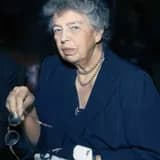
The UN General Assembly adopts the Universal Declaration of Human Rights in Paris, with Eleanor Roosevelt as chair and principal architect of the document.
On December 10, 1948, the United Nations General Assembly, meeting in Paris, adopted the Universal Declaration of Human Rights (UDHR), a foundational document articulating fundamental rights and freedoms to be universally protected. Eleanor Roosevelt, as Chair of the UN Commission on Human Rights, had guided nearly two years of intense negotiation, drafting sessions, and diplomatic compromise among representatives of vastly different political systems and cultural traditions to bring the document to fruition.
The Declaration was adopted with 48 votes in favor, none against, and eight abstentions (including the Soviet bloc, Saudi Arabia, and South Africa), a remarkable achievement of consensus-building during the earliest and most fraught years of the Cold War. Eleanor Roosevelt is widely regarded as the driving force and chief diplomat behind the document, earning her the enduring epithet "First Lady of the World," a title reportedly bestowed by President Truman.
The UDHR established, for the first time in history, a comprehensive international statement asserting that all human beings are entitled to fundamental rights and freedoms—including freedom of speech, religion, and assembly, protection from torture and slavery, and rights to education, work, and an adequate standard of living—regardless of nationality, race, gender, or belief.
The Declaration remains one of the most translated and referenced documents in the world, forming the moral and legal bedrock for subsequent international human rights treaties, national constitutions, and civil rights movements globally. Eleanor Roosevelt herself considered this achievement the proudest accomplishment of her long public life.