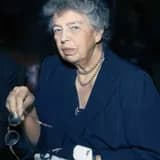
Eleanor Roosevelt dies in New York City at age 78 from complications of tuberculosis, ending the life of a prominent First Lady and human rights champion.
On November 7, 1962, Eleanor Roosevelt died at her Manhattan home at the age of 78. Her death was attributed to complications from aplastic anemia and a rare form of tuberculosis (bone marrow tuberculosis), which had gone undiagnosed for some time as doctors initially treated her for other conditions.
Her death prompted an extraordinary outpouring of grief and tribute from world leaders, reflecting her unparalleled stature as a global stateswoman. President John F. Kennedy ordered flags flown at half-staff, and dignitaries from around the world, including three U.S. presidents (Truman, Eisenhower, and Kennedy) and numerous heads of state, attended her funeral in Hyde Park, New York, where she was buried beside her husband Franklin D. Roosevelt in the Rose Garden of their family estate.
Adlai Stevenson, then U.S. Ambassador to the United Nations, famously eulogized her, saying she would rather "light a candle than curse the darkness," a phrase that has since become closely associated with her legacy of quiet, persistent action in the face of injustice.
Her death marked the end of an era that had seen her transform not only the role of First Lady but also the landscape of international human rights advocacy. Her legacy endured through the Universal Declaration of Human Rights, the countless institutions and causes she championed, and her example as a model of engaged, principled public service that continues to inspire political and human rights leaders around the world today.