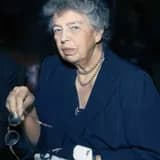
With Franklin D. Roosevelt's election as Governor of New York, Eleanor Roosevelt begins her role as the state's First Lady.
On November 6, 1928, Franklin D. Roosevelt was elected Governor of New York, and Eleanor Roosevelt assumed the role of First Lady of New York State. This position marked a significant expansion of her public and political activities beyond her earlier work with organizations such as the Women's Trade Union League and the Democratic State Committee.
As New York's First Lady, Eleanor continued to teach at the Todhunter School in New York City, commuting between Albany and the city—an unusual arrangement that demonstrated her determination to maintain her own professional identity even as her husband's political career ascended. She also began traveling as Franklin's political proxy, particularly after his 1921 polio diagnosis had limited his own mobility, inspecting state institutions and reporting back detailed observations that influenced policy.
This period was crucial in developing Eleanor's political acumen and public visibility. She deepened her involvement with women's political organizations and reform movements, honing skills in public speaking, journalism, and policy analysis that would prove essential during her tenure as First Lady of the United States.
Her years in Albany represent a critical bridge between her earlier activism and her transformative national role, demonstrating that she was already redefining what an American political spouse could accomplish years before reaching the White House.