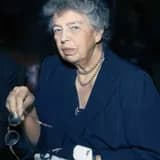
President Harry Truman appoints Eleanor Roosevelt as a U.S. delegate to the United Nations General Assembly, launching her formal diplomatic career.
On December 21, 1945, President Harry S. Truman appointed Eleanor Roosevelt as one of five United States delegates to the first session of the United Nations General Assembly, marking the beginning of her formal role in international diplomacy following Franklin D. Roosevelt's death earlier that year in April 1945.
Truman's appointment was notable given that Eleanor Roosevelt had no formal diplomatic training or prior government office in her own right, yet her international reputation, moral authority, and deep familiarity with global affairs from her years as First Lady made her a natural and compelling choice to represent American interests in the fledgling international body created to prevent future global conflicts after the devastation of World War II.
Despite initial skepticism from some U.S. officials about a woman's capacity to handle complex diplomatic negotiations, Eleanor Roosevelt quickly proved herself an astute and effective diplomat. She was assigned to the UN's Third Committee, dealing with humanitarian, social, and cultural affairs, where her negotiating skill in resolving disputes over the repatriation of refugees earned widespread respect from fellow delegates, including from the Soviet Union.
This appointment launched the final and arguably most globally consequential phase of her public life, transforming her from a former First Lady into an internationally respected stateswoman and human rights architect, a role in which she would serve for the rest of the decade and beyond, fundamentally shaping the emerging framework of international human rights law.