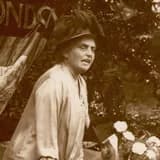
The first UK family allowances were paid directly to mothers on 6 August 1946, realizing Rathbone's quarter-century campaign, though she died before seeing it.
On 6 August 1946, the first family allowance payments under the Family Allowances Act 1945 were made directly to mothers across the United Kingdom. This moment represented the practical realization of a reform that Eleanor Rathbone had championed for approximately a quarter of a century, dating back to her earliest advocacy in 1918 and her seminal 1924 work, The Disinherited Family.
Crucially, the payments were made directly to mothers rather than fathers, a specific outcome that Rathbone had fought hard to secure. In 1945, she had organized a cross-party deputation of women MPs, including Nancy Astor, Edith Summerskill, and Mavis Tate, to press the government on this very point, recognizing that direct payment to mothers was essential to ensure the money would actually benefit children's welfare rather than being absorbed into general household or personal spending by fathers.
Tragically, Rathbone did not live to see this milestone, having died on 2 January 1946, some seven months earlier. Nevertheless, this first payment stands as one of the most significant legacies of her life's work, representing a fundamental shift in the British welfare state's approach to supporting families and recognizing the economic value of unpaid domestic and childcare labor performed by women. The principle of direct child-related payments to mothers established in 1946 would go on to influence family support policy in Britain for generations, evolving into modern child benefit systems.