← All women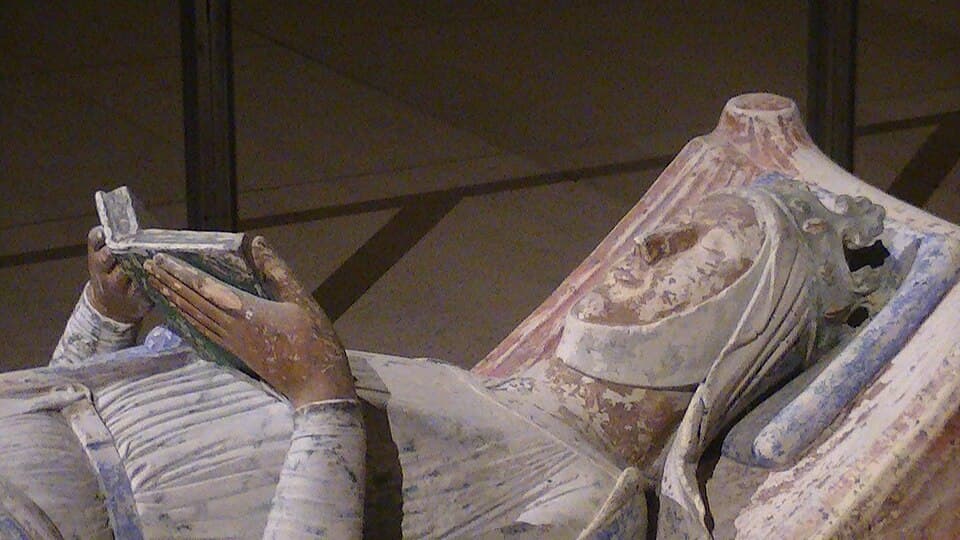
French, English · Politics
Eleanor of Aquitaine
1122 – April 1, 1204
Early Life and Background
Eleanor of Aquitaine (French: Aliénor d’Aquitaine) was born around 1122, most likely in Poitiers, the principal city of the duchy of Aquitaine in southwestern France. Her exact birth day and month are not recorded in reliable medieval sources, and modern historians generally accept only an approximate year. She was the eldest daughter and principal heir of William X, Duke of Aquitaine, and Aenor de Châtellerault.[2][5]
The house of Poitiers, to which Eleanor belonged, controlled a vast swathe of territory stretching from the Loire valley to the Pyrenees and including the culturally vibrant regions of Poitou, Limousin, and Gascony.[2][9] Aquitaine was famous for its courts of poetry and its traditions of chivalry, and Eleanor grew up in an environment where Occitan-language troubadour songs, courtly ceremony, and aristocratic education were central. Later legends suggest she received an unusually broad education for a girl, including instruction in languages, literature, and estate management; while details are uncertain, her later career as a patron of poets and an active ruler is consistent with a sophisticated upbringing.[7][9]
Eleanor’s mother died when she was young, and she became increasingly important in her father’s dynastic plans. William X designated her as his heir, an extraordinary step in a period when principalities rarely passed through women, signaling both the lack of close male relatives and William’s confidence in his daughter’s ability to hold the duchy. This decision would make Eleanor one of the wealthiest and most desirable brides in Europe.[2][5][17]
Inheritance and Marriage to Louis VII
In 1137, William X died while on pilgrimage to Santiago de Compostela.[2][5] At his death, Eleanor inherited the duchy of Aquitaine and the county of Poitou, becoming a sovereign duchess in her own right. Her lands did not automatically revert to the French crown, but as a royal vassal she required protection. William had entrusted Eleanor to King Louis VI of France, who quickly arranged her marriage to his son and heir, the future Louis VII.
On 25 July 1137, Eleanor married Louis VII in Bordeaux, bringing her extensive territories into personal union with the French monarchy.[2][13] Within months, on Louis VI’s death, Louis VII became king, and Eleanor was crowned Queen of France. The marriage instantly elevated Eleanor to one of the most prominent positions in Christendom and created a composite realm that, at least formally, stretched from northern France to the Pyrenees.[2][5]
As queen of France, Eleanor accompanied Louis on royal progresses and exercised influence at court, though sources differ on the extent of her formal authority. She was known for her strong personality and tastes, sometimes clashing with the more austere sensibilities of Paris and the French clergy. Over the course of the marriage, the couple had two daughters, Marie of France and Alix of France, but no surviving sons—a factor that would later weigh heavily in their marital and political fortunes.[2][5]
The Second Crusade and Marital Breakdown
In 1147–1149, Eleanor took an exceptional role by accompanying Louis VII on the Second Crusade to the Holy Land.[2][9] On 24 June 1147, when the crusade was formally launched, she took the cross alongside her husband, and the royal army departed toward the eastern Mediterranean.[2] Eleanor brought a substantial contingent from Aquitaine and, according to later accounts, travelled with a retinue of noblewomen—though such tales are often embellished.
The crusade proved disastrous militarily. The French forces suffered heavy losses in Anatolia and failed to achieve significant objectives in the Levant, including the attempted attack on Damascus. Eleanor’s presence on campaign, unusual for a queen, drew comment from contemporaries and later chroniclers. Rumours circulated that she sought to annul her marriage and perhaps ally herself with her uncle, Raymond of Poitiers, prince of Antioch, though evidence for romantic involvement is thin and shaped by hostile sources.[2][5]
What is clear is that the hardships of the crusade exacerbated tensions between Louis and Eleanor. Disagreements over strategy, personalities, and succession combined to create a deep rift. By the time the couple returned to Europe, their relationship had deteriorated seriously, and the absence of a male heir made the continuation of the marriage politically less compelling for the French crown.[2][5]
Annulment and Return to Independence
On 21 March 1152, at Beaugency, the marriage between Eleanor and Louis VII was formally annulled by ecclesiastical authorities on the canonical ground of consanguinity—they were related within prohibited degrees of kinship.[2][5] Although such kinship had existed from the outset, it now provided a legal pretext for dissolution. The annulment stripped Eleanor of her title as queen of France but crucially left her in possession of her hereditary lands.
With her independence restored, Eleanor immediately departed the French court and returned toward Poitiers. Her position as a wealthy, unmarried duchess made her vulnerable to kidnapping by ambitious noblemen seeking to claim Aquitaine through marriage. Contemporary accounts note attempts by figures such as Geoffrey of Anjou to intercept her, which she evaded through swift travel and the support of loyal vassals.[2][17]
Within weeks, Eleanor chose her own husband, demonstrating unusual agency for a 12th‑century aristocratic woman whose marriages were typically arranged by male kin or rulers. On 18 May 1152, she married Henry, Duke of Normandy and count of Anjou, at Poitiers.[2] Henry, already a major player in Anglo‑French politics, would soon become King of England. This marriage united Aquitaine with Henry’s other continental holdings, laying the foundation for the later Angevin empire.
Queen of England and the Angevin Empire
In 1154, Henry crossed to England to press his claim to the throne amid the disorder that followed the civil war between King Stephen and Empress Matilda. On 19 December 1154, he was crowned King Henry II of England, and Eleanor became Queen of England.[5][8] Having already been queen consort of France, she now held the rare distinction of being queen consort of two powerful kingdoms in her lifetime.[2][5]
Henry and Eleanor’s combined territories included England, much of Wales, Normandy, Anjou, Maine, Touraine, and Aquitaine, creating a vast polity that stretched from the Scottish border to the Pyrenees. While historians debate the degree to which this should be considered an "empire" in the formal sense, the geographic scale and complexity of the realm were unprecedented in Western Europe at the time.[2][9][17]
Eleanor bore Henry numerous children—traditionally eight who survived to adulthood: William (who died young), Henry the Young King, Richard (later Richard I the Lionheart), Geoffrey, Matilda, Eleanor, Joan, and John (later King John).[2][5] Through strategic marriages, these offspring would become or marry kings and princes across Europe, including in Sicily, Castile, and Germany, further extending Eleanor’s dynastic influence.
As queen of England, Eleanor was not merely a consort. She managed her own dower and hereditary lands, issued charters, and participated in diplomatic initiatives. Chroniclers and modern scholars note her role in arranging marriages, mediating disputes, and supporting religious foundations. Her court at Poitiers—particularly between 1168 and 1173—became associated with a flourishing of literature and the later legend of the "Court of Love," where troubadours and poets refined ideals of courtly love, though the historicity of highly formalised "courts" is debated.[7][9][11]
Patronage of Arts and Culture
Eleanor’s cultural patronage made her a central figure in what historians sometimes call the 12th‑century Renaissance.[7][16] She supported troubadours and writers, including figures such as Bernard de Ventadour and possibly Marie de France, fostering a literary milieu in which themes of chivalry and refined romantic love flourished.[9] Her influence helped popularise the Occitan and French vernacular poetic traditions that transformed aristocratic culture and shaped later European literature.
Her court is credited with encouraging the composition and dissemination of narratives about King Arthur and the Round Table, though direct evidence of specific commissions is limited. Nonetheless, the convergence of poets, musicians, and chroniclers around the circles she moved in suggests that Eleanor’s patronage contributed materially to the development of romance literature and the changing depiction of noblewomen as active participants in courtly life.[7][9][17]
Beyond literature, Eleanor’s building and household projects influenced material culture. Some historians, drawing on architectural evidence and anecdotal reports, attribute to her innovations in domestic comfort, such as the spread of more sophisticated fireplaces in royal residences, though details are debated.[11] In all, her cultural role reinforced an image of queenship that valued learning, artistic sponsorship, and ceremonial splendour.
Family Conflict and the Great Rebellion
Despite the outward splendour of the Angevin realm, Henry II’s family life was marked by deep tensions. By the late 1160s and 1170s, his sons grew dissatisfied with their limited real power despite holding princely titles, and Eleanor herself resented both personal humiliations and Henry’s centralised control.[2][5]
On 21 March 1173, Henry the Young King, Richard, and Geoffrey initiated what became known as the Great Rebellion, joining forces with the French king and other allies against Henry II.[2] Eleanor supported their cause, and sources indicate she attempted to travel from Poitiers to join her sons, but she was captured en route. Henry ordered her imprisonment, and for approximately fifteen years she lived under various forms of house arrest in England, though she was occasionally brought out for major state occasions.[2][5]
Her confinement starkly illustrates both the vulnerability and perceived threat of powerful queens. Henry’s decision to imprison his consort, rather than merely restrict her movements, was unusual and highlights the extent to which Eleanor’s political capabilities could destabilise his authority. The rebellion itself, though ultimately failing to displace Henry, weakened the dynasty and foreshadowed further conflicts among his heirs.[2][17]
Release and Role under Richard I
Henry II died on 6 July 1189. Upon his death, Eleanor was released from imprisonment.[2] She acted swiftly to organise the succession of her son Richard I, traveling to secure baronial support and facilitating his journey to England for coronation. Her rapid re‑entry into politics demonstrates the enduring respect and authority she commanded despite years of confinement.[2][9]
On 3 September 1189, Richard was crowned king of England, and Eleanor, as queen dowager and king’s mother, assumed a central political role.[2][9] Shortly afterward, Richard departed on the Third Crusade, leaving the governance of England largely in the hands of trusted ministers under Eleanor’s guidance. She oversaw royal finances, corresponded with church and secular officials, and intervened in diplomatic affairs.
When Richard was captured on his return journey and held for ransom in Germany, Eleanor spearheaded efforts to raise the enormous sum required for his release. She travelled personally to negotiate, and her letters from this period reveal a determined and pragmatic stateswoman.[2][9] Her actions were vital in securing Richard’s restoration and preventing permanent fragmentation of the realm.
Securing John’s Succession
Richard I died on 6 April 1199 after being wounded by a crossbow bolt at the siege of Châlus.[2][9] His death precipitated a succession crisis. The competing claims of his younger brother John and his nephew Arthur of Brittany threatened to divide the Angevin territories. Eleanor intervened decisively in favour of John.
Drawing on her authority as duchess of Aquitaine and matriarch of the dynasty, she travelled across Aquitaine and Poitou to secure oaths of loyalty to John and bolster his position in negotiations with English and Norman elites.[2][9] Her intervention proved critical in enabling John to be recognised and crowned as king of England later in 1199, though the exact dates of these diplomatic efforts are not always recorded.
Eleanor’s active role in these events, despite her advanced age, underscores her continued centrality to Plantagenet statecraft. Although John’s reign would ultimately see the loss of most of the family’s continental possessions and the emergence of political crises such as Magna Carta, his accession itself owed much to Eleanor’s political skill and prestige.[2][9]
Later Life at Fontevraud and Ongoing Influence
In her later years, Eleanor gradually withdrew from the most intense political struggles, though she never entirely abandoned public life. She spent significant time at Fontevraud Abbey in Anjou, a double monastery housing both monks and nuns, which had long-standing connections with the Plantagenet family.[13] There, she combined religious observance with continued oversight of Aquitaine’s affairs, issuing charters and settling disputes.
Even in old age, Eleanor remained involved in dynastic matters. She travelled to Castile to escort her granddaughter Blanche of Castile to France for marriage to the future Louis VIII, further entwining her descendants with European royal houses.[9][17] Her progeny occupied thrones and princely positions in England, France, Germany, and Iberia, making her a central ancestress of later European ruling families.
Contemporary admiration and criticism, as well as later romanticised portrayals, have sometimes obscured the historical Eleanor behind legend. Nonetheless, surviving charters, chronicles, and administrative records attest to her sustained involvement in governance, her skill in negotiation, and her prominence as both a ruler and mother of rulers.[5][7][17]
Death and Burial
Eleanor of Aquitaine died at Fontevraud Abbey on 1 April 1204, at about the age of eighty.[5][8] Some sources, including the Fontevraud site, give 31 March, but major reference works such as the Encyclopaedia Britannica record 1 April, which has become the prevailing scholarly date.[5][8][13] Her death marked the end of a remarkably long and active life in the political and cultural arenas of medieval Europe.
She was buried at Fontevraud, near the tombs of her husband Henry II and her son Richard I.[13] Her effigy depicts her lying with a book in her hands, an image often interpreted as signifying learning and piety. The abbey remains an important historical site, drawing visitors interested in the Plantagenet dynasty and in Eleanor’s story as a woman who defied many constraints of her era.
Legacy and Historical Impact
Eleanor of Aquitaine is widely regarded as one of the most powerful women of the 12th century.[5][8] As duchess in her own right, queen consort of both France and England, and mother to multiple kings, she shaped the political geography of Western Europe for centuries. Her decisions regarding marriage, inheritance, and alliance helped create and then destabilise the Angevin realm, contributing to long‑term rivalries between the French and English crowns.
Her cultural patronage influenced the development of medieval literature, particularly the traditions of courtly love and chivalric romance. The artistic and intellectual currents she fostered at her courts in Aquitaine and Poitiers fed into broader movements sometimes termed the 12th‑century renaissance, affecting not only poetry and narrative but also perceptions of noblewomen’s roles.[7][9][16]
As a political actor, Eleanor demonstrated that medieval queens could be more than ceremonial figures. She negotiated with popes and kings, managed finances, raised ransoms, and led diplomatic missions. Her imprisonment and later resurgence highlight both the vulnerabilities of women in a patriarchal society and the ways in which wealth, lineage, and personal ability could enable a woman to wield significant power nonetheless.[2][5][7]
Modern historians and popular writers have variously portrayed her as a romantic heroine, a ruthless schemer, a proto‑feminist icon, or a complex stateswoman. While interpretations differ, there is broad consensus that Eleanor’s life had extraordinary consequences for medieval Europe. Her descendants included not only English kings but also figures such as Blanche of Castile, whose own regency in France echoed Eleanor’s model of active queenship.[9][17]
Today, Eleanor of Aquitaine stands in women’s history as a landmark example of a high‑medieval woman exercising sustained authority in politics and culture. Her story continues to inspire scholarship, historical fiction, and public history projects that explore how gender, power, and creativity intersected in the medieval world.[1][6][10][12]
Dated achievements
10 indexed.
- Jul251137Politics
Marriage to Louis VII and Queen of France
Eleanor married Louis VII and became Queen of France.
View details Wikipedia: Eleanor of Aquitaine - Jun241147Politics
Departure on the Second Crusade
Eleanor joined the Second Crusade with Louis VII on June 24, 1147.
View details