← All women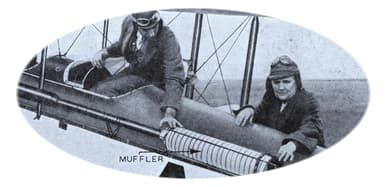
American · Science · Aviation
Eldorado Jones
1860 – May 3, 1932
Early Life and Background
Eldorado Jones was an American inventor and businesswoman best known for developing an exhaust muffler for airplane engines in the early twentieth century. She was born around 1860 in Missouri, with most reliable sources identifying Palmyra, Missouri, as her birthplace, although some details of her early years remain uncertain.[3][6] Her parents are reported as Alonzo and Mary J. (Williamson) Jones, and in childhood she was sometimes called "Dora."[6]
The historical record about her childhood and formal education is sparse. Available biographical sketches indicate she received enough education to qualify as a teacher and later to work as a stenographer and insurance professional, suggesting at least a secondary-level education in an era when this was not universally available to women.[3][4][8] No primary-source documentation has surfaced for specific schools or degrees, and most modern accounts rely on retrospective summaries rather than contemporaneous records.
Jones grew up at a time when women’s paid work was typically confined to a narrow range of acceptable occupations, such as teaching or clerical work. The emerging culture of invention and engineering was overwhelmingly male. That she eventually moved into these fields from a more traditional female occupation reflects both personal ambition and the slow opening, however limited, of technical fields to women at the turn of the century.
Career Beginnings
As a young woman, Eldorado Jones first pursued a career in teaching. She taught school in Moline, Illinois, and in nearby Lafayette (sources differ on specific localities), but she reportedly found that the work was poorly paid and unsatisfying.[3][4][5] Dissatisfied with the income and perhaps with the constraints placed on women educators, she left teaching to pursue other work.
Jones next found employment with an insurance company in Chicago, working as a stenographer and salesperson.[3][4][5][8] Insurance work, like teaching, was a relatively acceptable field for women in this period. However, it was during this phase that she began "tinkering" with iron and mechanical devices, discovering that her aptitude for invention could be more lucrative than either teaching or selling insurance.[4][7]
Her growing interest in metalwork and mechanical design earned her a local reputation. Sources note that she loved working with iron and that this affinity would later underpin many of her inventions, from household tools to complex engine components.[3][4] This practical engagement with materials and mechanisms foreshadowed her transition into full-time invention and entrepreneurship.
Transition to Inventor and Businesswoman
By the early 1910s, Eldorado Jones had moved decisively into the realm of invention. Around 1913, she founded Eldorado Inventions, Inc. in Moline, Illinois.[2][3][6][7] The company manufactured and marketed several of her domestic inventions, including a lightweight electric iron, a portable ironing board, and a collapsible hat rack.
From the outset, Jones structured her business around a strong commitment to women’s economic independence. She adopted a policy of employing only women over the age of 40 in her factory, a deliberate challenge to prevailing labor practices that favored younger workers and largely excluded women from industrial roles.[2][3][5][7][8] This made her factory both a site of production and a social experiment, demonstrating that older women could successfully engage in skilled manufacturing work.
Her work with iron and other metals, combined with her forceful personality, earned her the nickname "Iron Woman".[2][3][7][8] The moniker referred both to the materials she favored in her designs and to the toughness with which she pursued her business, often in the face of skepticism about women’s ability to invent and manage industrial operations.
In addition to Eldorado Inventions, Inc., later accounts suggest that Jones held leadership roles in related businesses. She was described as president and treasurer of Sun Utilities Company, which manufactured an electric iron she had invented, and as vice president and secretary of the Moline Muffler Manufacturing Company.[6] These details, drawn from genealogical sources, indicate that she leveraged her intellectual property through multiple corporate vehicles, though full documentary corroboration is limited.
Domestic Inventions
Before turning to aviation, Eldorado Jones established herself through a series of domestic and travel-related inventions. Among her best-known products were:
- A lightweight electric iron, designed to be easier for women to use than heavier traditional irons.[2][3][4][5][7][8]
- A travel-size ironing board with a built-in compartment for the iron, aimed at portability for traveling women.[2][3][5][7][8]
- A collapsible hat rack, which could be folded for storage or transport and addressed the practical needs of maintaining hats, a common article of dress.[2][3][4][7]
These devices fit squarely within the everyday lives of middle-class women, who were both her primary customers and, in many cases, her employees. Her inventions sought to make domestic tasks more efficient and manageable, while also generating income for a women-led business.
Jones secured U.S. patents for several of these devices. A patent for an electric iron was issued on October 3, 1916, and a patent for a collapsible hat rack followed on May 27, 1919.[3] While detailed patent numbers and specifications are preserved in technical archives, modern narrative accounts emphasize these dates as markers of her progress from domestic tools toward more technically demanding projects.
Through the manufacture and sale of these inventions, Eldorado Inventions, Inc. achieved a measure of commercial success. The products were described as "most successful" among her offerings and helped establish her credibility as an inventor in a period when women were rarely recognized in that role.[4][5]
The Airplane Engine Muffler
Eldorado Jones’s most historically significant invention was an exhaust muffler for airplane engines. Drawing on the principles of automobile mufflers, she developed the device around 1919, seeking to address the intense noise and efficiency problems associated with early aircraft engines.[3][7]
The muffler was designed using a series of small pinwheels that would "chew up" sound waves and slow the passage of exhaust gases while avoiding excessive back pressure on the engine. This configuration aimed to reduce noise without sacrificing performance.[3][8] The technical concept was notable for its attempt to adapt known automotive technology to the different operating conditions of aircraft engines, highlighting her ability to apply mechanical reasoning across domains.
On May 1, 1923, Jones received a U.S. patent for the airplane engine muffler.[3] Contemporary and later accounts, including engineering history summaries, refer to it as the first successful exhaust muffler for airplane engines.[1][3][8] While exhaust muffling concepts existed, her patented design appears to have been the first to achieve a practical and recognized solution for aircraft specifically.
The muffler attracted attention in technical and popular press. An article in Modern Mechanics (as summarized in later sources) praised the design and described its functioning in detail.[8] The invention held promise not only for reducing noise for pilots and passengers but also for making aviation more acceptable to communities concerned about sound pollution.
Despite the technical merit of the muffler, Jones faced substantial obstacles in commercializing it. She moved to New York City to seek investment and licensing opportunities, but her strong stance against dealing with men—she was widely portrayed as disdaining men and refusing to employ them—proved a barrier in a financing environment dominated by male bankers and industrialists.[3][5][7]
Potential backers reportedly turned away from financing her muffler, in part because of her reputation as a "man-hater" and in part because of broader skepticism toward women inventors.[5][7] As a result, the invention did not reach the scale of production or adoption that might have been possible had she been willing or able to engage with mainstream capital networks.
Views on Gender and Employment
A distinctive aspect of Eldorado Jones’s life and work was her explicit stance on women’s independence from men. She is consistently described in sources as a woman who "never married" and "never had much use for men".[3][4][5] Rather than relying on marriage for economic security, she built her livelihood through teaching, insurance work, and finally invention and manufacturing.
Her factory policies reflected these views. At Eldorado Inventions, Inc., she banned men from working in her factory and employed only women over the age of 40.[2][3][5][7][8] This practice has been interpreted both as a practical means of giving jobs to women who were otherwise excluded from industrial work and as a symbolic assertion that women could run and staff a successful manufacturing enterprise entirely on their own.
It is important to note that the surviving accounts of her attitude toward men are largely anecdotal, preserved through journalistic and retrospective narratives rather than systematic documentation. Nevertheless, they are consistent across sources and form a central part of her historical image.
Jones’s emphasis on older women workers also challenges assumptions about age in industrial employment. At a time when many factories preferred younger workers for perceived efficiency and lower wages, she consciously opened opportunities to women past the age of 40, who often faced heightened economic vulnerability.
Later Life and Decline
Despite her technical achievements and the promise of her airplane engine muffler, Eldorado Jones struggled financially in her later years. The failure to secure investment for mass production of the muffler meant that she did not reap substantial profits from what might have been her most lucrative invention.[3][5][7]
By the mid-1920s, she was reported living in Sheffield, Alabama, and at one point rumors circulated that she had died in a house fire in Chicago. She later corresponded with a friend in Moline to confirm that she was still alive, highlighting how fragmentary information about her life could be even among contemporaries.[6]
Eventually, Jones relocated to New York City, where she continued to pursue opportunities for her inventions but faced mounting economic difficulties.[3][5] After her businesses failed, sources state that she was forced to apply for public assistance and lived on welfare.[7]
She died in 1932 in New York City, apparently alone and without substantial financial resources.[1][3][5][7] Accounts describe that her body was found in her bed by a neighbor, underscoring the isolation into which she had fallen.[5][7] Precise details of the date and circumstances of her death are not preserved in accessible primary sources, and modern summaries typically provide only the year.
Legacy and Historical Impact
Eldorado Jones’s historical significance rests on multiple, intertwined contributions. Technically, she is recognized for developing and patenting a plane engine muffler that addressed noise and performance problems in early aviation. Engineering history resources describe it as the first successful exhaust muffler designed specifically for airplane engines, marking an important step in the control of aircraft noise.[1][3][8]
Her work on domestic inventions—electric irons, travel ironing boards, collapsible hat racks—helped improve everyday tools used by women and demonstrated that women could be inventors whose products found a market. These devices provided the foundation for her later, more complex engineering projects.[2][3][4][5][7][8]
Socially and culturally, Jones stands out for her insistence on women-only employment policies and her outspoken rejection of economic dependence on men. By running a factory staffed entirely by women over 40, she created a rare space in which older women could participate in industrial production and share in the benefits of a growing consumer economy.[2][3][5][7][8]
Her nickname, the "Iron Woman", has endured in contemporary retellings and educational materials, symbolizing both her technical engagement with metal and her determination to pursue invention on her own terms.[2][3][7][8] Modern STEM outreach resources now cite her as an example of a pioneering woman in engineering and invention, especially during Women’s History Month campaigns.[8]
At the same time, the trajectory of her career—technical success without commensurate financial reward, followed by poverty and an obscure death—illustrates structural barriers that faced women inventors in her era. Her refusal to engage with male financiers, while personally principled, intersected with sexist norms to limit her access to capital, showing how gendered power relations could shape the outcomes of innovative work.
In recent years, blog posts, educational websites, and historical essays have rediscovered her story, emphasizing both her achievements and the lessons they offer about the marginalization of women’s contributions to technology. These accounts often highlight the irony that a woman so deeply associated with "iron" and mechanical skill could be largely forgotten in the canonical histories of aviation and engineering.
Assessment of Sources and Historical Gaps
The surviving documentation on Eldorado Jones comes from a mix of sources: brief encyclopedia entries, engineering history summaries, genealogical profiles, feminist and STEM outreach articles, and personal blogs. Core technical information about her patents and inventions is supported by the Engineering and Technology History Wiki, which provides specific dates for key patents and a structured narrative of her career.[3]
Wikipedia entries in English and Spanish offer concise overviews that align with the technical account, though they provide limited detail on her personal life and rely on secondary sources.[1][2] Genealogical material from platforms such as WikiTree fills in some family details and additional corporate roles but may not always rest on independently verifiable primary documents.[6]
Journalistic and blog-style pieces, such as those on Teresa’s Garage, Iwoman.tv, Inventionland Education, and Shells-Tales-Sails, supply narrative color and contextual interpretation, including descriptions of her attitudes toward men, the atmosphere in her factory, and the circumstances of her death.[4][5][7][8] While these accounts are consistent with each other, they often do not cite archival sources and should be read as interpretive reconstructions rather than exhaustive biographies.
Key gaps remain, particularly concerning her exact birth date, specific educational path, personal relationships beyond general statements about her unmarried status, and the precise date and documentation of her death. These omissions reflect broader patterns in the historical record, where the lives of women inventors were often under-documented compared with their male counterparts.
Nonetheless, the available evidence clearly supports a picture of Eldorado Jones as a technically capable, commercially enterprising, and socially unconventional figure whose inventions and employment practices challenged the gendered boundaries of early twentieth-century American industry.
Dated achievements
4 indexed.
- Oct011916Science
Patent issued for lightweight electric iron
On Oct 3, 1916, Eldorado Jones received a U.S. patent for a lightweight electric iron, a key product of her women-run company Eldorado Inventions, Inc.
View details Engineering and Technology History Wiki – Eldorado Jones - May011919Science
Patent granted for collapsible hat rack
On May 27, 1919, Eldorado Jones received a U.S. patent for a collapsible hat rack, expanding her line of practical, space-saving domestic inventions.