← All women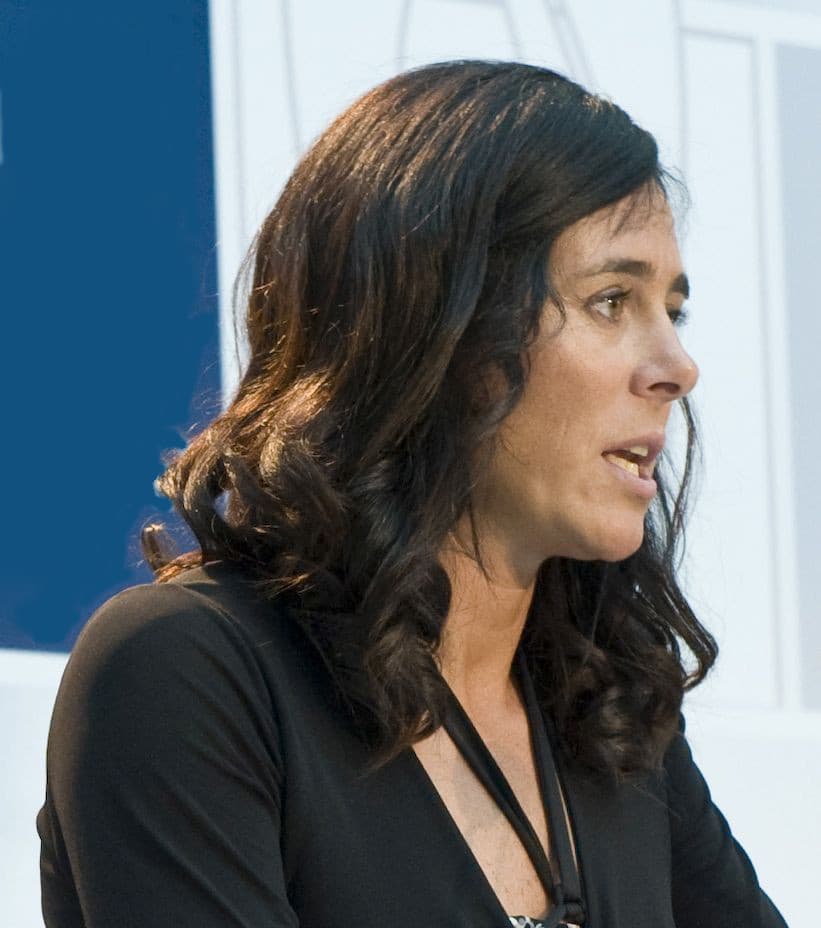
Spanish · Exploration · Sports
Edurne Pasaban
August 1, 1973 – present
Early Life and Background
Edurne Pasaban Lizarribar was born on 1 August 1973 in Tolosa, a town in Gipuzkoa in Spain’s Basque Country.[1][8][14] She grew up in a region with a strong mountaineering and outdoor culture, surrounded by the Pyrenees and Basque mountains. According to her official biography and institutional profiles, her parents introduced her to the mountains at an early age, taking her on hiking trips to the Pyrenees, experiences that awakened a lasting fascination with high places.[9][12][14]
During her teenage years, Pasaban joined a mountaineering club in Tolosa, deepening her engagement with climbing and outdoor sports.[12][15] At around 15 she began rock climbing, and at 16 she traveled to the Alps, where she climbed Mont Blanc, one of Europe’s most emblematic peaks.[9][15] These formative ascents provided her first experience of glaciated terrain and higher altitudes, helping to build the technical foundation and confidence that would later support her Himalayan career.
Parallel to her sporting interests, Pasaban pursued technical education. She studied Industrial / Technical Industrial Engineering at the University of the Basque Country, a degree that combined mathematics, mechanics, and problem‑solving.[6][9][11][14] Her first professional position was in the family engineering company, PASABAN S.A., where she worked as an engineer.[9][14] This background in engineering and business management later influenced her methodical approach to expedition planning and her subsequent work as a consultant and lecturer.
Career Beginnings in Mountaineering
Pasaban’s transition from enthusiastic alpinist to high‑altitude Himalayan climber took place in the late 1990s. In 1998, at age 25, she traveled to the Himalayas for the first time with her local mountaineering club to attempt Dhaulagiri (8,167 m), one of the world’s highest and most demanding peaks.[9][12] Heavy snow conditions forced the team to abandon the attempt, but the expedition gave her direct experience of Himalayan logistics and the physiological challenges of very high altitude.
In 1999 and 2000, Pasaban returned to the Himalayas to attempt Mount Everest (8,848 m) without supplemental oxygen.[12] Both attempts ended in failure due to severe weather, yet they were instrumental in strengthening her determination and understanding of the mountain’s demands. These early setbacks illustrate a pattern of persistence and realism that would characterize her later successes: she did not hesitate to turn back when conditions became too dangerous, prioritizing survival and long‑term goals over immediate summit success.
By the early 2000s, she had shifted toward a systematic engagement with the world’s highest peaks, known as the eight‑thousanders, a group of fourteen mountains above 8,000 meters located in the Himalayas and Karakoram. This decision placed her in a very small cohort of climbers—particularly women—who aspired to climb all fourteen.
The Eight‑Thousander Campaign: Major Ascents
Pasaban’s long campaign on the eight‑thousanders began on 23 May 2001, when she finally reached the summit of Everest via the South Col route, this time using supplemental oxygen.[1][4][12] The ascent made her one of the few Spanish women to have reached the top of the world and marked her first eight‑thousander. It also provided essential experience in high‑altitude logistics, team management, and the psychological pressures of a high‑profile climb.
Her second eight‑thousander came on 16 May 2002, when she summited Makalu (8,465 m), a technically demanding peak on the Nepal–Tibet border.[7] Later that year, on 5 October 2002, she added Cho Oyu (8,201 m), another major Himalayan summit, becoming a three‑time eight‑thousander climber within less than two years.[7] These climbs broadened her experience beyond Everest, exposing her to different types of terrain and logistical challenges.
In 2003, Pasaban’s pace accelerated. On 26 May 2003 she summited Lhotse (8,516 m), Everest’s near neighbor and the fourth‑highest mountain in the world.[1][7][12] That summer she shifted to the Karakoram range in Pakistan, where she achieved a demanding double: Gasherbrum II (8,035 m) on 19 July 2003 and Gasherbrum I / Hidden Peak (8,068 m) on 26 July 2003, giving her a total of six eight‑thousanders.[7] Successive summits in the same season highlighted her physical resilience and capacity to handle repeated death‑zone exposure.
On 26 July 2004, she climbed K2 (8,611 m), the world’s second‑highest and one of its most dangerous peaks, as part of a Spanish expedition associated with the TVE program Al Filo de lo Imposible.[1][8][15] The ascent, her seventh eight‑thousander, came at a high price: Pasaban suffered severe frostbite, later losing two toes.[1] The experience left permanent physical scars but did not end her Himalayan ambitions.
Pasaban continued in the Karakoram in 2005, summiting Nanga Parbat (8,125 m) on 20 July 2005, a mountain infamous for its high fatality rate and known as the “Killer Mountain”.[7] This climb marked her eighth eight‑thousander and demonstrated her willingness to confront peaks with particularly lethal reputations.
After a brief pause in eight‑thousander activity during 2006, she resumed her campaign. On 12 July 2007, Pasaban summited Broad Peak (8,047 m) in the Karakoram alongside Austrian climber Gerlinde Kaltenbrunner, adding a ninth eight‑thousander to her record.[1][7] In the 2008 season she achieved two more Himalayan giants: Dhaulagiri (8,167 m) on 1 May 2008, again in company with Kaltenbrunner,[1] and Manaslu (8,156 m) on 5 October 2008, reaching eleven eight‑thousanders.[7]
On 18 May 2009, Pasaban climbed Kangchenjunga (8,586 m), the third‑highest mountain in the world.[8] With this ascent she became the first woman to have climbed twelve eight‑thousanders, a milestone that placed her at the forefront of women’s high‑altitude mountaineering.[8] Her Kangchenjunga success came amid increasing media attention and a developing race among several women climbers to complete the fourteen peaks.
The final phase of her campaign unfolded in 2010. On 17 April 2010, she summited Annapurna I (8,091 m), historically one of the most dangerous eight‑thousanders, achieving her thirteenth summit.[7] Less than a month later, on 17 May 2010, she reached the summit of Shisha Pangma (8,027 m), the only eight‑thousander located entirely within Tibet.[1][2][3][7][13][14][15] This climb completed her set of all fourteen eight‑thousanders.
Record: First Woman to Climb All Fourteen Eight‑Thousanders
With her Shisha Pangma ascent on 17 May 2010, Pasaban became the first woman in history to climb all fourteen eight‑thousanders and the 21st person overall to do so, according to Guinness World Records and multiple biographical sources.[1][2][3][5][8][9][13][14][15][16] The record marked the culmination of a nine‑year effort beginning with Everest in May 2001 and extending across the Himalayas and Karakoram.
In the months surrounding this achievement, some mountaineering commentary briefly credited another climber as the first woman to complete the fourteen peaks. Later scrutiny of summit claims, routes, and altitudes—particularly on Annapurna and Shisha Pangma—led to revisions in the record‑keeping, with Guinness World Records and subsequent institutional profiles recognizing Pasaban’s priority.[1][6][9][14][15] Her insistence on verification and accurate documentation played a role in clarifying the historical record.
Pasaban’s accomplishment occurred in a context where women had only recently begun to appear in significant numbers on 8,000‑meter peaks. Her record was therefore not simply an addition to the statistics of Himalayan climbing but a symbolic turning point for women’s visibility in extreme alpinism. By showing that a woman could complete the full set of eight‑thousanders, she challenged assumptions about physical and psychological limits and helped redefine the image of female mountaineers in mainstream and specialized media.
Education, Professional Career, and Later Activities
While building her mountaineering career, Pasaban continued to develop academically and professionally. In addition to her initial engineering degree from the University of the Basque Country, she pursued advanced management and coaching studies. She completed the Senior Executive Program (SEP) at ESADE Business School in Barcelona around 2005–2006, and later earned a Master’s degree in Human Resource Management from ESADE.[6][14] She also completed a master’s program in Executive Coaching and Management at IE Business School in Madrid.[6][9]
Pasaban became an associate or adjunct professor at IE Business School / IE University, where she teaches subjects related to leadership, team dynamics, and personal development, often drawing parallels between high‑altitude expeditions and organizational life.[9][11][14] Her academic roles demonstrate a sustained effort to translate mountaineering lessons into frameworks useful for business and education, emphasizing resilience, decision‑making under uncertainty, and collaborative leadership.
Beyond teaching, she works as a speaker, consultant, and executive coach, delivering talks for corporate audiences and institutions.[6][9][14][15] Speaker agencies and her own website describe how she uses expedition narratives—planning, risk management, dealing with failure, leading in critical situations—to help teams and leaders reflect on their practices.[14][15] She has also been involved in media projects, appearing in documentaries and programs related to mountaineering, such as Spanish television productions and independent films listed on her filmography.[10]
Pasaban has also reportedly completed the Seven Summits challenge, climbing the highest peak on each continent, though public sources summarize this achievement without providing precise dates or detailed summit lists.[6][14][16] This broader mountaineering portfolio reinforces her status as an all‑round alpinist rather than a specialist confined solely to the Himalayas.
Awards, Honors, and Recognition
Following her 14‑peak achievement, Pasaban received various national and regional honors in Spain, recognizing her contributions to sport and the global visibility of Basque mountaineering. Biographical notices mention awards from Basque and Spanish institutions, though many of these are documented by year but not by exact ceremony date.[6][8][9][14] Her recognition extends internationally, as her Guinness World Record status as the first woman to climb all 8,000‑meter peaks remains a touchstone in adventure sports reporting.[1][13]
Media outlets such as National Geographic have profiled Pasaban, emphasizing both her technical achievements and her reflections on risk, ethics, and competition in high‑altitude climbing.[1][14] She is frequently cited alongside other leading women Himalayan climbers of her generation—such as Wanda Rutkiewicz, Gerlinde Kaltenbrunner, Nives Meroi, and Oh Eun‑Sun—as part of a pioneering cohort that transformed the gender balance in elite mountaineering.[5][11]
Her visibility is reinforced by institutional profiles (IE University, business schools, speaker agencies) and by appearances in films and documentaries focusing on expedition life.[9][10][15] These platforms have helped carry her story beyond specialized climbing circles into broader public awareness.
Personal Life
Public biographical sources focus primarily on Pasaban’s professional, athletic, and academic activities and provide limited detail about her private personal life. They note her work in the family engineering business, her later shift toward teaching and consulting, and her ongoing engagement with mountaineering and adventure travel.[6][9][14] Information on marriage, children, or intimate relationships is generally not emphasized in major reference entries, reflecting both her own preferences for privacy and the professional focus of the institutions that profile her.
Some interviews and profiles discuss the psychological impact of high‑altitude climbing on her personal identity, including her reflections on fear, loss, and the decision to continue or reduce extreme expeditions after completing the fourteen peaks. These narratives underscore the complexity of reconciling an intense expedition life with long‑term health and well‑being, but they do not typically delve into detailed family structures in a way suitable for encyclopedic citation.
Legacy and Historical Impact
Edurne Pasaban’s legacy rests principally on her status as the first woman to climb all fourteen eight‑thousanders and her broader role in advancing the visibility of women in extreme mountaineering.[1][2][3][8][13][14][15] Her nine‑year campaign demonstrated that a woman could not only equal but surpass male accomplishments in arguably the most prestigious frontier of high‑altitude climbing. This achievement challenged longstanding gender stereotypes about physical endurance, risk tolerance, and leadership in dangerous environments.
Beyond the raw summit count, Pasaban has contributed to discussions about mountaineering ethics and record‑keeping. Her insistence on careful verification of ascents, including the evaluation of alternative claims to the 14‑peak record, highlighted the importance of reliable documentation in a field where national pride and commercial interests can sometimes cloud judgment.[1][6][9][14] She has spoken publicly about balancing ambition with responsibility, stressing that turning back from a dangerous situation can be as important as reaching a summit.
Through her teaching and speaking work, Pasaban has helped translate mountaineering experiences into lessons applicable to organizational life, leadership, and personal development.[9][14][15] Her narratives about teamwork, decision‑making under pressure, and resilience have resonated with business audiences and students, extending her impact beyond sport into education and corporate culture.
In the wider history of women’s sport and exploration, Pasaban stands alongside other pioneers who transformed their disciplines by reaching historically significant milestones. Her career has inspired younger generations of women to engage with high‑altitude climbing, adventure travel, and leadership roles in outdoor professions. She has also contributed to reshaping media portrayals of female explorers, from peripheral figures to central protagonists.
Later Life and Continuing Work
After completing the fourteen eight‑thousanders in 2010, Pasaban has continued to be active professionally and athletically, though with a modified focus. She remains involved in mountaineering and outdoor activities, but much of her work now centers on teaching, executive education, motivational speaking, and coaching.[6][9][14][15] Her institutional roles at IE Business School and her consulting engagements suggest a sustained commitment to helping others apply expedition‑derived insights to their own challenges.
She also participates in media, educational, and philanthropic projects connected with the mountains, although comprehensive, dated lists of these activities are not always available in public reference sources. Biographical profiles emphasize that she now divides her time between her professional work with organizations and the mountains, using both spheres to reinforce messages about perseverance, humility, and responsible risk‑taking.[6][9][14]
As of the latest available sources, Edurne Pasaban is living, continuing to be recognized as an influential figure in international mountaineering and leadership education.[1][8][9][14] Her story remains a reference point in discussions of women’s achievements in high‑risk sports and the ongoing evolution of gender roles in exploration.
Dated achievements
15 indexed.
- Aug011973Exploration
Birth of Edurne Pasaban
Born on August 1, 1973, in Tolosa, Gipuzkoa, Basque Country, Spain.
View details Edurne Pasaban - Wikipedia - May232001Exploration
First eight‑thousander summit: Everest
Summited Mount Everest on May 23, 2001, her first eight‑thousander climb.
View details