← All women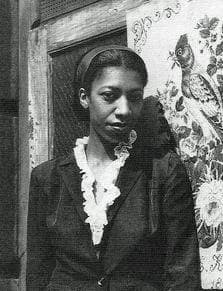
American · Arts · Literature
Edna Lewis
April 13, 1916 – February 13, 2006
Early Life and Background
Edna Regina Lewis was born on April 13, 1916, in Freetown, an African American community in Orange County, Virginia, founded after the Civil War by formerly enslaved people, including her grandfather.[7][1][2][15] Freetown was a self-sufficient farming settlement whose residents owned land, raised crops and livestock, and relied on mutual aid in the face of segregation and Jim Crow discrimination.[4][7] Lewis was one of eight children of Daisy and Eugene Lewis, and she grew up immersed in the rhythms of rural life.[7][14]
From an early age, Lewis learned to appreciate food by watching her mother and other women prepare meals from ingredients they grew, preserved, or foraged themselves.[4] Families in Freetown planted extensive vegetable gardens, canned and dried fruits, and smoked their own meats.[4][7] Manufactured ingredients and processed foods were rare; cooking meant transforming what the land and seasons provided. These practices shaped Lewis’s lifelong belief that good food depended on fresh ingredients, careful timing, and respect for seasonality.[1][4]
Freetown’s origins as a community of emancipated people also informed Lewis’s understanding of food as tied to autonomy and dignity. Her later writing described hog killings, church suppers, and harvest celebrations as communal rituals that sustained both body and spirit.[7][15] Though formal schooling opportunities were limited for Black children in rural Virginia, Lewis developed strong literacy skills and a love of storytelling that would later animate her cookbooks.[7] She also absorbed lessons in resourcefulness: she learned to sew, and would later sew for pay in New York, and she developed an eye for beauty that translated into her cooking and table presentation.[7][14]
Migration to New York and Career Beginnings
In 1933, at about age sixteen, Lewis left Freetown and traveled alone to New York City, part of the Great Migration of African Americans seeking work and opportunity in northern urban centers.[7][14] Arriving with little money and no formal culinary training, she worked a series of jobs, including sewing for the communist newspaper The Daily Worker and for high-end designers.[7] Her sewing skill was such that she reportedly replicated a Paris dress for the actress Helen Hayes without a pattern, based only on memory.[7][14]
During the 1940s, Lewis became involved in New York’s bohemian artistic circles. In 1948, she helped found Café Nicholson with Johnny Nicholson, becoming its chef.[7][5] The restaurant quickly attracted a clientele of writers, artists, and celebrities, including Truman Capote and Tennessee Williams, who were drawn to both its atmosphere and Lewis’s cooking.[5][8] At Café Nicholson, she served refined versions of Southern dishes—such as cheese soufflés, roast meats, and fruit desserts—prepared with a simplicity and elegance rooted in her Freetown upbringing.[7][14]
Lewis’s cooking at Café Nicholson gained early national attention when The New Yorker profiled the restaurant on September 29, 1949, highlighting her role in the kitchen.[7] At a time when Black women were rarely credited as chefs in white fine-dining spaces, this coverage elevated her as a creative professional, not just as anonymous labor. Café Nicholson became a crucial platform for her reputation, demonstrating that Southern food—particularly as interpreted by a Black woman from rural Virginia—could anchor sophisticated urban dining.[7][5]
In the 1950s, Lewis expanded her professional experience by cooking at Gage and Tollner, a historic restaurant in Brooklyn.[7][14] There she brought her seasonal, ingredient-focused approach into one of New York’s long-standing fine-dining establishments, further integrating Southern culinary sensibilities into mainstream restaurant culture. These years in New York established her as a chef whose work bridged regions and social worlds: rural Virginia and urban Manhattan, Black home kitchens and predominantly white elite dining rooms.
Cookbooks and Literary Contributions
Lewis’s transition from restaurant chef to widely influential author began in the early 1970s. In 1972, she coauthored The Edna Lewis Cookbook with Evangeline Peterson, one of the earliest major cookbooks by a Southern Black woman chef published under her own name.[4][5] The National Women’s History Museum notes that Lewis was among the first African American women from the South to write a cookbook that did not hide the author’s true name, gender, or race, a significant departure from earlier practices where Black cooks were often anonymized or relegated to stereotypical depictions.[1]
Her most celebrated work, however, is The Taste of Country Cooking, first published on September 1, 1976.[7][2][4] Structured around the agricultural year in Freetown, the book offers menus and narratives organized by seasons and occasions—springtime dinners, summer harvest meals, fall hog-killing feasts, and winter gatherings. Lewis wrote in a reflective, memoir-like style, describing how her community planted, cooked, and celebrated, and she provided recipes that captured the textures and flavors of Southern country cooking.
The Taste of Country Cooking was distinctive in American food writing for centering a rural Black community’s foodways with intimacy and respect. It emphasized fresh, local ingredients and the importance of cooking in accordance with the season, anticipating key themes of the modern farm-to-table movement.[2][3][10] Critics and readers praised its evocative prose and its clarity of technique, and the book quickly became a classic of American culinary literature.[4][5]
The book’s influence widened further when it was selected by the Book-of-the-Month Club on October 1, 1978, bringing Lewis’s depiction of Freetown and Southern cooking into countless American households beyond food-specialist circles.[7] This mainstream recognition helped cement the work as a foundational text for both chefs and home cooks, and it gave national visibility to the idea that Black rural life and Southern cuisine were central to the American story.
Lewis continued to write influential cookbooks. In 1988, she published In Pursuit of Flavor, which further explored her philosophy that good cooking is fundamentally about understanding and balancing flavor, using fresh ingredients and simple methods.[4] Later, after forming a close professional and personal bond with Atlanta chef Scott Peacock beginning in 1989, she coauthored The Gift of Southern Cooking: Recipes and Reminiscences from the Heart of the South, published in 2003.[4][8][10] That book combined recipes and recollections from both cooks, offering a rich portrait of Southern food that spanned regions and generations.
Professional Work and Chef Residencies
While her books increasingly defined her public reputation, Lewis remained deeply connected to restaurant work. In the late 1980s and 1990s, she undertook a series of chef residencies that extended her influence across the American South and back to New York.
In 1989, Lewis began collaborating with Scott Peacock, a younger white Southern chef who credited her as a mentor and friend.[4][8] Their partnership would shape both their careers, as Peacock helped care for Lewis in her later years and worked with her on public events and the coauthored cookbook.
On May 1, 1990, Lewis started a residency at Food for Thought, a restaurant in Atlanta.[7] This appointment returned her professional cooking to the South, allowing her to demonstrate in a contemporary urban setting the seasonal and ingredient-driven approach she had cultivated from her Freetown experience. Atlanta diners and local chefs encountered her as both a living link to traditional Southern foodways and a forward-looking influence on the city’s evolving culinary scene.
Two years later, on June 1, 1992, she became chef-in-residence at the Quilted Giraffe, a high-profile New York City restaurant known for its inventive, upscale cuisine.[7] In this context, Lewis’s cooking helped integrate Southern dishes and ingredients into the repertoire of New American fine dining. Her presence in such an establishment underscored that Southern food—when prepared with care and attention to seasonality—belonged alongside the most celebrated contemporary dishes.
On April 1, 1994, Lewis took on another notable residency, becoming chef-in-residence at Middleton Place Plantation near Charleston, South Carolina.[7] Middleton Place, a former rice-growing plantation worked by enslaved Africans, had become a historic site and tourist destination. Lewis’s cooking and interpretation of Lowcountry cuisine in this setting highlighted the crucial role of African and African American cooks in shaping Southern food traditions. Her work there helped connect visitors’ dining experiences to the complex history of slavery, agriculture, and culinary knowledge in the region.
Across these residencies, Lewis functioned not only as a chef but also as a teacher and cultural interpreter. She mentored younger cooks, modeled respect for ingredients and traditions, and demonstrated how restaurant menus could honor regional histories rather than simply commodify them.
Awards, Honors, and Recognition
By the 1990s, Lewis’s stature in the culinary world was widely acknowledged through major awards and institutional recognition. According to multiple sources, she received nearly every major accolade available to American chefs.[3][10]
On October 23, 1999, the Southern Foodways Alliance (SFA) presented Lewis with its inaugural Lifetime Achievement Award.[7][10] The SFA, dedicated to studying and celebrating the food cultures of the American South, chose Lewis as its first honoree, underscoring her central role in defining Southern cooking and documenting African American food traditions. The award recognized her as a "pivotal" figure who elevated Southern cuisine to national prominence.[7]
Lewis was also officially named a "Grande Dame" by Les Dames d’Escoffier International, an organization of women leaders in food, wine, and hospitality.[3][10] She received the first-ever James Beard Living Legend Award and an honorary doctorate in culinary arts from Johnson & Wales University.[3] In addition, she was honored with lifetime achievement awards from both the International Association of Culinary Professionals (IACP) and the Southern Foodways Alliance.[3][10]
Her books were inducted into the James Beard Foundation Cookbook Hall of Fame, reflecting their enduring impact on food writing and home cooking.[10] Later, she was commemorated with a United States Postal Service postage stamp, an honor reserved for individuals considered nationally significant in American history and culture.[10]
In 2011, Lewis was posthumously inducted into the Culinary Hall of Fame, which noted that she "elevated Southern American cooking from regional comfort food to refined cuisine deserving celebration."[5] In 2014, the Library of Virginia named her one of its "Virginia Women in History", later recontextualized under its "Virginia Changemakers" program, highlighting her contributions to Southern cuisine and cultural history.[4]
These honors cemented Lewis’s reputation as both a culinary artist and a cultural historian of Southern and African American foodways. They acknowledged not only the quality of her recipes but also the importance of her narrative work in preserving the memory of communities like Freetown.
Personal Life and Relationships
Lewis’s personal life was marked by independence, resilience, and deep friendships. She never married, and there is no evidence that she had children, but she built a chosen family through her relationships with colleagues and friends in the culinary world.[7][8]
Her early years in New York were intertwined with political and artistic circles, including work for the leftist press and engagements with designers and performers.[7] Later, her partnership with Scott Peacock became a defining feature of her personal and professional life. The two met in 1989 and formed a close bond; Peacock became both collaborator and caregiver as Lewis aged.[4][8]
Lewis eventually moved to Georgia to live with Peacock, and they shared a home in the Atlanta area.[7][8] Their coauthored cookbook, The Gift of Southern Cooking, reflected not only shared culinary interests but also shared stories and memories, blending perspectives from rural Virginia and Alabama with contemporary Southern restaurant experience.[4][8]
Accounts from friends and colleagues portray Lewis as a dignified, quietly commanding presence—"tall" and "statuesque," with a gentle manner and precise standards in the kitchen.[14][3] She was known for her generosity in teaching younger cooks, her insistence on doing things properly, and her ability to convey the sensory and emotional dimensions of cooking.
Legacy and Historical Impact
Edna Lewis’s legacy is multifaceted, spanning professional kitchens, home cooking, food literature, and public history. She is widely described as the "Grande Dame" or "godmother" of Southern cooking, and as a foundational figure in the articulation of American regional cuisine.[1][3][10]
One of her most important contributions was to reframe Southern food, especially Black Southern food, as a cuisine of sophistication and depth rather than mere comfort food or stereotype. Through The Taste of Country Cooking and subsequent books, she presented detailed accounts of Freetown’s foodways, emphasizing the skill, knowledge, and communal care embedded in everyday practices like gardening, preserving, and cooking.[4][7]
Her emphasis on fresh, seasonal, and locally sourced ingredients anticipated and influenced the farm-to-table movement that gained momentum in the late 20th and early 21st centuries.[17][3] Chefs and food writers have cited her as a crucial inspiration for cooking that respects the land and the agricultural calendar. She showed that seasonal cooking was not a trend invented by contemporary restaurants but a tradition long practiced in rural communities, particularly among African Americans.
Lewis also helped redefine what a cookbook could be. Her integration of narrative, memory, and recipe created a model for food writing that treats cooking as inseparable from cultural and personal history. This approach has influenced later generations of authors who use food to explore identity, migration, and community.[4][15]
As a Black woman who achieved prominence as both chef and author in a field historically dominated by white men, Lewis broke significant racial and gender barriers. The National Women’s History Museum emphasizes that she was among the first African American women from the South to publish a cookbook under her own name without obscuring her identity.[1] Her visibility helped pave the way for later Black chefs, restaurateurs, and food writers to claim authorship and authority in the culinary world.
Institutions such as the Southern Foodways Alliance, the Library of Virginia, and the Culinary Hall of Fame have enshrined her memory in exhibitions, awards, and educational materials, ensuring that her story is included in broader narratives of American cultural history.[7][4][5] Her work continues to be taught and discussed in culinary schools, history programs, and food studies courses.
Later Life and Death
In her later years, Lewis experienced cognitive decline but remained, as one physician noted, "still quite aware of what she wants."[7] Living with Scott Peacock in the Atlanta area, she continued to cook, teach informally, and collaborate on projects, including The Gift of Southern Cooking, published in 2003.[4][8]
On February 13, 2006, Lewis died at age 89 at the home she shared with Peacock, in Decatur or the greater Atlanta area.[2][7][14][15] Her passing prompted obituaries and tributes in major newspapers, culinary journals, and online platforms, many of which described her as one of the most important American chefs and food writers of the 20th century.[3][12]
Following her death, recognition of her impact continued to grow. She was inducted into the Culinary Hall of Fame in 2011, honored by the Library of Virginia in 2014, and celebrated in numerous essays, biographies, and documentaries.[5][4][3] The United States Postal Service’s commemorative stamp further signaled her elevation into the pantheon of nationally significant cultural figures.[10]
Today, Edna Lewis’s recipes remain in circulation, her cookbooks are frequently reprinted, and her name is invoked in discussions of Southern cooking, African American culinary history, and the ethics of sourcing and seasonality. Chefs across the United States continue to adapt and honor her dishes, and home cooks rely on her guidance to prepare everyday meals with care and attention to flavor. Her legacy endures not only in the kitchens that bear her influence but also in the ongoing efforts to recognize and preserve the food traditions of communities like Freetown.
Dated achievements
9 indexed.
- Apr131916Arts
Birth in Freetown, Virginia
Edna Lewis was born in Freetown, Orange County, Virginia, a community founded by formerly enslaved people including her grandparents.
View details Encyclopedia Virginia: Edna Lewis - Sep291949Arts
Featured in The New Yorker for Café Nicholson cooking
A New Yorker profile spotlighted Edna Lewis's cooking at Café Nicholson, an early major national showcase for a Black woman chef in New York City.