← All women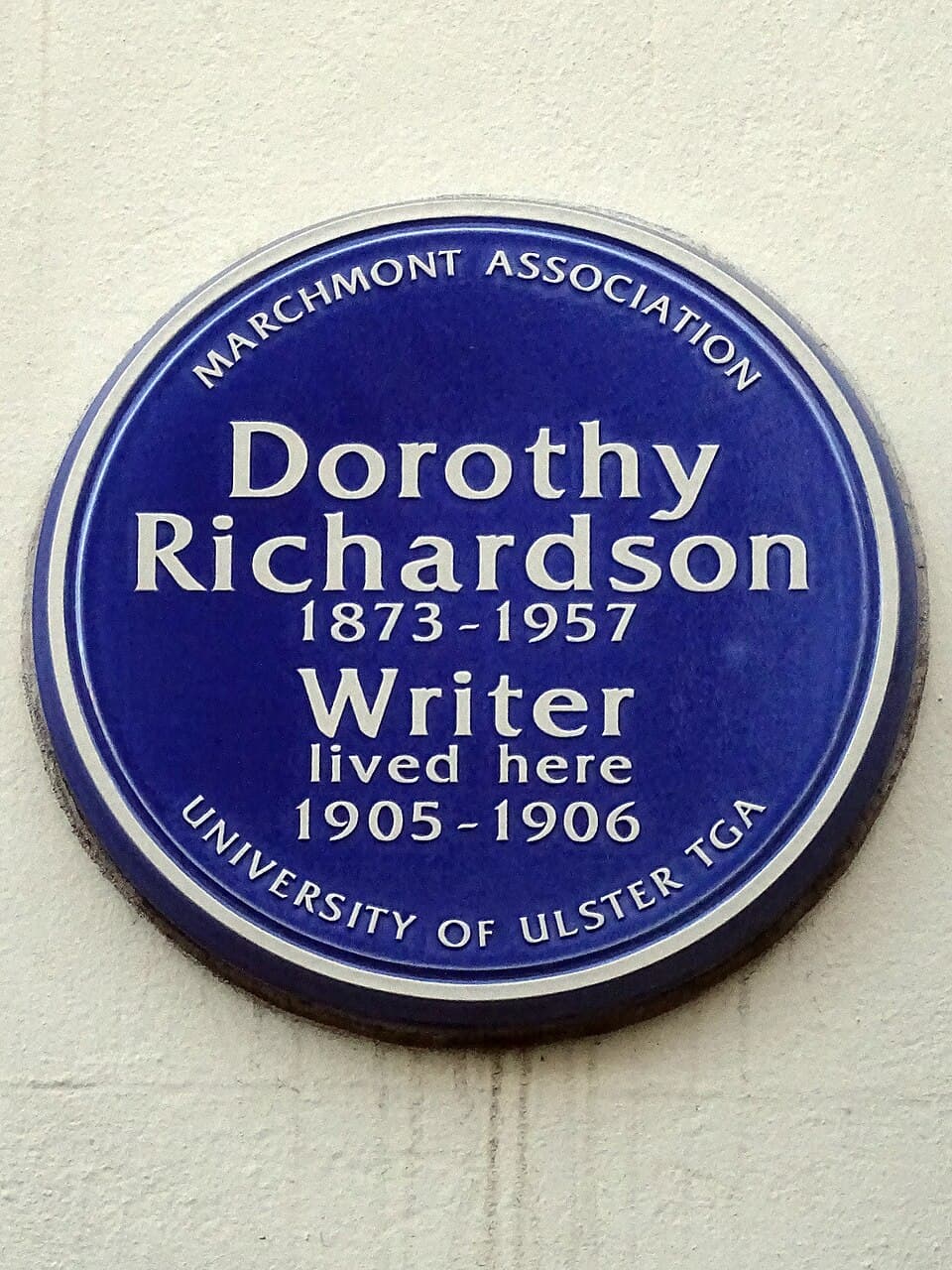
British · Literature
Dorothy Richardson
May 17, 1873 – June 17, 1957
Early Life and Background
Dorothy Miller Richardson was born on May 17, 1873, in Abingdon, Berkshire, England. The daughter of Charles Richardson, a successful brewery owner, and Mary Richardson, her upbringing was marked by familial and financial instability following her father's financial ruin and her mother's subsequent suicide. She was educated at a progressive school, where she began cultivating her love for literature and languages.
Career Beginnings and Development
Richardson moved to Bloomsbury, London, at the age of 17, where she worked as a governess, a secretary, and a journalist. Immersed in the intellectual and artistic circles of the time, she began her writing career contributing reviews and essays to various publications. Her early short stories and novels reflect the keen observational style and introspective approach she would later perfect in her seminal work.
Major Works and Accomplishments
Richardson is best remembered for her sequence of 13 novels collectively titled 'Pilgrimage' (1915-1967), which is considered one of the earliest examples of stream of consciousness writing in English. The series explores the life of Miriam Henderson, recounting her experiences and thoughts in intricate psychological detail. The narrative innovation of 'Pilgrimage' was foundational for future modernist writers, like Virginia Woolf and James Joyce. Additionally, Richardson contributed to the advancement of feminist literary critique, with her writing deeply embedded in the exploration of feminine consciousness and identity.
Awards, Honors, and Recognition
While Richardson did not receive major literary awards during her lifetime, her contribution to literature has been posthumously recognized for its profound impact on English literature and the development of modernist narrative techniques.
Personal Life
In 1917, Richardson married Alan Odle, an artist, and illustrator. Despite his poor health and financial struggles, their marriage was supportive and fueled both of their artistic endeavors. Richardson's personal correspondence reveals much about her intellectual life and friendships, offering insight into the life of an untraditional woman writer in early 20th-century England.
Legacy and Historical Impact
Dorothy Richardson's legacy is predominantly tied to her pioneering role in the development of the modernist narrative technique. Her innovative use of stream of consciousness has been largely influential in shaping the narrative style of subsequent prominent authors. Her works continue to be studied and celebrated for their exploration of gender, identity, and psychological depth.
Later Life and Death
Richardson continued to write and publish until her later years, with the last installment of 'Pilgrimage' being issued posthumously in 1967. She passed away on June 17, 1957, in Beckenham, Kent, leaving behind a defining legacy in stream of consciousness literature, with 'Pilgrimage' often cited as a definitive work that challenges assumptions about narrative structure and the exploration of inner realities.
Dated achievements
2 indexed.
- May171873Literature
Birth of Dorothy Richardson
Birth of Dorothy Richardson, pioneering British author, in Abingdon, Berkshire.
View details Wikipedia - Dorothy Richardson - Jun171957Literature
Death of Dorothy Richardson
Dorothy Richardson passed away on June 17, 1957, in Beckenham, Kent.
View details