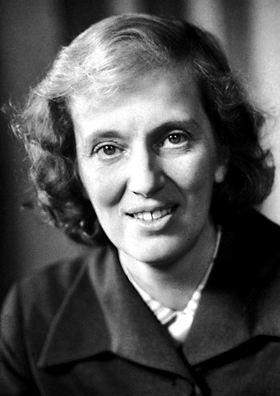
Dorothy Mary Crowfoot was born in Cairo, Egypt, to British parents working in the Egyptian Education Service.
Dorothy Mary Crowfoot was born on 12 May 1910 in Cairo, Egypt, where her father John Winter Crowfoot worked in the Egyptian Ministry of Education and later became an eminent archaeologist, and her mother Grace Mary Hood was a self-taught expert in ancient textiles and botanical illustration.
Because of her parents' work in Egypt and later Sudan, Dorothy spent much of her early childhood separated from them, being raised largely in England by relatives and at boarding school while her parents pursued archaeological digs in the Middle East. This unconventional upbringing exposed her early to scholarly rigor, scientific observation, and the culture of discovery that would define her life's work.
Her mother's passion for botany and chemistry sparked young Dorothy's fascination with crystals and chemical structures; by the age of ten she was already conducting simple chemical experiments and collecting minerals. This childhood curiosity, nurtured despite the limited scientific education typically offered to girls in the era, set the foundation for a career that would revolutionize the field of X-ray crystallography and ultimately earn her a Nobel Prize.
Her birth in Cairo and cosmopolitan early life gave her an international outlook that persisted throughout her career, as she later traveled extensively, including pioneering scientific exchanges with Chinese and Soviet researchers during the Cold War.
Images