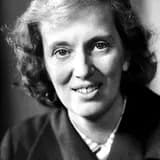
Dorothy Crowfoot Hodgkin died at her home in Shipston-on-Stour, Warwickshire, England, aged 84.
Dorothy Crowfoot Hodgkin died on 29 July 1994 at her home in Shipston-on-Stour, Warwickshire, England, at the age of 84, following a stroke.
By the time of her death, Hodgkin was widely celebrated as one of the most important scientists of the twentieth century, having transformed the field of X-ray crystallography and structural biology through her determinations of the structures of cholesterol, penicillin, vitamin B12, and insulin. Her Nobel Prize in Chemistry (1964) remained the only science Nobel awarded to a British woman for decades after her death, and continues to hold that distinction.
In her later years, despite worsening rheumatoid arthritis that confined her increasingly to a wheelchair, Hodgkin remained scientifically active and deeply engaged in international causes, particularly the Pugwash Conferences on Science and World Affairs, which she chaired from 1976 to 1988, advocating for nuclear disarmament and peaceful scientific collaboration across Cold War divides.
Tributes following her death emphasized not only her scientific brilliance but her humility, generosity as a mentor—having trained and inspired numerous accomplished scientists including future UK Prime Minister Margaret Thatcher, who studied chemistry under her at Oxford—and her lifelong commitment to social justice and international peace. Hodgkin is remembered as a defining figure in twentieth-century science and an enduring inspiration for women pursuing careers in STEM fields.